

Forgotten Diamonds: Albuquerque’s Little League Renaissance Highlights Stark Urban Divide
POLICY WIRE — ALBUQUERQUE, N.M. — It’s often in the neglected corners, those parts of a city typically sidestepped by civic planners and often ignored by public discourse, where the quiet struggles —...

POLICY WIRE — ALBUQUERQUE, N.M. — It’s often in the neglected corners, those parts of a city typically sidestepped by civic planners and often ignored by public discourse, where the quiet struggles — and equally quiet triumphs — play out. That’s precisely where Westgate Little League calls home. Here, in what locals candidly label ‘one of Albuquerque’s most overlooked communities,’ the simple game of baseball, battered fields, and tattered uniforms often speak louder than any municipal budget allocation. It isn’t the glittering downtown revitalization everyone talks about; no, this is ground-level impact, a recognition that the kids playing ball here are just as deserving of a decent swing as any others, even if the city seems to have forgotten them.
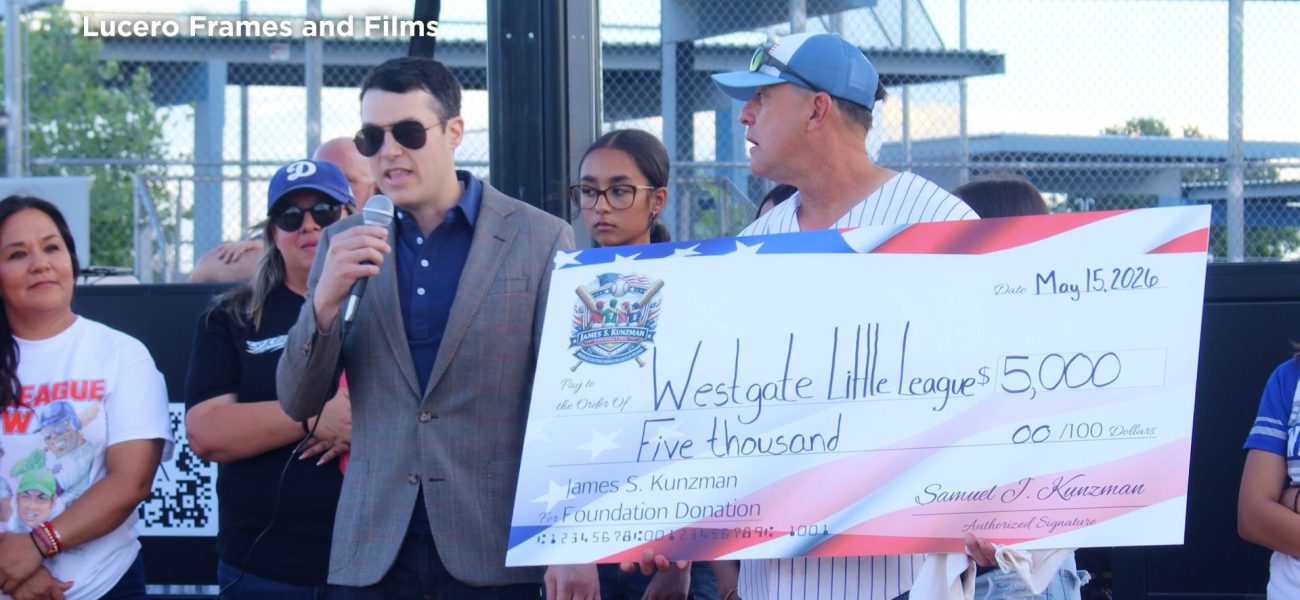
But someone certainly hadn’t forgotten. The James S. Kunzman Foundation, a philanthropic enterprise helmed by Albuquerque native Samuel Kunzman, just dropped a five-thousand-dollar check onto the plate for Westgate. Not in some sterile boardroom, but right out in the elements, during a community movie night near Tower Road and 86th Street. A truly low-key affair, really. It brought out current players with dirt-stained knees, former stars probably now wrestling with mortgage payments, and a smattering of community members. They watched a film, perhaps a baseball flick (no word on whether it was Field of Dreams or something grittier), but the real feature presentation wasn’t on the screen. It was in the hushed murmurs of gratitude, the relieved sighs that maybe, just maybe, these kids wouldn’t be playing on a forgotten sandlot for too much longer.
Because let’s be honest, five grand won’t build a new stadium. It won’t eradicate poverty. But it will buy new equipment, fix some fences, pay league fees for kids whose parents stretch every dollar further than a foul ball over the left-field wall. And that, in a neighborhood constantly facing down economic headwinds and — let’s be frank — systemic neglect, isn’t just about baseball. It’s about dignity. It’s about showing these young minds that someone, somewhere, cares enough to pitch in.
Kunzman, who founded his organization in Belen, sees it pretty simply. “We’re not just funding equipment; we’re investing in self-worth,” he told Policy Wire, his voice holding that familiar New Mexico blend of grit and quiet resolve. “It’s easy to talk about opportunity, but it’s harder to build it. We’re doing the grunt work. These kids? They’re just waiting for their shot.” He sounded tired, maybe, but genuinely driven.
But the foundation’s intervention also throws into stark relief the public sector’s sometimes-waning commitment to these communities. Bernalillo County Commissioner Elena Ramirez, typically a cautious diplomat in such matters, conceded as much, albeit elliptically. “Our public resources are often stretched thin, aren’t they? And yes, private initiatives like Mr. Kunzman’s provide essential buoyancy for neighborhoods like Westgate,” she offered, carefully sidestepping any direct criticism of city hall, but making her meaning perfectly clear. “It’s heartwarming to see community step up, but it also prompts us to look hard at where our communal priorities truly lie.” Indeed. Her words hang in the air, a tacit acknowledgment of systemic gaps. New Mexico’s challenges extend far beyond the water table.
What’s unfolding in Albuquerque isn’t unique. It’s a localized manifestation of a global pattern: private philanthropy stepping in to shore up fractured social infrastructure. Consider, if you will, the bustling passion for sport across South Asia. In countries like Pakistan or Bangladesh, cricket isn’t merely a game; it’s an obsession, a cultural glue, a national pastime that often transcends socioeconomic lines and becomes an aspirational ladder for millions. Much like the importance of community baseball here, it demonstrates how integral organized sports can be. The kind of foundational support Kunzman is providing in Albuquerque finds its echo — or its stark absence — in community cricket leagues across Karachi or Dhaka, where a modest donation can ignite untold potential. The difference is often whether such initiatives are spearheaded by well-meaning individuals or if they’re woven into the very fabric of public policy.
And that’s the rub, isn’t it? U.S. Census Bureau data, for what it’s worth, pegs Albuquerque’s overall poverty rate at around 16 percent, but in neighborhoods like Westgate, it frequently hovers well above 20 percent. It’s in these precincts where every dollar for after-school programs, or — God forbid — baseball, has to compete with soaring rents, stagnant wages, and the constant hum of systemic disadvantages. But a five-thousand-dollar check isn’t just numbers. It’s the ability to buy a glove, to replace a broken bat, or to make sure some kid who’s got a cannon for an arm isn’t left on the sidelines simply because his family can’t cough up a few hundred bucks for registration. These small investments? They resonate. They build character. They might even save a life. It’s the kind of quiet heroism that rarely makes primetime news but defines real community development, not the flashy kind, but the stuff that matters to individual lives.
What This Means
The Kunzman Foundation’s donation isn’t just a feel-good story about kids and baseball; it’s a stark policy statement masquerading as charity. When private citizens or entities have to step in with cash to ensure basic access to youth sports, it speaks volumes about where municipal and state priorities often fall short. It means that while policymakers are debating grand infrastructure projects or corporate tax incentives, the social bedrock of marginalized communities often erodes without direct, consistent public investment. This donation, while small in the grand scheme of civic budgets, highlights a reliance on individual goodwill to plug gaping holes in public services, particularly in areas like recreational youth development, which are demonstrably linked to lower crime rates, improved academic performance, and enhanced social cohesion. So, yes, it brings hope to Westgate, but it also quietly — and pointedly — indicts the broader system for its often-anemic support of its most vulnerable citizens. It’s a local story, sure, but one with national implications, especially when we talk about fostering civic pride and reducing social disparities. It forces us to ask: where’s the rest of the cavalry? This kind of community building, a process not so different from the local sports rivalries that animate conversations in cities from here to the Great Lakes, requires sustained, intentional investment. You know, like the passion seen in Midwestern diamond diplomacy.