


Mali’s Precarious Chessboard: Russian Operatives Exit Kidal, Leaving a Geopolitical Void
POLICY WIRE — Bamako, Mali — It wasn’t the roar of advancing forces that signaled a shift in Mali’s grinding, multifaceted conflict, but rather the relative quiet of a strategic...

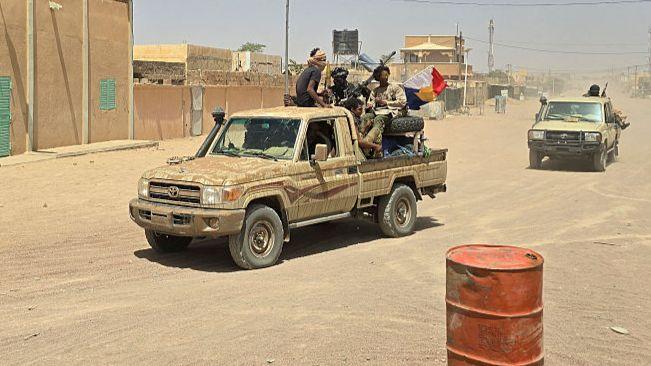
POLICY WIRE — Bamako, Mali — It wasn’t the roar of advancing forces that signaled a shift in Mali’s grinding, multifaceted conflict, but rather the relative quiet of a strategic repositioning – a decidedly unheroic egress. Russian-affiliated military contractors, fixtures in Mali’s escalating security conundrum since France’s hurried departure, have reportedly pulled out of Kidal, a northern bastion fiercely contested by Tuareg separatists. Their precipitous exit, confirmed after a volley of insurgent attacks, leaves a palpable void and raises disquieting questions about the junta’s capacity and Moscow’s commitment to its embattled West African client.
This isn’t just about a tactical retreat from a remote outpost; it’s a stark, symbolic moment. Kidal, a historical fulcrum of Tuareg rebellion and a hotbed of jihadist activity, has long been a litmus test for control in Mali. For years, the Malian armed forces (FAMA) — and their erstwhile French partners struggled to subdue it. So, when the Kremlin-linked operatives, often dubbed the Wagner Group, stepped into the breach, their presence was touted by Bamako as the answer to Mali’s interminable security woes. Their withdrawal under pressure now suggests a more complex, less triumphant narrative.
Behind the headlines, this development underscores the enduring, brutal reality of Sahelian instability. It’s a region where lines between separatists, ethnic militias, and transnational jihadist groups blur with alarming fluidity, creating a perfect storm of violence and displacement. The Malian government, which severed ties with Paris and leaned heavily on Moscow, now faces renewed scrutiny regarding its chosen security architecture. It’s a gamble, many would argue, that’s clearly not paying dividends.
“This isn’t a retreat; it’s a strategic realignment to better address evolving threats,” shot back Colonel Assimi Goïta, Mali’s transitional president, in a statement released through state media. “Our sovereignty remains paramount, and our partners are adapting to our operational needs to secure every inch of Malian territory. It’s a dynamic battlefield, and we’re responding accordingly.” A familiar refrain, isn’t it, designed to mask operational setbacks.
But the Coordination of Azawad Movements (CMA), the Tuareg separatist alliance, paints a different picture, one of outright capitulation. “They ran. It shows the Malian army and their foreign backers are paper tigers,” declared Bilal Ag Cherif, a prominent CMA leader, speaking from an undisclosed location. “Kidal is ours, — and this is just the beginning of reclaiming what’s rightfully ours. No foreign force, Russian or otherwise, can hold back the will of our people.” It’s a bold assertion, certainly, but one that resonates deeply with the local populace.
And so, the geopolitical chess game continues, but with a piece seemingly removed from the board. Russia’s broader strategy in Africa — often characterized by resource extraction, arms deals, and the export of security services — now confronts a glaring vulnerability. The illusion of invincibility, or at least superior effectiveness compared to Western forces, is undeniably punctured. This isn’t just a Malian problem; it reflects a broader pattern of external interventions struggling against deeply entrenched, localized insurgencies across the Muslim world. Whether it’s the tribal intricacies of Afghanistan or the regional complexities of Pakistan’s border regions, external actors often find themselves entangled in struggles whose nuances they fail to grasp, frequently leading to similar ignominious withdrawals.
Still, the human cost remains tragically consistent. According to UNHCR figures, over 700,000 Malians remain internally displaced as of early 2024, a grim testament to the enduring instability that continues to rip families and communities apart, no matter who’s purportedly in charge of security.
What This Means
This development is consequential for Bamako’s junta, Moscow’s African ambitions, and the beleaguered populations of the Sahel. Politically, the withdrawal from Kidal significantly erodes the Malian government’s already tenuous legitimacy and raises uncomfortable questions about its ability to protect its citizens. Its primary pitch — that Russian partners would stabilize the country where others failed — looks considerably weaker today. Don’t expect any immediate pivot back to Western alliances, though; the ideological trenches run deep.
Economically, persistent insecurity in resource-rich northern Mali will continue to deter investment and strain the national budget, diverting funds from essential services to a seemingly endless conflict. It’s a vicious cycle that’s crippling. Regionally, the emboldened separatist groups and potentially resurgent jihadist elements (like Islamic State in the Greater Sahara and Jama’at Nusrat al-Islam wal Muslimeen) could destabilize neighboring nations, turning Mali into an even greater regional powder keg. We’ve seen this pattern before, tragically, in places like Nigeria, where deepening crises of trust often manifest in cascading security failures.
For Russia, while not a death blow to its African expansion, this Kidal episode forces a re-evaluation of its operational footprint. It’s a pragmatic enterprise, not a humanitarian mission, and clear failures risk undermining the entire commercial model. Moscow might choose to redeploy these operatives to other, perhaps less challenging, theaters — or simply adjust tactics. The broader message, however, is clear: even mercenaries with heavy equipment aren’t immune to the brutal realities of asymmetrical warfare against highly motivated, locally entrenched adversaries. It’s a harsh lesson, one that other global powers, including those eyeing influence in the volatile geopolitical chessboard of the Muslim world, would do well to heed.