


Cricket’s New Moneyball: How a Teen Star’s Bat-Flips Reshape India’s Billion-Dollar League
POLICY WIRE — New Delhi, India — The roaring stadiums, the flashing neon, the million-dollar bids – this isn’t just sport anymore, it’s a full-blown commercial juggernaut, a digital spectacle...

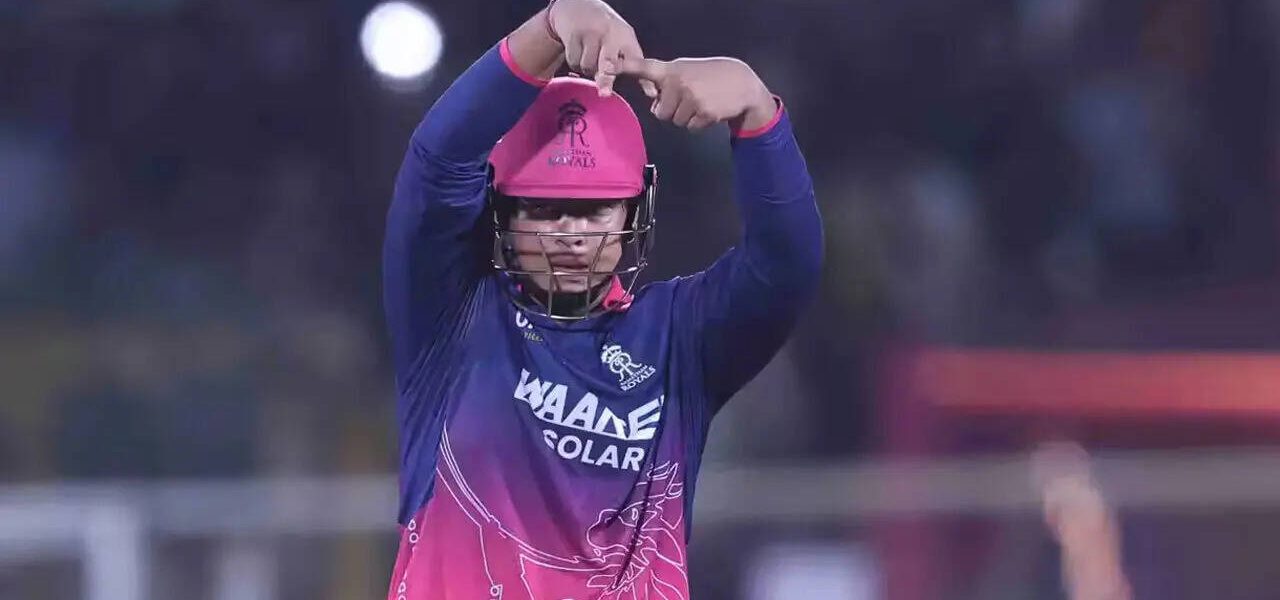
POLICY WIRE — New Delhi, India — The roaring stadiums, the flashing neon, the million-dollar bids – this isn’t just sport anymore, it’s a full-blown commercial juggernaut, a digital spectacle that’s reshaped how the world sees cricket. And right now, its most intriguing new component comes in the form of a scrawny 15-year-old kid named Vaibhav Sooryavanshi, who just keeps smashing sixes, casually rewriting records, and frankly, shaking up the whole darn operation.
It wasn’t a sleek marketing campaign or a strategic broadcast deal that caught everyone’s eye last week. Nope. It was a kid, hitting balls into orbit. While seasoned pundits endlessly debate team strategies and financial forecasts, Sooryavanshi’s bat became the headline, sending not just cricket balls, but palpable shockwaves through the very foundation of the Indian Premier League (IPL) – a league that commanded a staggering economic valuation of $15.4 billion in 2023, according to a D&P Advisory report. This isn’t just a new face; it’s a new gravitational pull.
His latest rampage, a blistering 93 off just 38 balls for the Rajasthan Royals against Lucknow Super Giants, was the kind of stuff that rips up form guides and leaves bowlers looking utterly bamboozled. Rajasthan, staring down a mountainous target of 221, got an unexpected gift from a teenager who — initially, mind you — seemed to be finding his feet. But once he got settled? Forget about it. He just took off, hitting seven fours and 10 colossal sixes, pushing his season’s tally to 53, just shy of the mythical Chris Gayle’s 59.
But this isn’t merely about statistics. It’s about perception. And former India all-rounder Irfan Pathan didn’t mince words speaking on JioStar. “He ain’t just hitting sixes now; he’s dismantling strategies. Makes a veteran bowler scratch his head and wonder if he ever knew how to bowl at all,” Pathan quipped, a wry smile evident even through the digital feed. “We used to say he was all leg-side power, didn’t we? But the way he drove over covers, even that audacious upper-cut over third man? That’s maturity, that’s range. And because of it, stopping him? Well, good luck with that.”
This isn’t just a cricketing sensation. It’s a phenomenon that speaks volumes about the subcontinent’s unparalleled passion for the sport, a passion that knows no borders. The glitz and glamour of the IPL – India’s cash cow – casts a long shadow, inspiring countless youngsters, from dusty grounds in Karachi to bustling Dhaka, to pick up a bat. For many, the IPL is the dream factory, the fastest route from obscurity to stardom and, yes, staggering wealth. A young kid from Pakistan, Sri Lanka, or Bangladesh watching Sooryavanshi knows exactly what’s on offer, even if the paths to get there are sometimes less direct.
Dr. Aisha Rahman, a sports economy analyst at Karachi University, mused, “Every IPL season creates these figures, doesn’t it? But a talent like Sooryavanshi isn’t just about runs; it’s about the millions of young people across our region seeing a pathway, a dream, often unattainable, but oh so potent for viewership and brand loyalty. He’s a cultural commodity now.” Rahman understands the power these sporting narratives hold in a region obsessed with cricket, where South Asia’s intense cricket rivalries often reflect broader geopolitical currents.
And Sooryavanshi, with his nonchalant attitude — and utterly destructive hitting, exemplifies this shift. He started his decisive innings slowly, taking five runs from his first 10 balls. A cautious start, for sure. But then something clicked. He just erupted, plundering 24 runs in one single over. That’s a switch flipping from gear-grinding caution to full-throttle ballistic, all within moments. He didn’t just chase the target; he seemed to casually walk right past it, daring anyone to catch him.
He’s hit more sixes this season than any other Indian batter in IPL history – the first to cross the 50-mark. Pathan knows what that means. “Chris Gayle, for all his power, was always that bowler’s nightmare. And now? Now Sooryavanshi is creating that same raw fear. Gayle’s record of 59 sixes from 2012, which seemed unbreakable forever? It’s genuinely in danger. What’s more, the way he bats – so fluid, so young – implies this isn’t a flash in the pan. He’s here to stay, — and the league better adjust.”
The conversation around Sooryavanshi has quickly morphed from ‘who’s this kid?’ to ‘how far can he go?’ This isn’t just about cricket now. This is about brand appeal, market value, and the relentless pressure on young shoulders carrying the weight of expectation for an entire, cricket-mad nation.
What This Means
The rise of a sensation like Vaibhav Sooryavanshi in the IPL is more than just a sports story; it’s a political and economic bellwether. Economically, his individual star power can drive immense viewership, inflate advertising revenues, and ultimately, solidify the league’s already massive financial footprint. We’re talking millions, maybe even billions, influenced by one teenager’s performance. For sponsors, he’s gold. For franchises, he’s a long-term investment. Politically, cricket in India, and across the subcontinent, acts as a powerful unifier and, sometimes, a subtle stage for regional soft power displays. A homegrown prodigy dominating like this not only fuels national pride but also sets a new, almost impossible-to-reach, benchmark for talent across neighboring cricketing nations.
Because the high-stakes game of professional sport, especially in a region as passionate as South Asia, always spills over into the broader cultural and economic landscape. Sooryavanshi’s meteoric rise reminds everyone just how rapidly the game can evolve, and how profoundly individual talent can disrupt established orders—even in a multi-billion-dollar enterprise. It forces teams, coaches, and indeed, national boards across the entire cricket world, to rethink talent identification and nurturing. It’s a very public challenge: can you find the next Vaibhav, — and if so, how?