


Germany’s Schengen Scrutiny: Court Ruling Exposes Europe’s Enduring Border Dilemma
POLICY WIRE — Berlin, Germany — It wasn’t the thunderous collapse of a wall, nor the ceremonial unveiling of new markers, but a prosaic encounter on an anonymous highway that’s now...

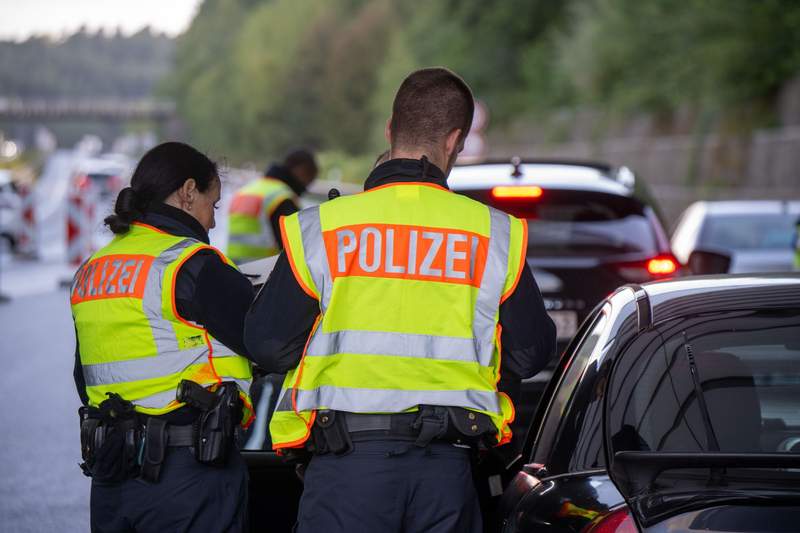
POLICY WIRE — Berlin, Germany — It wasn’t the thunderous collapse of a wall, nor the ceremonial unveiling of new markers, but a prosaic encounter on an anonymous highway that’s now reverberating through the hallowed halls of European integration. A German court, with judicial precision, recently declared unlawful a routine border check on a traveler arriving from Luxembourg, peeling back layers of national sovereignty versus the foundational tenets of the Schengen Area.
And just like that, the invisible lines we’ve come to take for granted within much of Europe are back under the microscope. This isn’t merely a bureaucratic hiccup; it’s a consequential ruling, challenging the often-strained efforts of nations to balance perceived security imperatives with their multilateral commitments. The court, based in Leipzig, essentially affirmed that while German police may conduct checks near the border – within a 30-kilometer zone – these must not amount to the reintroduction of systemic border controls, which is precisely what the Schengen Borders Code prohibits.
For years, Europe’s open internal borders have been a hallmark, allowing citizens and goods to traverse nations without the tedious, often humiliating, stops of yesteryear. But recent crises – from the 2015 refugee influx to the COVID-19 pandemic – saw several member states, including Germany, unilaterally re-establish temporary controls. These moves, while often defended as exceptional and temporary, have fostered a creeping normalisation of what should be extraordinary measures. The court’s judgment here is a potent reminder that such actions aren’t to be taken lightly; they’re subject to stringent legal oversight.
“While we respect the court’s adjudication and the principles of free movement, national security remains paramount,” shot back Anneliese Bauer, a spokesperson for the German Federal Ministry of the Interior, in a statement to Policy Wire. “It’s a delicate balance, one we’re constantly recalibrating against evolving threats, yet without undermining the spirit of Schengen.” But still, the ruling’s clarity suggests the balance had, perhaps, tipped too far.
Behind the headlines, this legal skirmish is about more than just paperwork at the border. It’s about the erosion of trust, the fraying of collective agreements, and the palpable tension between national prerogatives and supranational ideals. The Alpine accountability demanded by courts in one sphere often echoes across others, shaping expectations for adherence to international law.
“The Schengen Area isn’t merely a geographical construct; it’s a foundational pillar of European unity,” declared European Commission Vice-President Věra Jourová, emphasizing the bloc’s stance. “Any erosion, however small, demands scrutiny. Our citizens rely on this freedom, and we’re committed to its preservation.” Her remarks underscore the deep concern in Brussels about the cumulative effect of these seemingly isolated national decisions.
Indeed, the economic stakes are substantial. A 2021 European Parliament report estimated that reinstating full internal border controls could cost the EU economy a staggering €100 billion over a decade. That’s a sum capable of bankrolling significant infrastructure projects or environmental initiatives, not simply absorbing the costs of border queues.
What’s more, this internal European dynamic is keenly observed beyond its borders, particularly in regions like South Asia. Nations such as Pakistan, grappling with their own complex regional alliances, internal security challenges, and the constant flow of people across its borders (especially from Afghanistan), view Europe’s struggle with its own internal boundaries as a fascinating geopolitical mirror. The push and pull between national sovereignty and shared regional frameworks — be it within the EU or SAARC — highlight a universal tension. For the millions of diaspora communities from the Muslim world living and traveling within Europe, any perceived tightening of internal borders can trigger anxieties, regardless of the legality, as it often correlates with increased scrutiny based on appearance or origin.
And it’s a palpable irony, isn’t it? Europe, so often perceived as a fortress with its formidable external border policies aimed at stemming irregular migration from regions like the Middle East and Africa, finds itself grappling with the very notion of ‘border’ internally. It’s a dichotomy that doesn’t escape observers in Islamabad or Cairo. They’re acutely aware of the disparity between the relatively unfettered movement within the EU and the almost insurmountable barriers facing those who seek entry from the outside – an entry often sought via routes through their own territories.
What This Means
At its core, this ruling from Germany’s Federal Administrative Court serves as a stark reaffirmation of Schengen’s legal primacy over expedient national security measures. It’s a legalistic slap on the wrist, reminding member states that internal controls must remain truly exceptional and strictly temporary, not a stealthy return to pre-Schengen realities. Politically, it strengthens the hand of the European Commission in future disputes with member states over border policy, providing judicial precedent for challenging unilateral actions. Economically, maintaining frictionless movement is indispensable for the single market’s efficiency, making this ruling a victory for businesses and everyday commuters alike. Still, it doesn’t eradicate the underlying tensions. As long as national governments face domestic pressure over migration and security – legitimate concerns, it’s true – the temptation to push the boundaries of Schengen regulations will persist. So don’t expect the debate to fade anytime soon; it’s a foundational argument, an endless tug-of-war that defines much of modern Europe.