
Delhi’s Yellow Paradox: Why Trump’s Ghost Haunts the Auto Rickshaw Circuit
POLICY WIRE — New Delhi, India — First, it was the ubiquitous ads for mobile networks and movie stars. Then came the local politicians, their grinning visages promising utopia with each pothole...

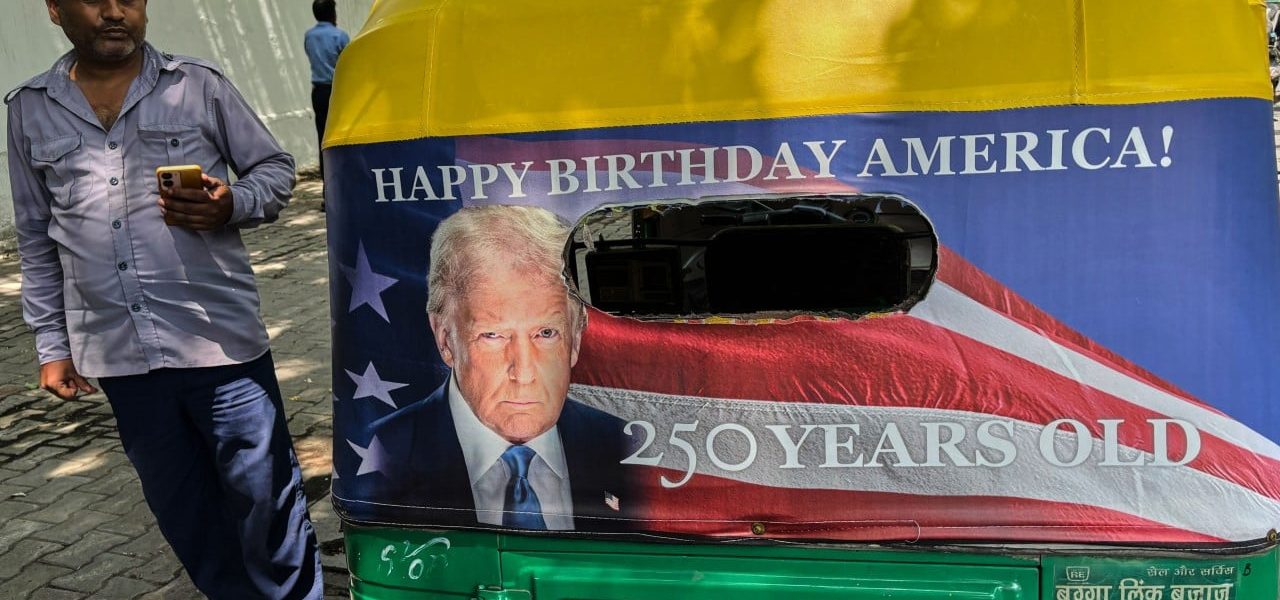
POLICY WIRE — New Delhi, India — First, it was the ubiquitous ads for mobile networks and movie stars. Then came the local politicians, their grinning visages promising utopia with each pothole jolting the three-wheeler. But now? A different kind of shock greets Delhi’s commuters: the unmistakably orange-tinted portrait of former U.S. President Donald Trump, emblazoned across the back of the city’s notoriously aggressive auto rickshaws.
It’s a peculiar sight, isn’t it? One that makes you squint, then wonder if the relentless heat has finally gotten to you. What’s an American president—or, rather, an *ex*-president—doing staring out from a beat-up vehicle just feet from the Red Fort? It isn’t some rogue operator with a peculiar affinity for Mar-a-Lago, either. And it isn’t an isolated incident; approximately 100 autorickshaws have been spotted sporting Trump’s mug, often alongside a rather enthusiastic slogan: “Happy Birthday America!”
Because, as it often turns out in international relations, nothing’s ever truly random. This isn’t just fan art on wheels. It’s a carefully orchestrated, if delightfully unsubtle, display of affection. For whom? The man himself, obviously, but also for what he represents in certain powerful Indian circles: a strong, transactional leader. A leader, mind you, who publicly embraced India’s Prime Minister Narendra Modi with a fervor that stood apart from traditional diplomatic pleasantries. We’re talking ‘Howdy, Modi!’ stadium rallies here. Not exactly low-key.
The messaging, in a geopolitical landscape that’s always shifting—especially around Beijing’s growing assertiveness—is crystal clear. It’s an open embrace, a reaffirmation of a particular brand of Indo-U.S. camaraderie that flourished under Trump’s tenure. Some call it an act of astute, anticipatory diplomacy, considering a potential Republican return to the White House. But others just call it loud. You can’t miss these things.
“India values its relationship with the United States, regardless of who occupies the White House,” stated Arindam Bagchi, spokesperson for India’s Ministry of External Affairs, in a rather detached briefing, not specifically addressing the auto-rickshaw phenomenon but acknowledging the broader bilateral ties. “Our strategic partnership transcends personalities; it’s rooted in shared democratic values — and common interests. These are fundamental truths, really.” He’s got a point. But that doesn’t mean the optics aren’t potent.
For some, this mobile homage makes perfect sense. “President Trump showed America knew how to get things done, and he respected strong leaders,” opined Rajiv Mehta, a Delhi-based business community leader with ties to several Indian diaspora groups in the U.S. “We Indians, we appreciate that directness. He understood India’s needs, not like some others who get all academic. It’s about connections, isn’t it? He made connections.” Mehta’s view reflects a sentiment that finds currency among sections of India’s economic and social elite—a belief that strongmen politics offers tangible benefits.
And those benefits are often measured in dollars. Bilateral trade between the U.S. and India, for instance, nearly doubled between 2017 — and 2022, reaching over $120 billion. That’s a significant leap, reflecting deeply intertwined economies and an evolving geopolitical alliance that both sides clearly don’t want to mess with. Trump, in his own way, presided over a period of growth that appealed to the Indian leadership, even as his protectionist rhetoric sometimes ruffled feathers. They weren’t afraid to push for their interests, but they also recognized opportunity. It’s transactional, yes. But it often works.
What This Means
This autorickshaw spectacle, while visually jarring, speaks volumes about India’s contemporary foreign policy calculus. It’s a calculated wager on future U.S. elections—a sort of diplomatic hedge fund in vehicular form. It signals to Washington, regardless of who wins, that New Delhi isn’t afraid to cultivate personal bonds with leaders, particularly those who demonstrate a no-nonsense approach to international affairs.
But the messages resonate beyond the bilateral. For regional neighbors, especially Pakistan, it’s just another brick in the wall of a perceived Indo-American axis. Each grinning Trump face, each enthusiastic ‘Happy Birthday America!’ plastered on a rickshaw, is seen as further cementing Delhi’s status as a favored partner. It implicitly heightens Islamabad’s strategic anxiety, potentially prompting a re-evaluation of its own external alliances, maybe even nudging them closer to Beijing. This isn’t just about Indian domestic messaging; it’s about signaling across the entire South Asian landscape, saying, ‘Look who’s still in our corner.’ Because, remember, every public display, however mundane its canvas, holds a hidden layer of intent.
Economically, this is about confidence. It suggests that, despite political uncertainties, the economic corridors between the U.S. and India are expected to remain robust. It’s also an acknowledgment that policies affecting India, like visa regimes—which Trump’s administration did indeed tighten—are always top of mind. For those backing the former president, it’s a silent nod that, perhaps, his deal-making style is exactly what India needs for a continued rise.
Ultimately, whether you find it charmingly idiosyncratic or slightly alarming, these Trump-themed autorickshaws aren’t just random acts of roadside adoration. They’re political theater. Mobile manifestos. A peculiar blend of street-level tribute and high-stakes diplomacy, rattling through the noisy arteries of a nation acutely aware of its place in the world. And honestly? They just don’t make for boring commutes.