


Fictions and Fears: The Festering Lie Around an MP’s ‘Murder’
POLICY WIRE — London, UK — Forget for a moment the facts. Because a lie, deftly engineered and broadcast into the echo chambers of the internet, can gain far more traction than a sober truth. This...

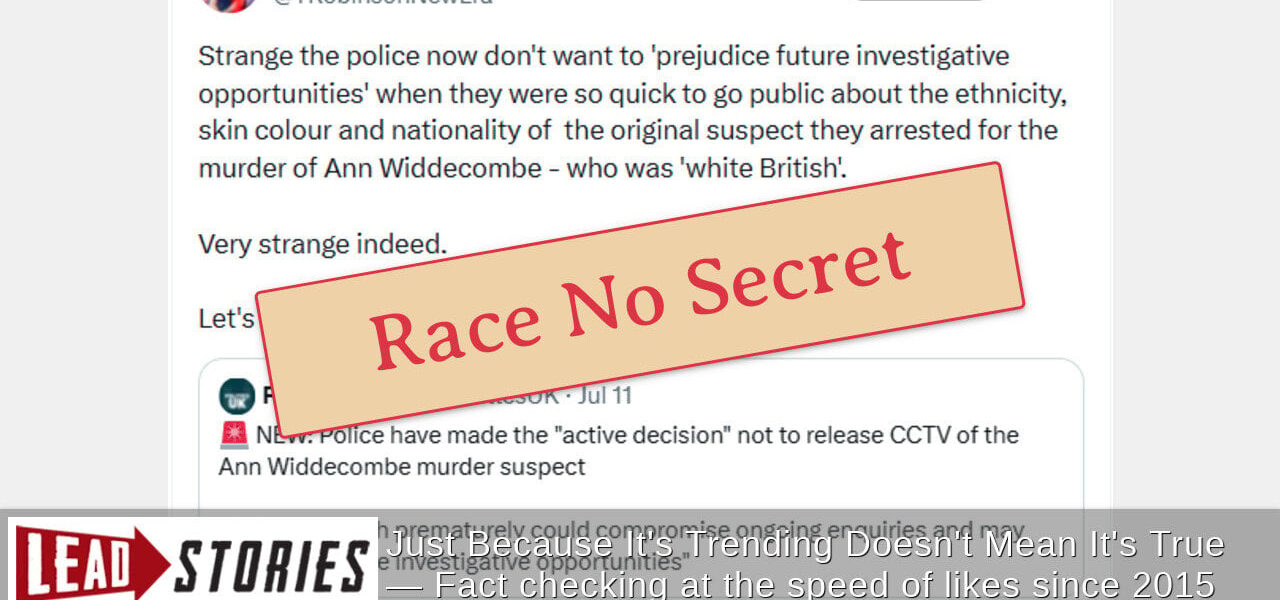
POLICY WIRE — London, UK — Forget for a moment the facts. Because a lie, deftly engineered and broadcast into the echo chambers of the internet, can gain far more traction than a sober truth. This particular fabrication didn’t just walk; it sprinted, an ugly rumour alleging that British police were deliberately concealing the ethnicity of a suspect in the fictional murder of former MP Ann Widdecombe. It’s a classic digital ghost story, perfectly tailored to exploit pre-existing anxieties about official transparency and identity politics in a hyper-polarized Britain.
No, Ann Widdecombe hasn’t been murdered. And, no, police haven’t withheld CCTV footage of a suspect for this non-existent crime. The narrative, however, was as compelling as it was cynical: law enforcement, so the story went, was bending to politically correct diktats, sacrificing justice to avoid upsetting delicate racial sensitivities. The entire episode serves as a rather stark illustration of how easily a nation already navigating a minefield of cultural tensions can be pushed further into division by phantom conspiracies.
It began as a ripple, a snippet of online chatter that quickly mutated into a tidal wave of outrage, dominating feeds and comment sections. But for all the fervor, the source material was non-existent. A British National Crime Agency spokesperson, speaking on background about the persistent challenge of online disinformation (and not specifically about this fake Widdecombe incident, because, well, it’s fake), described the operational tightrope: “We make decisions about evidence release based on maintaining the integrity of an investigation and protecting potential victims, not public speculation or political optics. Any assertion to the contrary often serves a different agenda altogether.” Their words are often drowned out, though, aren’t they?
And that’s the real tragedy. It’s not just about a fictional murder, is it? It’s about the eroding trust in institutions, especially law enforcement, precisely when it’s most needed. One conservative lawmaker, known for her staunch views on law — and order, offered a sharp, almost weary assessment. “The constant invention of conspiracies,” she quipped, “suggests some people would prefer a world without evidence, where rumour reigns supreme and facts are merely inconvenient obstacles to a good tirade.” She didn’t mince words, naturally. You’d expect that, wouldn’t you? That kind of frustration isn’t uncommon when dealing with the sheer tenacity of online fictions.
Consider the broader canvas of Britain. The Pakistani and other South Asian communities— integral parts of the national fabric for generations — often find themselves unwittingly drawn into these fabricated debates. Stories like these, however baseless, stoke suspicion — and otherize, making daily life harder for countless families. It’s an insidious byproduct of the disinformation age: when an internet rumour can casually ignite real-world prejudice. A recent report from the UK’s Home Office noted a nearly 11% increase in recorded hate crimes linked to race or religion in England and Wales in 2023, compared to the previous year. That’s a stark figure, telling us much about the raw nerves that online provocateurs continue to hit.
📄 POLICY WIRE WHITEPAPER PUBLISHED: PAKISTAN'S NATIONAL SECURITY POLICY PRIORITIES
👉 READ BY CLICKING HEREThe machinery behind such disinformation campaigns isn’t always sophisticated; sometimes, it’s just pure, unadulterated cynicism, a willingness to play on the cheapest seats in the house. But its effect on public discourse, on what constitutes “truth” for many, is undeniable. We’re witnessing a systematic chipping away at consensus, replaced by fragmented, often fantastical, narratives.
What This Means
The case of the phantom Widdecombe suspect isn’t just a bizarre footnote; it’s a policy bellwether, a clear signal of the UK’s deepening susceptibility to information warfare – whether it’s foreign actors or domestic opportunists pushing these buttons. Politically, such incidents corrode public faith in the state’s ability to deliver justice fairly. If large swathes of the population believe police operate with hidden racial agendas, then policing becomes an impossible tightrope walk, each decision scrutinized through a prism of manufactured bias. Economically, this erosion of trust isn’t benign. It deters foreign investment from countries that value stability and predictable legal systems, and it diverts critical public resources into correcting fictional grievances instead of addressing actual ones. Think of the hours spent fact-checking, debating, or managing the fallout from a story that never even existed!
It feeds into a dangerous loop: outrage, reaction, then further entrenched division. Policymakers, already grappling with genuine immigration debates and social cohesion challenges, find themselves battling ghosts rather than tangible issues. And because the source of these narratives is often opaque, the mechanisms to counter them are clumsy at best. We’re in a period where the integrity of information itself is under unprecedented assault, creating a political environment less focused on tangible policy achievements and more on constant defence against fictional scandals. It isn’t sustainable, is it? Not for a robust democracy, anyway. The challenge for Britain, and indeed for most Western democracies, isn’t just to fact-check the latest absurdity, but to understand and inoculate the public against the insidious methodology behind it all.