


Mexico’s State-Backed Electric Car: A Global South Gambit or Market Mirage?
POLICY WIRE — Mexico City, Mexico — A quietly momentous unveiling south of the border is giving some of the world’s established auto titans (and even nascent EV players) cause for reflection,...

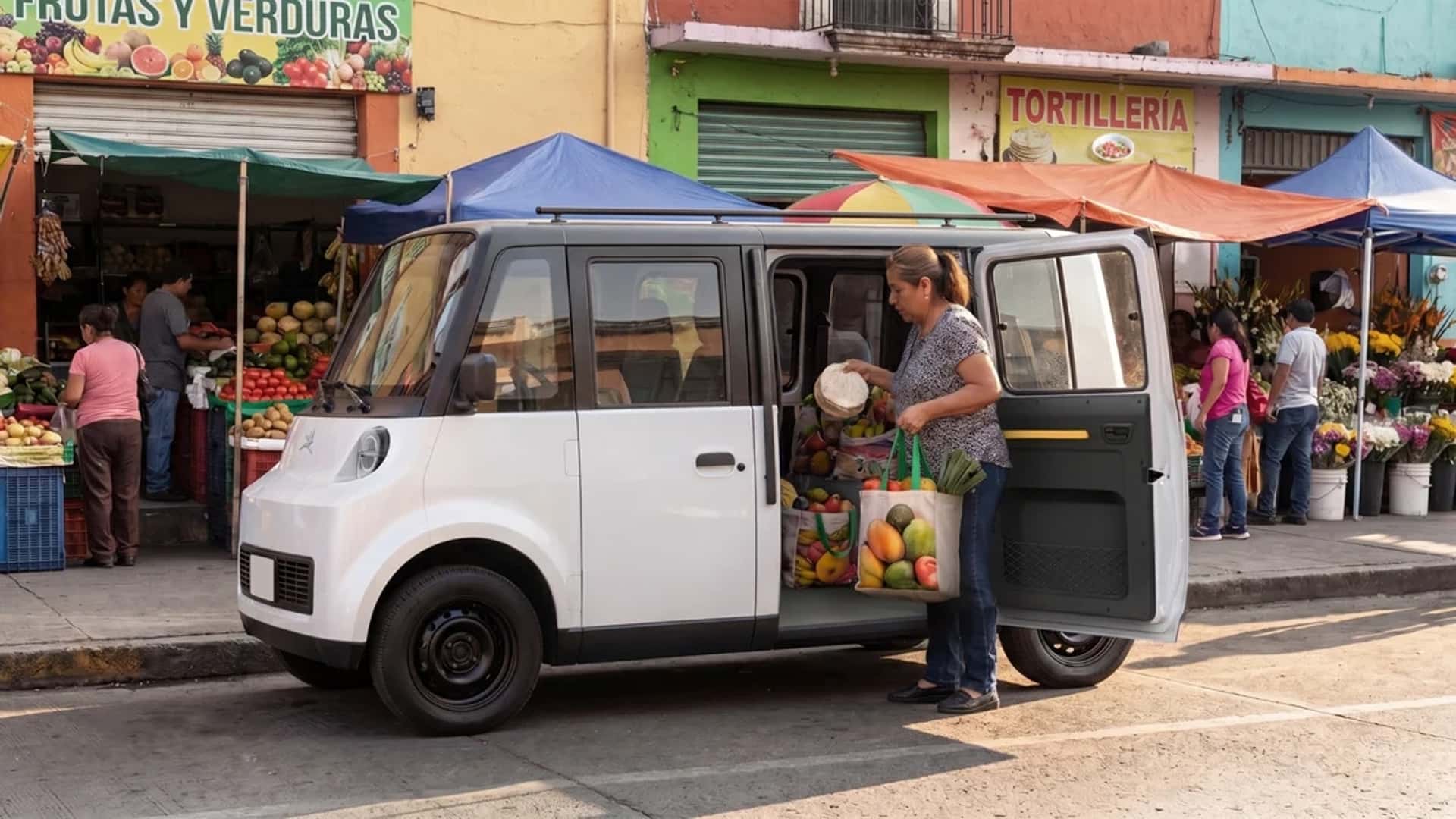
POLICY WIRE — Mexico City, Mexico — A quietly momentous unveiling south of the border is giving some of the world’s established auto titans (and even nascent EV players) cause for reflection, if not outright concern. While much of the industrial globe fixates on autonomous taxis and luxury electric crossovers, Mexico has taken a rather different route. It’s rolled out something entirely unexpected: a utilitarian, state-backed electric vehicle—a workhorse of a machine designed not for speed records or Silicon Valley showrooms, but for the gritty realities of everyday life.
This isn’t about gleaming showrooms or charging networks as advanced as our mobile phones. Oh no. We’re talking about a six-seater, battery-powered contraption—built with, shall we say, a certain fiscal prudence—that reportedly lands at an astonishing price point of $8,600. And it’s not a private enterprise simply enjoying government perks; it’s explicitly labeled as a state-backed EV. This isn’t just news for Guadalajara, you see; it’s a loud declaration about how the developing world might just drive itself into the future. [QUOTE_PLACEHOLDER]
Because let’s face it, the world’s most populous nations aren’t waiting for Tesla’s next model. They’re struggling with choking pollution, fuel import bills, and a public transport infrastructure that’s often stretched thin. This Mexican gambit — call it national industrial policy for the electric age — sidesteps the glitz to tackle practicality head-on. But that very state backing, while enabling the eye-popping price, also throws up immediate questions about fair competition, trade implications, and the delicate balance between public and private innovation.
For nations like Pakistan, for instance, which grapples daily with an escalating fuel crisis and the sheer scale of urban sprawl (consider Lahore’s estimated 13 million residents), such an offering isn’t just interesting. It’s potentially game-changing. Could a $8,600 EV, capable of seating six (a family size more common than in the West), reshape personal and commercial transport in megacities from Karachi to Dhaka? Don’t scoff, because it’s a vision many governments in the Global South quietly harbor—a genuine answer to transport woes that doesn’t involve billion-dollar subway projects or carbon-spewing fossil fuels. But here’s the catch: the infrastructure has to keep pace. You can have the cheapest EV in the world, but if it can’t charge, it’s just a very heavy, expensive paperweight.
The strategic implication here stretches far beyond simply cheap transport. For years, Western powers and now China have dominated auto manufacturing, dictating technological trajectories and market prices. This move by Mexico, while not explicitly confrontational, does represent an assertion of sovereign industrial policy, one focused squarely on domestic needs rather than export markets—at least for now. But could Mexico’s approach inspire similar initiatives across South Asia or the broader Muslim world? Perhaps, but it wouldn’t be easy. Most nations in those regions face considerable hurdles in domestic manufacturing capacity, supply chain resilience, and research & development infrastructure—the very elements necessary to develop and sustain such a venture without becoming reliant on foreign technology or parts.
And what about that price tag? It’s so low it almost defies belief, given typical battery costs. That sort of price points towards a few things: heavy government subsidies (which it has), streamlined, perhaps even austere, design (certainly plausible), and likely local sourcing of components to minimize import duties and logistics costs. Or perhaps, something simpler. Think about the humble rickshaw, often a cornerstone of South Asian transport. This EV could very well be the motorized rickshaw’s modern, sustainable cousin, upgraded for a new century but retaining its focus on low cost and passenger volume.
But of course, we must ask: At what quality? How many compromises does an 8,600-dollar car entail? History is replete with state-backed projects that prioritized accessibility over reliability, utility over durability. Time, — and countless kilometers of bumpy Mexican roads, will undoubtedly tell that story. As one recent analysis from BloombergNEF noted, the average global EV price tag, while falling, still stood at roughly $42,000 in 2023. Mexico’s proposal isn’t just disruptive; it’s practically extraterrestrial compared to that.
What This Means
This state-backed Mexican EV is less about disrupting global luxury auto markets and far more about igniting a paradigm shift in industrial policy across the developing world. Its implications are broad, reflecting a global trend where governments, stung by supply chain disruptions and geopolitical shifts, are increasingly wading into manufacturing. For Mexico, it’s a bold play to address urban congestion — and pollution while asserting economic sovereignty.
Economically, if successful — and scalable, such models could fundamentally alter vehicle ownership demographics. It’s a potential leapfrog technology for populations unable to afford conventional EVs, fostering economic inclusion and potentially catalyzing an entirely new sub-sector of automotive manufacturing geared towards extreme affordability. But this also begs tough questions about market distortions. If the state continually underwrites losses or heavily subsidizes production, what happens to private ventures? Where’s the innovation incentive when the government is always there to undercut your price?
Politically, it could inspire other emerging economies—especially those in South Asia and parts of the Muslim world—to pursue similar ventures, seeking energy independence and reduced trade deficits. It’s a move that subtly challenges the dominance of traditional automotive giants and their export-centric models, fostering a more multipolar manufacturing landscape. Yet, it’s a risky path, too; success hinges on effective governance, sustained public investment, and the ability to sidestep the pitfalls of state-managed enterprises—corruption, inefficiency, and stagnation. But for many nations grappling with immense climate and economic pressures, a $8,600 EV might just be a wager worth taking. It’s cheap, it’s green (at the point of use, anyway), — and it comes straight from the people’s coffers. How often do you see all three in the same package?