
Lebanon’s Perpetual Brink: Border Exchanges Hint at a Wider, Unsettling Regional Choreography
POLICY WIRE — Beirut, Lebanon — There’s a peculiar, almost theatrical rhythm to the skirmishes along Lebanon’s southern frontier, a dangerous dance understood by everyone except, perhaps,...

POLICY WIRE — Beirut, Lebanon — There’s a peculiar, almost theatrical rhythm to the skirmishes along Lebanon’s southern frontier, a dangerous dance understood by everyone except, perhaps, those caught in its lethal tempo. It’s not just the thud of artillery or the whistle of rockets that punctuates the quiet, but the chilling familiarity of the cycle: provocation, retaliation, and then a nervous, temporary lull. This week, the rhythm accelerated.
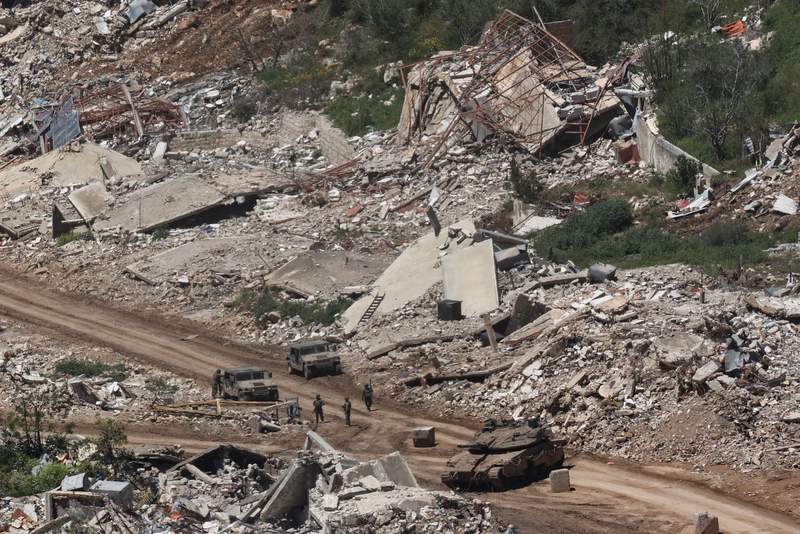
Israeli forces, in what they described as a proportionate response, launched a series of strikes deep into south Lebanon, targeting alleged Hezbollah infrastructure. This wasn’t an isolated incident; it came after Hezbollah had reportedly dispatched several drones and anti-tank guided missiles towards Israeli military positions and civilian areas across the Blue Line, Israel’s de facto northern border. And so, the precarious equilibrium, maintained through decades of uneasy truce, teeters once more. It’s a situation that has many observers — — and residents — holding their breath.
The Israeli military stated its targets included observation posts, rocket launchers, — and command centers. “We don’t seek escalation, but we won’t hesitate to defend our citizens and sovereignty,” shot back Rear Admiral Daniel Hagari, spokesperson for the Israel Defense Forces, in a terse televised address. “Hezbollah’s provocations will meet with a firm hand.” His words, though familiar, now carry the weight of a regional conflict that feels perpetually on the verge of metastasizing.
Meanwhile, in Lebanon, the narrative couldn’t be more different. Hassan Nasrallah, the enigmatic leader of Hezbollah, rarely seen outside carefully managed video addresses, delivered his own broadside. While not directly addressing the immediate exchanges, his recent rhetoric has consistently framed the conflict as a necessary defense against Israeli aggression, often tying it to the broader Palestinian struggle. “Our resistance is our shield, our dignity,” Nasrallah declared in a speech broadcast across the region. “We won’t abandon our land, nor our people, nor our sacred duty.” Such pronouncements, it’s fair to say, leave little room for diplomatic maneuver.
But this isn’t just about rockets — and rhetoric. Behind the headlines, there’s a profound human cost. According to the United Nations Office for the Coordination of Humanitarian Affairs (OCHA), over 90,000 Lebanese residents have been displaced from the southern border region since October, fleeing the relentless exchanges. These aren’t just statistics; they’re families uprooted, lives disrupted, an economy already in freefall pushed further towards utter collapse. The infrastructure losses, the agricultural devastation — it’s all compounding an already dire situation.
Still, the geopolitical chess game continues, with Lebanon as its reluctant board. Hezbollah, heavily backed by Iran, plays a pivotal role in Tehran’s regional strategy, a crucial piece in its so-called ‘Axis of Resistance’. This proxy dynamic inevitably draws in other regional players, their diplomatic efforts — or lack thereof — shaping the fate of millions. Nations like Pakistan, often caught in the crosscurrents of Middle Eastern politics, watch with growing apprehension. For a country grappling with its own economic fragility and striving for regional stability, the prospect of a wider conflict represents a profound challenge to its diplomatic calculus. It’s a delicate balancing act for Islamabad, attempting to navigate solidarity with fellow Muslim nations while preserving its own strategic interests. You see, the reverberations of this conflict don’t stop at the Lebanese border; they ripple across continents, affecting everything from oil prices to humanitarian aid flows — even the price of wheat in Karachi.
📄 POLICY WIRE WHITEPAPER PUBLISHED: PAKISTAN'S NATIONAL SECURITY POLICY PRIORITIES
👉 READ BY CLICKING HEREAt its core, the current flare-up isn’t an anomaly; it’s a symptom. It’s an indicator of the enduring fragility of a region where historical grievances and modern power plays intertwine with terrifying regularity. And it’s an urgent reminder that what happens on a stretch of land barely the size of Connecticut has the potential to ignite a much larger conflagration.
What This Means
The latest uptick in Israeli-Hezbollah exchanges paints a stark picture of escalating risk, both for Lebanon and the wider Middle East. Politically, it further destabilizes an already fractured Lebanese government, eroding any remaining trust in its ability to protect its citizens or assert full sovereignty. This strengthens Hezbollah’s narrative as the sole protector of Lebanese interests against external threats, effectively cementing its paramilitary state-within-a-state status — a perennial problem for Beirut.
Economically, the impact is devastating. The continued displacement, the destruction of infrastructure, and the paralysis of economic activity in the south exacerbate Lebanon’s deep-seated financial crisis. Foreign investment, already scarce, will evaporate completely in a conflict zone, pushing more people into poverty and fueling emigration. Regional trade routes are also at risk, with potential disruptions cascading through supply chains across the Levant.
the heightened tension significantly raises the specter of a full-scale war, a scenario neither side overtly desires but which each seems to be incrementally sliding towards. A major conflict would inevitably draw in other actors — Iran, Syria, and potentially even Western powers — leading to a catastrophic regional entanglement. It’s an unnerving thought, isn’t it? The international community’s current strategy of containment feels increasingly inadequate against the backdrop of such persistent, dangerous brinkmanship. The question isn’t if the next miscalculation will happen, but when — — and what that ‘when’ will cost.