
Ducati’s 2026 Hypermotard V2 SP: A Policy Paradox on Two Wheels
POLICY WIRE — Bologna, Italy — Few machines, frankly, manage to concentrate unbridled élan into such a gleaming, desirable package as the latest iteration from Borgo Panigale — that hallowed ground...

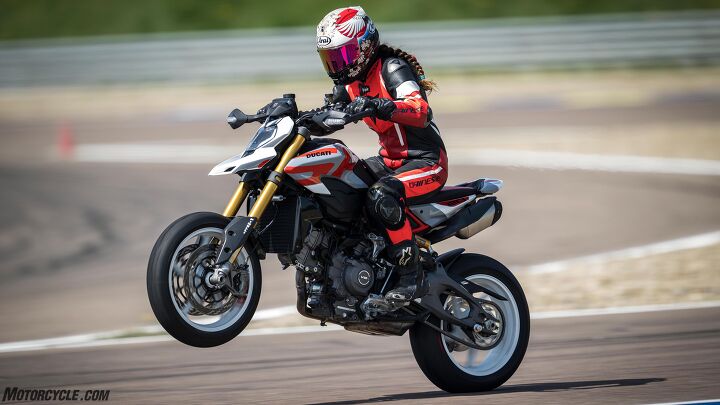
POLICY WIRE — Bologna, Italy — Few machines, frankly, manage to concentrate unbridled élan into such a gleaming, desirable package as the latest iteration from Borgo Panigale — that hallowed ground where two-wheeled dreams are forged with fire and passion, incidentally. For 2026, Ducati unleashes the Hypermotard V2 SP, a motorcycle that, on its surface, vows a heady elixir of adrenaline and surgical precision, yet beneath its sleek fairings and advanced electronics, presents an enticing quandary for policy wonks, city architects, and luxury market mavens alike.
And yet, this isn’t just another performance bike roaring off the assembly line. It represents a sly pivot in consumer expectation, a blend of cutting-edge technology and audacious design that steadily demarcates the premium segment.
At its core, the Hypermotard V2 SP isn’t merely a conduit for getting from point A to point B. It’s about the journey itself, the statement it makes, — and the niche it carves in an ever-evolving global economy. The ride, for those who’ve experienced it, is a symphony of responsive power and agile handling, a testament to Ducati‘s unyielding quest for perfection.
But does such unadulterated performance, this gleaming mechanical apex predator, truly fit neatly into the coming epoch of quiet urban mobility and draconian environmental mandates? Doesn’t it just clash with the whole vibe? That’s a question nagging the craniums of legions in Brussels — and well beyond.
“It’s not merely about horsepower; it’s about the visceral connection, the heritage, and the statement it makes about individual freedom in an increasingly regulated world,” mused Giovanni Castiglione, head of the European Luxury Motoring Council, during a recent industry summit. “These machines are cultural touchstones, not just commodities.”
Still, the market for such high-end two-wheelers maintains its meteoric ascent. Market analytics firm Delphi Automotive Insights noted that the global premium motorcycle segment it’s grown by an average of 6.8% annually over the last five years, largely fueled by emerging economies. This sustained growth, an inconvenient truth for some (not mentioning names, but you know who you are), upends received sagacity about declining internal combustion engine sales.
In places like Pakistan, a country often associated with more utilitarian transport, the aspiration for luxury brands like Ducati is insidiously burgeoning. A burgeoning affluent class in cities like Lahore and Karachi sees these bikes not just as vehicles, but as symbols of success and global connectivity. They’re making a statement, a bold one indeed (and isn’t that just human nature, to want to stand out?), perhaps even orchestrating a cultural redefinition.
Behind the headlines of geopolitical shifts and economic reforms, this growing appetite for premium European goods is recalibrating mercantile predilections across the subcontinent. It’s a dynamic, rather conveniently, often overlooked by Western observers — a shame, really, as it illuminates so much.
For policymakers — those earnest souls tasked with charting society’s course, often navigating treacherous shoals of public opinion and fiscal restraint — the ascendancy of such potent, frequently raucous, machines presents a peculiar Gordian knot. How, one truly wonders, do you balance individual freedom and economic growth, which these luxury goods represent, with increasingly stringent noise pollution and emissions regulations? It’s a tightrope walk, to say the least.
“While the engineering marvels of these machines are undeniable, we’re constantly evaluating how high-performance vehicles integrate into future urban infrastructure and environmental goals,” remarked Dr. Anya Sharma, a senior analyst at the Global Transportation Policy Institute. “It’s a balance we haven’t quite mastered, and it has significant implications for urban planning in densely populated areas.”
📖 THE POLICY DIGEST MAGAZINE: OCTOBER 2026 EDITION NOW LIVEExclusive Battle Damage Assessment by Sarah Adams, US-Iran Diplomatic Talks & Transnational Investigations👉 READ BY CLICKING HERE
The Hypermotard V2 SP with its 110 horsepower engine and relatively light 436-pound wet weight isn’t designed for quiet contemplation. Built for aggressive street riding. Track days. Fast. A resolutely tactile experience in an increasingly digital world, it’s.
Could its very existence signal a pushback against the homogenizing forces of electrification — and autonomous vehicles? A palpable likelihood, that.
What This Means
The 2026 Ducati Hypermotard V2 SP isn’t just about a thrilling ride; it’s a social seismograph, quivering to the tremors of several interconnected global trends. Economically, its continued demand buttresses the mettle and expansion of the luxury consumer market, especially in developing nations eager to display new wealth. This creates new trade flows — and opportunities, but also latent societal abrasions as visible consumption grows.
Politically, the existence of such a machine, alongside the broader trend of high-performance vehicles, reignites debates around urban design, noise ordinances, and the future of fossil fuel-powered transport. Governments must wrestle with squaring industrial innovation and personal liberty against public health and environmental concerns. Diplomatic implications also arise, as brands like Ducati become stylistic emissaries, projecting European design and engineering prowess into diverse markets, sometimes challenging local manufacturing ambitions.
And that matters. Seriously. The consumer choices made in far-flung metropolises — say, Karachi or Kuala Lumpur, bustling hubs where old traditions meet surging modernity — concerning these luxury totems can unfurl concentric repercussions that reach far beyond the simple act of purchase, nudging everything from infrastructure blueprints to labyrinthine international trade accords.
Related: Strategic Fuel Fleet Sale Reshapes Indian Ocean Energy Dynamics
Ultimately, the persistent fascination with machines like the Hypermotard V2 SP intimates that even amidst an accelerating global push towards sustainable and anodyne locomotion, the human desire for excitement, craftsmanship, and raw, unadulterated performance isn’t going anywhere. “Brands that can blend heritage with cutting-edge, while offering an unmatched emotional experience, will continue to command premium prices and zealous adherents for decades to come, irrespective of broader industry shifts,” posits Eleanor Vance, an independent automotive market strategist. The math is stark: fervor, it would seem, persists as a potent economic propellant.