


The Great Pivot: China’s Auto Giants Seek Solace Beyond the Assembly Line
POLICY WIRE — Beijing, China — It isn’t the gleaming electric vehicles, nor the relentless pursuit of autonomous driving, that truly defines the current epoch for China’s colossal...

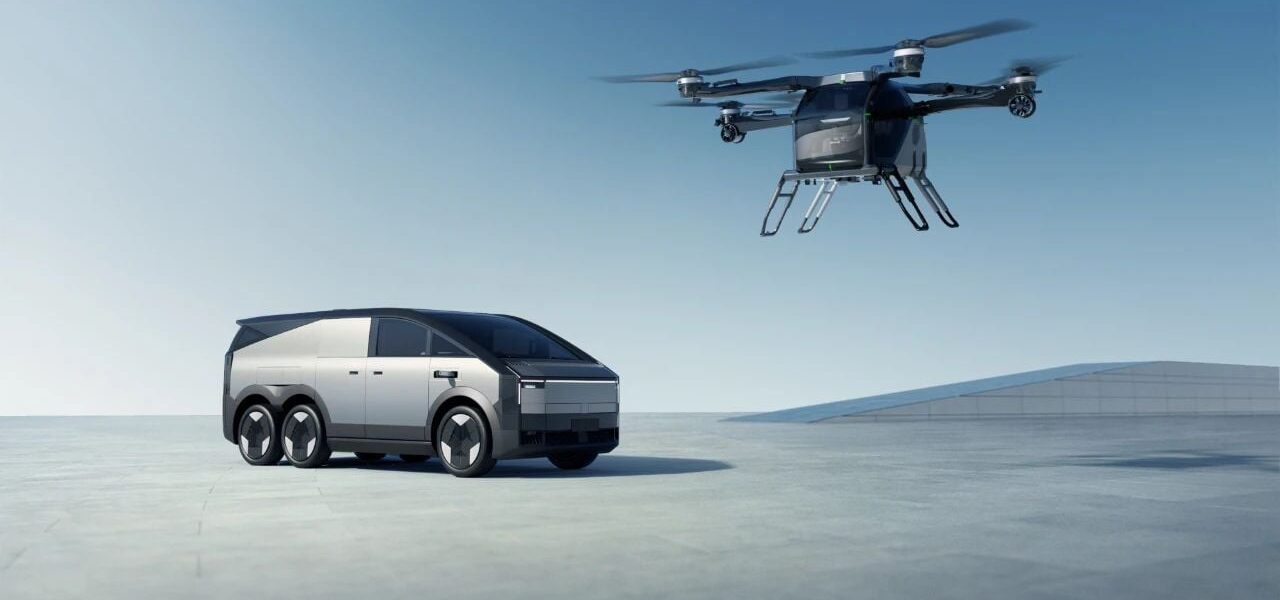
POLICY WIRE — Beijing, China — It isn’t the gleaming electric vehicles, nor the relentless pursuit of autonomous driving, that truly defines the current epoch for China’s colossal automotive industry. No, the subtle, often overlooked transformation lies in the burgeoning ‘side hustles’—the unexpected detours into robotics, aerospace components, and industrial AI—that are becoming less of a novelty and more of a lifeline for the nation’s car-making behemoths.
The visible narrative, one of relentless growth and technological leapfrogging, often overshadows a gnawing reality: profitability margins are thinning. Fierce domestic competition, a glut of manufacturers, and a consumer base increasingly spoiled for choice have pushed even the most established players into uncharted industrial territories. Suddenly, the assembly lines once dedicated solely to sedans and SUVs are also churning out high-precision gears for wind turbines or sophisticated battery management systems for energy grids. It’s a sophisticated rebranding of existential necessity, isn’t it?
And it’s a telling sign when companies famed for putting wheels on the road are now heavily invested in keeping planes in the air, or automating factories entirely removed from traditional car production. This isn’t just about leveraging existing manufacturing expertise; it’s about hedging bets against a market that, for all its scale, can be brutally unforgiving. China’s passenger vehicle market, despite its vastness, witnessed a significant slowdown, with growth rates plummeting from double digits in prior years to a mere 1.2% in 2023, according to data from the China Association of Automobile Manufacturers (CAAM).
“This strategic diversification isn’t a sign of weakness; it’s a testament to our industrial foresight and our commitment to synergistic innovation,” shot back Madam Ling Wei, a senior economist at the Ministry of Industry and Information Technology, when pressed on the underlying pressures. “Our companies are simply leveraging their considerable engineering prowess to contribute to the broader national strategy of advanced manufacturing. We’re building resilience, not just cars.” Her measured tone belied the frantic scramble some corporations are undoubtedly enduring.
But analysts abroad paint a less sanguine picture. “While Beijing frames it as strategic expansion, it’s undeniably born from overcapacity and intensifying price wars within the automotive sector,” observed Dr. Julian Vance, an automotive industry analyst with London-based Stratagem Insights. “They’re trying to find new revenue streams—any revenue streams—before the domestic market eats itself. It’s an arms race of diversification, where the true winners are yet to emerge.” So, the race isn’t just for the roads; it’s for entirely different markets, a stark departure from past singular focus.
Behind the headlines of record EV sales and ambitious export targets lies a more granular story of companies like BYD venturing deeply into battery and semiconductor production, not just for their own vehicles but for external clients. Geely, meanwhile, has its fingers in aerospace, while others are developing industrial robots, smart city solutions, or even agricultural machinery. This isn’t merely an internal shuffle; it’s also a subtle recalibration of China’s global industrial footprint. Nations across the Belt — and Road Initiative, from Pakistan to Egypt, are already seeing the trickle-down effect.
📄 POLICY WIRE WHITEPAPER PUBLISHED: PAKISTAN'S NATIONAL SECURITY POLICY PRIORITIES
👉 READ BY CLICKING HEREConsider the energy sector, for instance. Chinese automakers’ expertise in battery technology—initially developed for electric vehicles—is now being aggressively marketed for large-scale energy storage solutions. This pivot could prove consequential for countries like Pakistan, which battles chronic energy deficits. Imagine a future where Chinese automotive firms aren’t just selling cars there, but also comprehensive energy infrastructure, effectively leveraging their ‘side hustle’ into a pivotal economic partnership. (It’s a long game, after all.) This intertwining of automotive R&D with broader industrial applications isn’t confined to local consumption; it’s a blueprint for global market penetration, offering bundled solutions that are hard for smaller, less diversified firms to match. And it’s a clever way to keep the cash flow going, wouldn’t you say?
The parallels aren’t lost on keen observers of economic distress. Just as elite football clubs scramble for distressed assets to stay competitive, these industrial giants are acquiring or developing new capabilities to ensure their long-term viability. The push for self-sufficiency in critical components, particularly those vital for battery supply chains—a domain where even Israel’s Iron Beam faces unexpected battery shortages—is another driving force behind this frenetic diversification.
What This Means
This widespread industrial pivot within China’s automotive sector carries profound political — and economic implications. Politically, it solidifies Beijing’s command-and-control industrial policy, demonstrating the state’s capacity to steer massive private (and quasi-private) enterprises towards national strategic goals, even when those goals diverge from immediate market profitability. It’s about building a robust, self-reliant industrial ecosystem less susceptible to external shocks, a key tenet of President Xi Jinping’s economic vision. Economically, this aggressive diversification could lead to significant global market disruption. As Chinese auto firms enter new sectors with state backing and vast manufacturing capacity, they’re likely to bring intense price competition, potentially displacing established players worldwide. it creates a new layer of complexity for international trade relations, blurring the lines between traditional industries and potentially escalating trade tensions beyond mere automobile tariffs. For developing nations, particularly within the Belt and Road ambit, it presents both an opportunity for advanced technological transfer and a risk of deeper economic dependency.