


Kyiv’s Shadow War on Crude: Zelensky Hails Economic Blows as Kremlin Downplays Impact
POLICY WIRE — London, UK — While the world’s gaze fixates on the grinding, territorial clashes in eastern Ukraine, a different kind of front has quietly opened, gnawing at Russia’s...

POLICY WIRE — London, UK — While the world’s gaze fixates on the grinding, territorial clashes in eastern Ukraine, a different kind of front has quietly opened, gnawing at Russia’s economic lifeline. This isn’t about boots on the ground or artillery barrages; it’s a shadow war fought with drones targeting the very infrastructure that fuels the Kremlin’s ambitions.
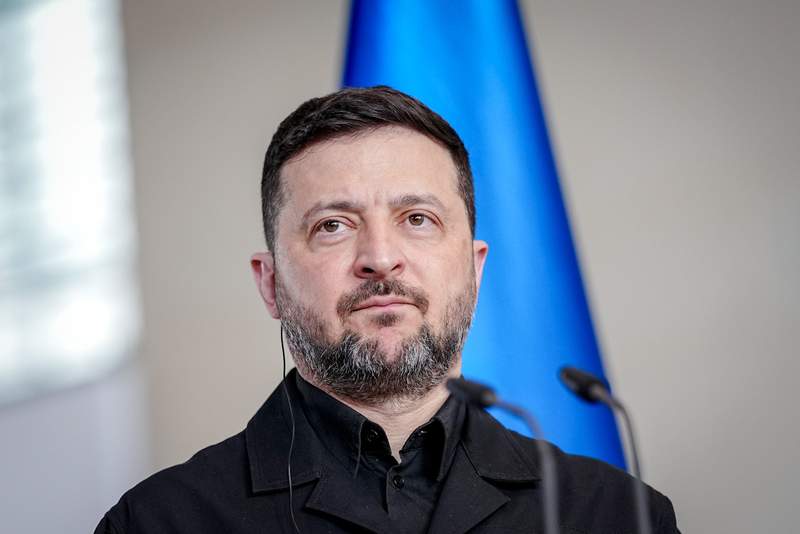
President Volodymyr Zelensky recently made it plain: Ukraine’s sustained bombardment of Russian oil facilities isn’t just about making noise—it’s having a tangible effect. He told international partners that these long-range strikes are, in fact, whittling down Russia’s war chest, creating a direct hit on their revenue streams. You can bet that sentiment raised some eyebrows in the gilded halls of European capitals, who, until recently, had urged restraint.
“We’re responding, quite logically, to the continuous aggression,” Zelensky stated with his usual resolve. “Our defense forces are now demonstrating what they can achieve to force Russia into a just peace. It’s not just about defending our land; it’s about draining the poison from their pockets.” His remarks, delivered to a security conference, pulled back the curtain a little on Kyiv’s often-opaque strategic thinking regarding these sorts of actions. And, it really wasn’t the kind of sentiment you’d hear from a leader worried about international repercussions for targeting critical infrastructure.
But Moscow, predictable as ever, continues its usual choreography of denial. Kremlin spokesperson Dmitry Peskov, when pressed on the effectiveness of Ukrainian attacks, merely shrugged off the notion of significant damage. “These are sporadic, terroristic acts, nothing more,” Peskov offered in a thinly veiled dismissal last week. “Russia’s energy complex continues to operate robustly. Their desperation won’t shake our resolve.” You’d almost believe him if the satellite imagery and global market indicators weren’t telling a different story, wouldn’t you? It’s classic Moscow—just don’t see what you don’t want to.
The truth, however, likely resides somewhere between Ukraine’s celebratory pronouncements and Russia’s steadfast refusal to acknowledge weakness. Western intelligence sources, often more circumspect, suggest these strikes are certainly inconvenient, at minimum. One sudden strike can cause weeks or even months of disruption. Reports indicate that at least 10% of Russia’s oil refining capacity was taken offline by these attacks as of March 2024, according to analyses widely cited by news agencies like Reuters. That’s not a trifling number for an economy utterly dependent on petrodollars. They’re feeling the pinch.
Because, for every refinery unable to churn out refined products, Russia either sells less or is forced to find workarounds, often at greater cost. This isn’t crippling their entire war effort overnight, of course. Nobody’s suggesting that. But it’s a slow bleed, an attrition from a distance. And every dollar that doesn’t flow into the state coffers from oil exports means less for tanks, less for missiles, and less for soldiers’ pay.
For nations far removed from the direct conflict, say Pakistan or Indonesia, this kinetic dance in the Black Sea region carries its own specific implications. These countries are constantly juggling their energy needs, often relying on global markets that are exceptionally sensitive to any tremor in a major producer like Russia. An unstable Russian supply, even one subtly compromised by drone strikes, pushes global prices. That means tougher decisions for governments trying to manage soaring inflation — and domestic energy demand. It’s a delicate geopolitical balancing act, isn’t it? Pakistan, particularly, has been trying to diversify its energy sources, navigating complex relationships with both Western powers and Russia. Any volatility impacts its efforts to secure affordable energy for its vast population, often caught in Gaza’s fractured grip of global supply and demand.
What This Means
The long-term economic reverberations of these attacks are complex. Politically, Ukraine is making a calculated bet: inflict enough economic pain and, perhaps, compel a shift in Russia’s military calculus. It’s a high-stakes strategy, pushing boundaries with allies who fear escalation, but also demonstrating Ukraine’s expanding capacity to strike at Russia’s soft underbelly. Economically, even if temporary, each hit to a refinery forces Russia to reassess supply chains, divert resources for repairs, and potentially lose out on the more profitable refined products. It chips away at their ability to bypass sanctions. For global markets, it means a baseline level of uncertainty around energy supply, translating into higher prices that disproportionately affect developing nations with already strained budgets. It complicates things, certainly. It’s a war waged in the dark, but its effects cast long shadows indeed.