


Nile’s Echoes: Ancient Egypt’s Peculiarities Offer Stark Modern Governance Lessons
POLICY WIRE — Cairo, Egypt — For all the shimmering grandeur of their pyramids and the stark mystery of their mummies, ancient Egyptians—turns out—were less alien and far more bewilderingly human...

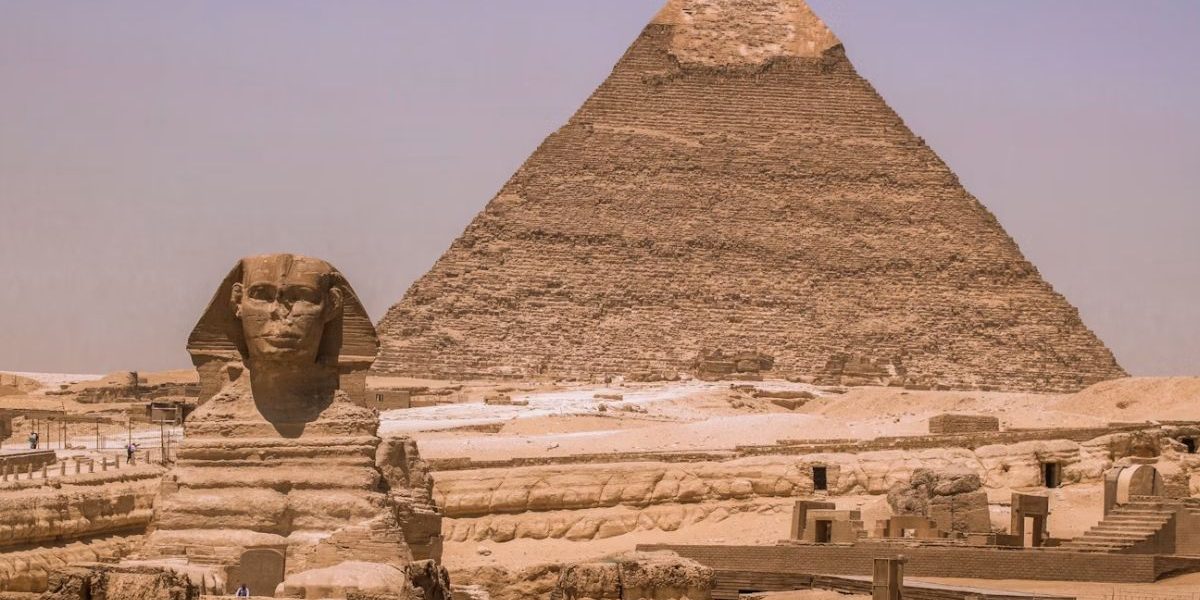
POLICY WIRE — Cairo, Egypt — For all the shimmering grandeur of their pyramids and the stark mystery of their mummies, ancient Egyptians—turns out—were less alien and far more bewilderingly human than most history books let on. They didn’t just build monumental tombs and worship a pantheon of zoomorphic deities; they paid taxes in beer, had an aversion to grey hair (for priests, anyway), and their ruling class often sported physiques far from today’s idealized marble abs. And yet, this isn’t just dusty trivia. It’s a lens—a smudged, slightly cracked one—through which to glimpse the peculiar durability of power, cultural identity, and sheer human eccentricity, themes that still echo in today’s capitals and ministries, often unacknowledged.
Take, for instance, the sheer, unadulterated devotion to felines. A house fire? You didn’t put it out if it meant hurting a cat. A dead pet? Cue weeks of public mourning — and shaved eyebrows. This wasn’t quaintness; it was religion, a belief system so pervasive it shaped everyday life and, surprisingly, even foreign policy. When Cambyses II of Persia invaded Egypt in 525 BCE, legend has it his forces paraded cats in front of their shield line, knowing the Egyptians wouldn’t dare strike. A cunning gambit. Because ancient belief systems, as it happens, could be exploited. Just as easily as modern ideological fervor, one might observe. This reverence wasn’t an isolated quirk; it was deeply embedded in a society where deities were, quite literally, worshipped in furry, four-legged forms.
But it’s not just the pets; it’s the rulers themselves. History often paints pharaohs as stern, imposing figures. Some, like the famous Queen Hatshepsut, were powerful women who governed with astonishing foresight. She not only ruled as pharaoh—something unthinkable in many contemporary societies then—but commanded monuments that rivaled her male counterparts, often depicting herself with male attributes like a false beard. We’re still arguing about gender equality in leadership in the 21st century. They were, in some ways, centuries ahead of the curve. Of course, her successor tried to erase her from history, proving that fragile male egos are an enduring constant. Some things never change, do they? It’s almost darkly comedic, actually, how enduring these human traits are.
“The details often overlooked are precisely where the most profound lessons lie,” observed Dr. Amina Hassan, Director of Antiquities for Egypt’s Ministry of Tourism — and Antiquities. She points out that understanding these smaller facets helps demystify the ancients. “It helps us relate. They dealt with power, legacy, and superstition in ways we still struggle with today.” Her ministry estimates that archaeological tourism contributed roughly 15% to Egypt’s GDP in pre-pandemic years, underscoring that history isn’t just academic; it’s big business. And a complex, sensitive one at that.
📄 POLICY WIRE WHITEPAPER PUBLISHED: PAKISTAN'S NATIONAL SECURITY POLICY PRIORITIES
👉 READ BY CLICKING HEREConsider the very act of preserving these narratives. While Egypt takes great pride in its heritage, the broader Muslim world often finds itself navigating its own historical labyrinth. In places like Pakistan, centuries of varied empires and cultural influences mean a sometimes fractured sense of shared past. Ambassador Farooq Ahmad, Pakistan’s Permanent Representative to UNESCO, articulated this challenge recently: “Every nation seeks its foundational myths, its touchstones. For us, it’s about acknowledging a rich and complex history, from ancient Indus Valley civilizations to the Islamic golden age, and reconciling it with modern identity.” He suggests that appreciating the eccentricities of older civilizations, like Egypt’s, can help inform how diverse historical narratives are embraced and presented in an interconnected world. It’s not about idealizing the past, but making sense of its messy reality. Because the world is always messy, isn’t it?
What This Means
The superficial allure of ancient Egypt—pharaohs, gold, monumental scale—often eclipses the messy, bizarre human details that, frankly, make it far more interesting and relevant. These seemingly odd facts, from their peculiar currency to their gender-fluid depictions of pharaohs, aren’t just historical footnotes. They’re sharp insights into the durable mechanisms of societal control, religious influence, and political maneuvering that, for all our modern pretense of sophistication, haven’t truly gone away. They speak to the enduring human fascination with status, the complex relationship between leaders and the populace, and the sheer audacity of cultural identity—all themes playing out, right now, in news cycles from Islamabad to Washington. And yes, it shows how easily belief systems, no matter how wild, can become tools, or weapons. Don’t underestimate the power of a good story, or a sacred cat.