


Beneath the Surface: Israel’s New Normal as Shadow War Looms
POLICY WIRE — Tel Aviv, Israel — The school bells fell silent. Not for a holiday, mind you, but because the sky above Israel has grown decidedly… complicated. And now, the country’s effectively...

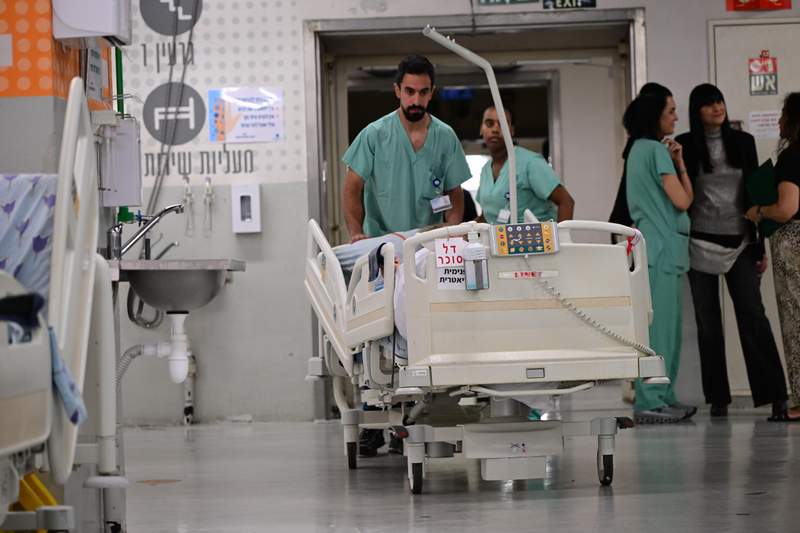
POLICY WIRE — Tel Aviv, Israel — The school bells fell silent. Not for a holiday, mind you, but because the sky above Israel has grown decidedly… complicated. And now, the country’s effectively moved parts of its daily grind underground, ready for another shoe to drop. Hospitals are making space in fortified basements, — and kids? Well, they’re not in classrooms, which is saying something in a society obsessed with education. It’s a new, unsettling normal, this sudden shift to ‘restricted activity’ mode after Tehran finally launched its much-ballyhooed missile barrage.
It wasn’t a total surprise, no. But the scale? And the public nature of it? That was different. Folks here, they’ve gotten used to a certain level of low-intensity friction. But a direct, overt attack from Iran — thousands of miles away, even if mostly intercepted—it changes the game. Nobody’s exactly popping champagne, even after Israel’s Iron Dome and its allies punched most of that stuff out of the sky. Instead, there’s a collective, tight-lipped watchfulness, a sort of grim preparedness that’s become a national posture.
Because frankly, it’s never just about the missiles that fly. It’s about what comes next, or rather, what *could* come next. Prime Minister Benjamin Netanyahu, never one to mince words, spoke from Jerusalem, his tone clipped. “We’ve shown restraint, but that reservoir is finite. Anyone who seeks to harm us will feel our might, — and they will feel it with full force. We don’t want conflict, but we aren’t scared of it.” It’s the kind of quote that gets pulses racing, both here and across the broader Middle East. You’ve got to wonder what the next chess move looks like on either side, don’t you?
But the real story right now isn’t in the intercepted warheads; it’s in the quiet hum of generators powering underground medical facilities, in the vacant playgrounds, and the gnawing anxiety permeating cafes. Public gatherings? Forget ’em. Outdoor activities? Canceled, thanks to security directives that sound less like advisories — and more like wartime decrees. It’s an economy on pause, a society holding its breath, a very expensive waiting game. For reference, Israel already commits roughly 4.5% of its GDP to defense, one of the highest ratios globally, according to the Stockholm International Peace Research Institute (SIPRI) 2023 data—and that was before the latest round of theatrics. Imagine the fiscal squeeze a sustained state of alert could bring.
And this isn’t some isolated skirmish in a dusty corner; it’s a global flashpoint with far-reaching tremors. In Islamabad and Karachi, political analysts are watching with trepidation, discussing the implications for a Muslim world already fractured and weary. This heightened state of tension between two major regional players, Israel and Iran, it’s sending shivers down diplomatic spines clear to South Asia. Because what starts as a tit-for-tat between distant adversaries can quickly morph into broader destabilization, impacting everything from energy prices to regional allegiances. “The escalation is deeply troubling,” observed Dr. Aisha Hassan, a Lahore-based international relations scholar. “It threatens to ignite a wider conflagration that no one, least of all the developing nations already grappling with internal issues, can afford. It’s a lose-lose proposition, no matter how you frame it.” She’s got a point, hasn’t she?
This whole situation’s also put everyone else on edge. The US, the UK, Jordan—they all pitched in on the defensive, demonstrating just how interconnected, how vulnerable, this whole region really is. This isn’t just about Israeli security; it’s about a fragile regional equilibrium being tested to its absolute breaking point.
What This Means
Politically, Israel’s government will likely face intense pressure, both internally and externally, to navigate a proportionate response that doesn’t drag the country, or the region, into an all-out war. It’s a delicate dance between projected strength for a domestic audience and de-escalation for nervous international partners. Don’t expect any sudden breakthroughs on other fronts—like, say, a normalisation deal with Saudi Arabia—while missile launchers are being readied. But this confrontation might also solidify an unspoken, strategic alignment with Sunni Arab states quietly unnerved by Iran’s adventurism.
Economically, this state of prolonged semi-lockdown — and heightened alert is going to hit hard. Tourism, a sector that’s been battered repeatedly, won’t see recovery anytime soon. Investment might shy away. The constant need for vigilance translates into substantial, sustained defense spending, drawing resources away from domestic programs and innovation—the stuff that really keeps a country humming. It’s going to squeeze the national wallet, hard. And a protracted, low-level conflict or even just a perception of perpetual insecurity? That kind of uncertainty eats at an economy faster than any individual rocket ever could.
This isn’t just an exercise in military readiness; it’s a grim rehearsal for a future no one really wants. But it’s the one they’re facing, for better or worse, in a region perpetually on the brink.