

Gaza’s Fractured Grip: As Civilian Despair Mounts, Hamas’s Inner Turmoil Comes to Light
POLICY WIRE — Deir al-Balah, Gaza Strip — The children here don’t cry for sweets anymore; they cry for clean water. They understand, with an unsettling precocity, the value of a single, dust-caked...

POLICY WIRE — Deir al-Balah, Gaza Strip — The children here don’t cry for sweets anymore; they cry for clean water. They understand, with an unsettling precocity, the value of a single, dust-caked loaf of bread. This grim economic calculus, this day-to-day scrabble for mere existence, has become the uncomfortable new barometer for life in Gaza. But beneath the raw, immediate despair — beneath the constant drone of unseen aircraft and the pulverizing rhythm of explosions — a more insidious erosion has begun: trust in the very authority that claims to govern.
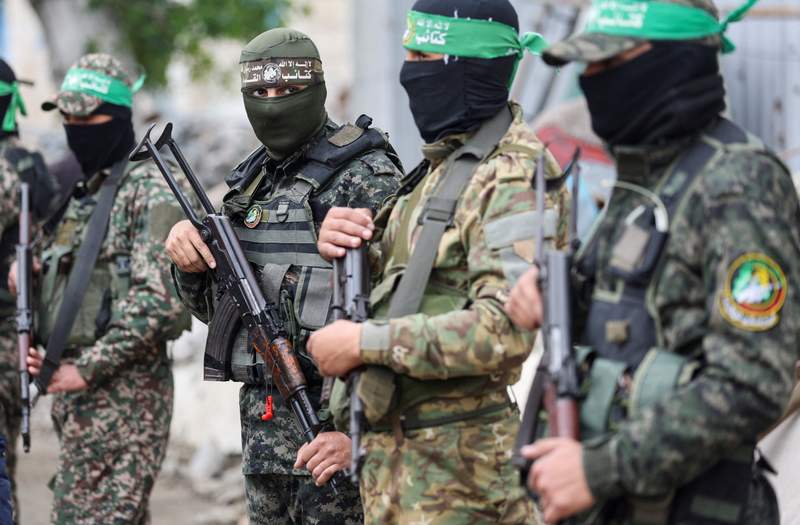
It’s not just the blockade, you see, nor the ceaseless conflict that strips bare Gaza’s populace. People whisper now. Not about tactical gains or losses on the battlefield, but about who benefits from the scarce aid, about perceived inconsistencies in leadership, about commanders who seem to live a different reality. This isn’t a rebellion, not yet anyway. It’s a slow-burn disaffection, a collective shrug of shoulders in the face of what feels like a failing system. It’s a quiet crumbling, a spreading crack across Hamas’s carefully cultivated facade of absolute unity and unwavering resistance.
This subtle, yet profound, shift in the Gazan psyche points to an uncomfortable truth: the group’s internal struggles — ideological, operational, even generational — are now impossible to shield from an increasingly cynical and beleaguered populace. For years, the narrative from within Hamas was one of monolithic purpose, of steadfast defiance against overwhelming odds. Now? That sheen, already tarnished by repeated conflicts — and international isolation, is truly wearing thin. But what does that even mean for ordinary folks just trying to survive? They’re just watching the pieces fall.
Sources within intelligence circles, who aren’t authorized to speak publicly, indicate a growing schism between the political leadership, often operating from comfortable expatriate havens, and the fighters on the ground who bear the brunt of the battle. “The field commanders, they’re feeling the pressure of untenable tactical positions and immense civilian casualties,” an analyst specializing in regional conflict, Dr. Miriam Hadad of the Mediterranean Policy Institute, told Policy Wire. “There’s a definite divergence between strategic pronouncements from afar and the grittier realities confronting those carrying out operations. It creates friction, doesn’t it?”
But Sami Abu Zuhri, a senior Hamas official, recently countered such suggestions, asserting from his reported location in Beirut, “These are fabrications sown by our enemies to weaken our resolve. Our movement is unified in its righteous resistance, — and our people stand with us against the barbarity. Any ‘cracks’ are figments of Western media’s imagination, designed to distract from the real atrocities being committed against our nation.” He’d always say something like that. They all do.
This disconnect isn’t lost on the broader Muslim world. In Pakistan, for instance, a nation with a deep, fervent emotional connection to the Palestinian cause, there’s been a subtle, growing debate. While public support for Palestine remains incredibly strong, questions arise. Some columnists, like those at *Dawn*, Pakistan’s oldest English-language newspaper, are cautiously suggesting that an effective, unified Palestinian front might require introspection about governance structures in Gaza if international goodwill and sustained humanitarian efforts are to be maximized. It’s a pragmatic angle, certainly, but a politically tricky one to make in public.
Consider the raw numbers: the United Nations Office for the Coordination of Humanitarian Affairs (OCHA) estimated, even before the current devastating conflict, that some 81% of Gazans were reliant on humanitarian aid. That figure has skyrocketed, surely. And who controls the distribution channels? Who profits from the black markets? These aren’t abstract policy debates anymore. They’re daily indignities, endured by families crammed into makeshift shelters, with no power, no medicine, and diminishing hope.
What This Means
The implications of Hamas’s perceived internal fracturing stretch far beyond Gaza’s pulverized borders. Politically, a divided leadership complicates any potential ceasefire negotiations, making unified commitment from the Palestinian side a much harder sell. It also risks exacerbating power vacuums should current leaders be incapacitated, potentially inviting even more instability or opening avenues for other militant groups to gain traction, further fragmenting an already splintered society.
Economically, this breakdown erodes any remaining semblance of central authority that might oversee reconstruction or humanitarian distribution effectively. Foreign aid, even when it trickles in, becomes less efficient, more susceptible to diversion, and less likely to reach the neediest. It makes an already impossible situation worse, denying the civilian population a coherent internal structure capable of even basic administration. For aid organizations and international bodies, it’s like navigating a brutal calculus of contention. without internal cohesion, future political solutions—like a two-state framework, however distant it might seem now—become almost laughably impractical to implement, given the absence of a truly unified, authoritative Palestinian counterpart.
Ultimately, these cracks aren’t just an internal problem for a political-military organization. They represent a deepening crisis for every man, woman, and child trying to carve out a moment of peace in the Gaza Strip. Because when the caretakers of a populace can’t even hold it together amongst themselves, the burden, as it always does, falls heaviest on those at the bottom, just struggling to survive. It’s a sad, predictable reality that seems more than just theoretical for them.