


Kyiv’s Relentless Dawn: Fresh Carnage, Fading Diplomatic Horizons
POLICY WIRE — KYIV, Ukraine — They’d just finished another night of uneasy sleep, or no sleep at all. It’s Tuesday in Ukraine, and like countless Tuesdays before it, the morning light revealed...

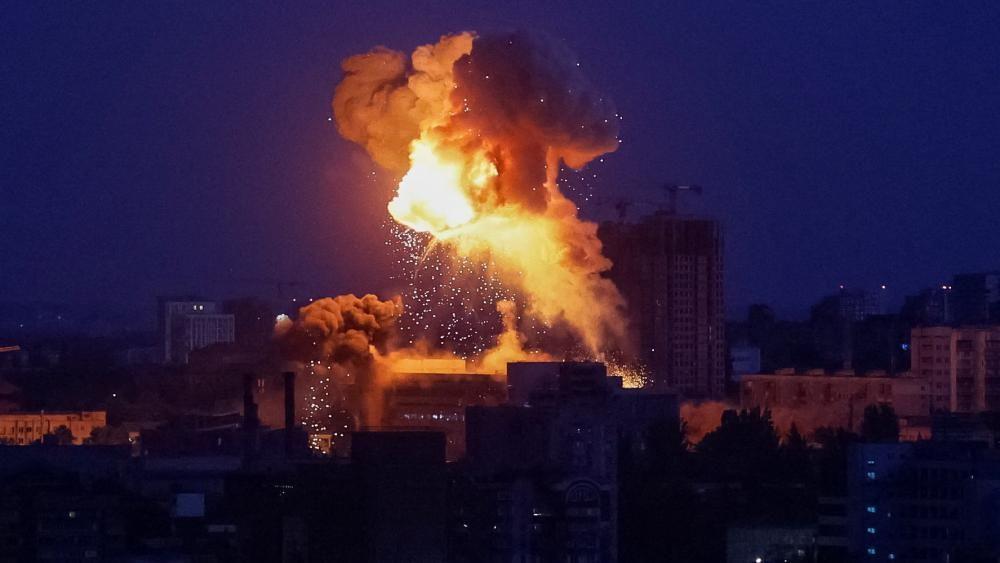
POLICY WIRE — KYIV, Ukraine — They’d just finished another night of uneasy sleep, or no sleep at all. It’s Tuesday in Ukraine, and like countless Tuesdays before it, the morning light revealed shattered lives, smoldering wreckage, and another grim tally. Russia’s latest large-scale aerial assault didn’t merely target military installations; it punched right into residential areas, energy grids, and the everyday existence of ordinary folks.
It’s an endless grind, isn’t it? Missile after missile, drone after drone, thudding into cities that have already taken more hits than any urban center should bear. This wasn’t some surgical strike. We’re talking about four lives snuffed out—gone, just like that—and dozens more scrambling from the debris, bloodied and dazed. Think about it: families torn apart over breakfast coffee, their homes reduced to toothpicks and dust by what Ukrainian officials are labeling yet another ‘indiscriminate act of terror.’ There’s no glamour in this kind of warfare, just endless, aching destruction.
President Volodymyr Zelenskyy’s office didn’t pull any punches, saying these were ‘deliberate attacks against civilian infrastructure,’ as if Kyiv needed reminding. “Our people are weary,” confessed Mykhailo Podolyak, an advisor to the Ukrainian Presidential Office, his voice thin with controlled rage during a morning briefing. “But our resolve isn’t. Every single piece of Western air defense saves lives; every delay in its delivery costs them.” He wasn’t wrong. They’ve been begging for more sophisticated defenses for months, years even. You can almost feel the exasperation radiating across the capital.
The scale of this current wave of attacks hasn’t exactly shifted the global dynamic, but it surely tightens the screws on already frayed nerves. Remember how the International Organization for Migration reported that by early 2024, nearly 14 million Ukrainians had been displaced internally or across borders since the invasion began? Well, attacks like these just keep those numbers ticking up, turning millions into permanent wanderers. But don’t expect the Kremlin to apologize. Or even acknowledge it, really.
Washington, predictably, was quick to condemn. But condemnation only goes so far, doesn’t it? “We stand unequivocally with the people of Ukraine against Russia’s barbarity,” declared State Department spokesperson Matthew Miller in a boilerplate statement later in the day. “These brazen assaults demonstrate Moscow’s utter disregard for human life — and international law. We continue to urge all nations to support Kyiv and isolate the aggressor.” You hear that, and you just know another aid package is probably somewhere in the congressional labyrinth, waiting for its cue.
And speaking of isolation, the sheer economic ripple effect of this war—which assaults like these exacerbate—keeps getting ignored by those who only look at a single conflict. Global energy markets jump, grain prices flutter, — and supply chains get choked up again. This constant instability drains resources — and attention from elsewhere. Consider Pakistan, for instance. It’s struggling with its own profound economic challenges, from spiraling debt to persistent energy shortages. Each new escalation in Ukraine funnels global aid, diplomatic focus, and potential investments away, even if indirectly, from its own burning needs. It means less bandwidth for the G7, fewer concessional loans, less market certainty. Everything is connected. Everything.
📄 POLICY WIRE WHITEPAPER PUBLISHED: PAKISTAN'S NATIONAL SECURITY POLICY PRIORITIES
👉 READ BY CLICKING HEREThe geopolitical chessboard remains messy. Nations in the broader Muslim world, including some in South Asia, often navigate a delicate line, trying to maintain relationships with both the West and Russia—a balancing act that gets even harder when attacks like this underscore the stark realities of aggression. It isn’t just about principles; it’s about practicalities, about access to fertilizer, affordable oil, and non-aligned political support.
What This Means
These large-scale, brutal aerial attacks aren’t random. They serve multiple objectives for Moscow. One, it’s about degrading Ukraine’s remaining critical infrastructure, hoping to collapse morale and economic viability as winter looms or defenses thin out. Two, they aim to stretch Ukrainian air defense systems to their absolute limits—trying to deplete missile stocks that are already in critically short supply, forcing Kyiv’s partners to replenish constantly. And because Russia doesn’t play by the usual rules, a fair number of these drones and missiles will always make it through, even the best defenses, ensuring casualties and widespread fear.
Politically, the implication is stark: Russia isn’t backing down. Not one bit. No matter how many Western diplomats talk of ‘paths to peace,’ Moscow appears dead set on maximizing destruction and territorial gains through force. It’s a clear message to Europe and the US: we’ll keep fighting, we’ll keep hurting Ukraine, and the cost of supporting Kyiv will just keep going up. Economically, expect more volatility. Global commodity prices, especially energy — and agricultural products, remain extremely sensitive to such acts. For developing nations, already teetering on the brink of fiscal crises, this continued instability is less a distant geopolitical headache and more a direct hit to their ability to feed their people and maintain order. The price of prolonged conflict, it seems, isn’t just paid in Kyiv, but across every single one of those tenuous supply lines, right into the world’s most vulnerable households.