


Strait of Hormuz: American Resolve Meets Iranian Provocation Amid Oil Lifeline Tug-of-War
POLICY WIRE — Washington, D.C. — Imagine a global economy—just picture it—holding its breath over a sliver of water not much wider than the distance a cargo ship traverses in a few hours. This...

POLICY WIRE — Washington, D.C. — Imagine a global economy—just picture it—holding its breath over a sliver of water not much wider than the distance a cargo ship traverses in a few hours. This isn’t some far-off hypothetical, you know. This is our daily bread, folks, the stuff of international trade and geopolitical jostling playing out in the Strait of Hormuz, a chokepoint often taken for granted until something gives.
Lately, something has given. The serene — well, not exactly serene, let’s be real — but established routines of the Arabian Gulf have seen a sharp jolt. It wasn’t a sudden, seismic shift, either, more like a persistent twitch. And then, American guns went off, not in some grand battle, but against small, unmanned aircraft. The U.S. military confirmed it: Iranian drones, those pesky eyes in the sky, were shot down. They were too close, too threatening to shipping lanes where — get this — about one-fifth of the world’s daily oil supply just floats on through.
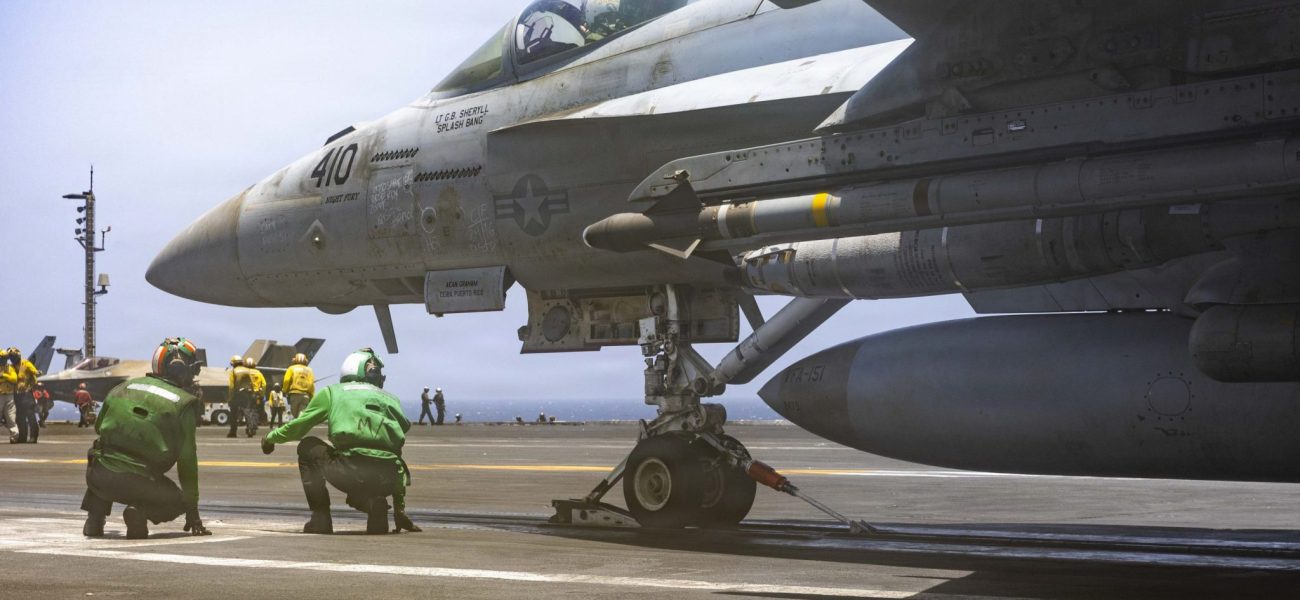
It sounds dramatic, and in a way, it’s. But when you’re out there, day after day, and these incidents become almost, well, normalized, the real story starts to emerge. The U.S. is out there. That much is clear. They’re providing ‘naval overwatch’, a term that sounds suitably bureaucratic but means something very direct when you’re a ship captain counting on getting your crude to market without an uninvited escort. It’s an assertion, plain — and simple, that commerce moves, period.
But the real juice of the situation? It suggests a recalibration in how the region is seen, how fluid—or perhaps, how volatile—these maritime avenues truly are. Someone once observed, with perhaps too much enthusiasm, that [QUOTE_PLACEHOLDER]. What an odd way to put it. You don’t usually measure openness by drone encounters, do you? But there it’s. Open, perhaps, to challenges, which then elicit responses. That’s the game, isn’t it?
The dance of escalation — and deterrence goes on, quietly, for the most part, beneath the radar of global headlines. Still, even the subtle moves ripple far. For instance, the Gulf Cooperation Council (GCC) states collectively exported an estimated 18.5 million barrels of oil per day in 2022, nearly all of which passed through this very strait, according to the U.S. Energy Information Administration (EIA). And that’s a figure you don’t ignore. Because what affects the price of a barrel here ultimately affects the price of everything, everywhere.
And where does Pakistan fit into all this? Good question. Being an immediate neighbor, though not a direct participant in Gulf waters, Pakistan’s economy remains profoundly tethered to regional stability, especially regarding energy. Any serious disruption in the Strait—whether perceived or real—sends jitters through Karachi’s stock exchange and fuels anxiety about inflation in a country already wrestling with its own financial demons. Fuel imports are, after all, an agonizingly expensive lifeline for a nation dependent on consistent energy flows from the very waters now patrolled by an anxious international fleet. They’re acutely aware of anything that risks oil prices going bananas. Because when crude oil ticks up even a little bit, it hits a nation like Pakistan hard.
📄 POLICY WIRE WHITEPAPER PUBLISHED: PAKISTAN'S NATIONAL SECURITY POLICY PRIORITIES
👉 READ BY CLICKING HEREBut back to those drones. It’s a pretty pointed message, this whole shooting-them-down business. It isn’t just about protecting a couple of tankers; it’s about signaling resolve, reminding everyone who’s really watching the shop. Iranian activities, like those recent drone operations, or perhaps earlier incidents of [QUOTE_PLACEHOLDER], always push this envelope. But America has been clear: there are lines.
This whole scene, really, is like a game of high-stakes poker, isn’t it? Each side makes a move, waits for a reaction. It’s a continuous, tense negotiation over maritime sovereignty, international shipping rights, and—let’s not forget—massive economic interests. They’re playing this game with precision, with advanced hardware, — and with very, very little margin for error. And the stakes? Our energy grids, our global supply chains, our morning commute. You know, just the usual.
What This Means
This isn’t just about naval maneuvers or advanced weaponry; it’s about confidence. Or a lack thereof. When the U.S. explicitly engages—even in what they call ‘defensive’ actions like shooting down Iranian drones—it reassures some and provokes others. Economically, any hint of instability in Hormuz acts like a cold compress on oil prices, forcing them upward, albeit perhaps temporarily, unless there’s a prolonged incident. For importers globally, particularly in energy-hungry nations like Pakistan or India, this translates directly to increased costs, potential inflation, and pressure on their currency reserves. Politically, Washington’s continued deployment and proactive posture serve as a stark message to Tehran: direct interference with international shipping won’t go unanswered. It reinforces U.S. commitment to regional allies like Saudi Arabia and the UAE, signaling a maintained umbrella of security for their export channels. Conversely, for Iran, it’s a test of its perceived strength and resolve, likely leading to a re-evaluation of its gray-zone tactics or, perhaps, a more brazen push. The long game here isn’t just about safe passage; it’s about shaping the perception of power and control in a region where such perceptions can literally move markets and, eventually, troops. It suggests that while the strait may be ‘open’ for business, it remains open for a high-wire act of geopolitical brinkmanship, too. It’s a pause in the negotiations, if you will. But a pause in a very dangerous sort of game.