

Kyiv’s Drones Penetrate Moscow’s Airspace, Shattering the Illusion of Kremlin Invincibility
POLICY WIRE — Moscow, Russia — The chimes of the Spasskaya Tower once served as an immutable symbol of Russian sovereignty, a rhythmic assurance of order emanating from the heart of the Kremlin. Not...

POLICY WIRE — Moscow, Russia — The chimes of the Spasskaya Tower once served as an immutable symbol of Russian sovereignty, a rhythmic assurance of order emanating from the heart of the Kremlin. Not anymore. A low, persistent hum, the tell-tale signature of an unmanned aerial vehicle, now increasingly punctures that carefully curated tranquility, bringing the war’s stark reality to Moscow’s doorstep. It isn’t just about explosions; it’s about the psychological reverberations, the subtle unraveling of a formidable image.
Behind the headlines of specific drone impacts — be it near the Kremlin or suburban apartments — lies a more consequential truth: Ukraine’s asymmetric warfare strategy has found a new, deeply unsettling vector. These aren’t just nuisance attacks; they’re deliberate, symbolic incursions designed to erode domestic confidence and complicate the Kremlin’s narrative of a distant, controlled ‘special military operation.’ For months, President Vladimir Putin’s administration has meticulously shielded its populace from the true costs of the conflict, but an unmanned craft arcing through the capital’s guarded airspace is a rather unambiguous message.
And it’s a message that resonates far beyond Moscow’s city limits. Brigadier General Kyrylo Budanov, head of Ukraine’s Defense Intelligence, didn’t mince words when asked about the origins of these persistent aerial visitors. “We’re simply reminding them that war isn’t a spectator sport for everyone,” he stated, his voice devoid of histrionics, suggesting a long-term strategic recalibration rather than a desperate lashing out. It’s a chillingly pragmatic assessment, reflecting Kyiv’s resolve to demonstrate that its reach, however limited compared to Russia’s conventional might, is growing, and its targeting is increasingly bold. Don’t underestimate the power of morale in modern conflict.
Still, the Kremlin’s official response remains a predictable cocktail of outrage — and deflection. Dmitry Peskov, the presidential press secretary, shot back at suggestions of Russian vulnerability. “This is a desperate act of terrorism, a futile gesture that changes nothing on the battlefield, designed only to sow panic,” he retorted, attempting to paint the incursions as mere propaganda rather than a significant security breach. Yet, the palpable tightening of air defense around the capital and the hurried cancellation of some public events, particularly those surrounding the sacrosanct Victory Day Parade (a showcase of Russian military prowess, ironically), speak volumes about the true level of official concern.
The operational capabilities of Ukraine’s drone arsenal have demonstrably expanded, with reports indicating Ukrainian drones now boast a striking range exceeding 1,000 kilometers, extending well into Russia’s strategic depth. This technological leap, often fueled by ingenious homegrown solutions and Western components, has fundamentally altered the calculus of engagement. It challenges the conventional understanding of a front line, transforming the entire conflict into a more diffuse, less predictable theater. The rise of inexpensive, effective drone warfare is truly redefining global conflict, forcing militaries worldwide to rethink defense strategies.
What This Means
At its core, these drone incursions represent a profound shift in the psychological dimension of the Ukraine war, with cascading political and economic implications. For Moscow, it’s a direct challenge to the Kremlin’s carefully cultivated image of invulnerability, forcing ordinary citizens to confront the war in a way state propaganda has largely prevented. This erosion of perceived safety, however minor in terms of physical damage, could subtly chip away at public support or at least inject a degree of unease into a populace largely disengaged from the conflict’s harsh realities.
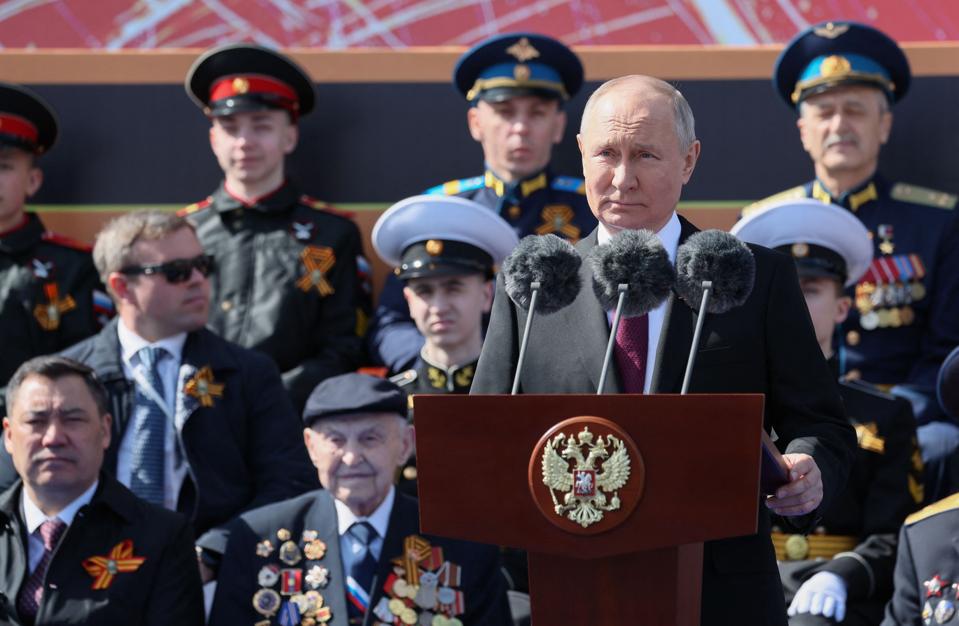
Economically, the need to bolster air defenses around Moscow diverts resources that could otherwise be used on the front lines or for other domestic priorities. And the sheer logistical effort involved in tracking and intercepting these relatively small, low-flying targets is significant. Politically, it complicates Putin’s efforts to project strength both domestically — and internationally. His annual Victory Day address, typically a triumphant display of Russian might and unity, becomes freighted with the unspoken threat of aerial menace, transforming a celebration into a potential vulnerability.
The reverberations aren’t confined to Europe, mind you. In South Asia and the wider Muslim world, where drone warfare has long been a contentious topic — often associated with Western military interventions and questions of sovereignty — Moscow’s new reality draws stark parallels. Nations like Pakistan, grappling with their own complex cross-border threats and the shadow of drone operations, will watch these developments closely. The spectacle of a major power struggling to defend its capital from comparatively low-tech aerial threats sends a clear, if discomfiting, message about the changing nature of warfare and the pervasive vulnerability of even heavily fortified urban centers. It’s a global lesson in asymmetric capabilities, plain — and simple.
So, while the material damage from individual drone strikes might often be negligible, their strategic impact, particularly as instruments of psychological warfare and symbols of persistent defiance, is anything but. Kyiv’s message is clear: Russia’s imperial project will have consequences, and those consequences are increasingly making their way home.