
Jakarta’s Silent War: The Ecological Irony of ‘Janitor Fish’ and the Price of Neglect
POLICY WIRE — Jakarta, Indonesia — They call them janitor fish, a perverse moniker for an invasive species now choking the very lifeblood of Indonesia’s sprawling capital. Not with trash, mind...

POLICY WIRE — Jakarta, Indonesia — They call them janitor fish, a perverse moniker for an invasive species now choking the very lifeblood of Indonesia’s sprawling capital. Not with trash, mind you, but with their sheer, proliferating presence, transforming rivers into murky, oxygen-depleted graves for native aquatic life. It’s a war waged not with bullets or bombs, but with nets, traps, and the grim determination of hundreds of municipal workers — a stark, unwelcome reflection of policy blind spots and unchecked urbanization.
For weeks, a mass removal operation has been underway, a desperate scramble to reclaim Jakarta’s waterways from the bristly, bottom-dwelling pleco (Pterygoplichthys pardalis). These innocuous-looking aquarium inhabitants, once a novelty in countless homes, were unceremoniously dumped into the city’s rivers and canals, their progeny now numbering in the millions. They’ve become a living, breathing testament to the profound ecological consequences of human carelessness, a consequence Jakarta is now paying for dearly (and literally).
Dr. Siti Nuraini, Head of Indonesia’s Marine and Fisheries Agency, didn’t mince words when pressed on the scale of the problem. "We’re confronting an ecological catastrophe masquerading as a simple cleanup," she declared, her voice betraying a mix of exasperation and grim resolve. "These fish aren’t just an inconvenience; they’ve annihilated local populations, disrupted the food chain, and degraded water quality to a perilous degree. It’s an urgent, national security-level threat to our biodiversity."
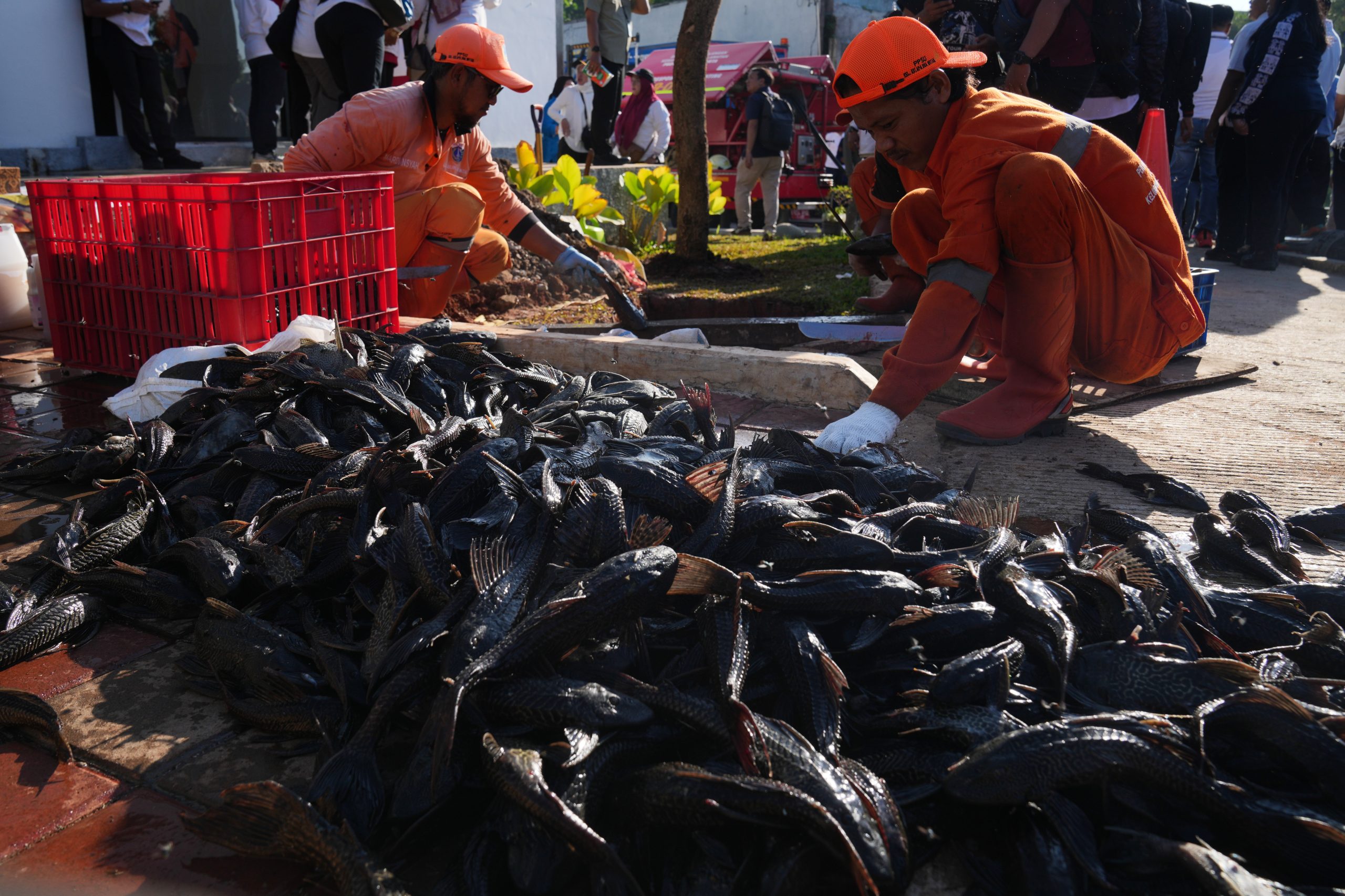
And so, hundreds of civil servants, volunteers, and even military personnel have been mobilized, their task a Sisyphean effort to extract untold tonnes of these ecological vandals. Pictures shared across social media depict mountains of dead fish — grotesque, unsettling piles waiting for disposal. It’s an unglamorous, back-breaking job, underscoring the deep, systemic failures that allowed such an unchecked proliferation. At its core, this isn’t just about fish; it’s about governance, public awareness, and the long-term health of an entire ecosystem. You can’t just wish away neglect, can you?
Behind the headlines, the economic implications are beginning to emerge. Local fisheries, already struggling, face existential threats as native species vanish. Tourism, dependent on clean waterways, takes a hit. And the sheer cost of the removal operation — labor, equipment, disposal — diverts precious resources that could be spent on infrastructure or social programs. According to a 2023 report from the Ministry of Environment, the economic toll from invasive species globally now exceeds an estimated $1.4 trillion annually, a figure that Jakarta’s current predicament grimly illustrates.
Still, this isn’t an isolated incident. Indonesia, the world’s most populous Muslim-majority nation, shares this environmental quandary with many of its counterparts. Across South Asia and the broader Muslim world, rapidly urbanizing centers grapple with similar issues of invasive species, unchecked waste, and polluted waterways. Think of the choked canals of Dhaka or the beleaguered rivers flowing through Karachi — they too tell stories of human impact, ecological vulnerability, and the immense pressure placed upon natural resources. It’s a common thread, a shared challenge that demands regional cooperation and robust policy interventions, not just localized, reactive cleanups. Indeed, the unchecked ambitions that lead to such environmental devastation often come with significant societal costs, beneath the spectacle of daily life.
Mr. Budi Santoso, Jakarta’s Deputy Governor for Environmental Affairs, offered a more hopeful, if realistic, assessment. "This isn’t just about fish; it’s about the health of our communities, our economy, and our future," he opined during a recent press briefing, wading through a knee-deep canal alongside workers. "We’re learning tough lessons here, lessons that must inform our urban planning, our environmental regulations, and our public education campaigns. It’s a bitter pill, but one we must swallow for the sake of generations to come."
So, the battle continues. Each scooped-up pleco represents a tiny victory, a microscopic dent in a monumental problem. But the real victory won’t be measured in fish removed, but in the preventative policies enacted, the public consciousness raised, and the long-term commitment to ecological stewardship that, frankly, has been sorely lacking.
What This Means
The Jakarta ‘janitor fish’ crisis is far more than a local ecological nuisance; it’s a potent parable for the interconnectedness of policy, environment, and economy in developing nations. Politically, it exposes glaring weaknesses in environmental oversight and regulatory enforcement, signaling a need for more proactive, rather than reactive, governance. It also highlights the perennial struggle between economic development and ecological preservation, often with the latter being sacrificed until a crisis emerges. Economically, the direct costs of mitigation, coupled with indirect losses to fisheries and potential tourism, represent a drain on national resources that could otherwise fuel growth or improve social services. the narrative resonates deeply within Muslim-majority countries across South Asia and Southeast Asia, where rapid urbanization often outstrips infrastructural and environmental planning capacity, leading to similar ecological vulnerabilities. This localized struggle, therefore, serves as a universal caution: environmental neglect, however seemingly minor at its genesis, invariably escalates into complex, costly, and politically charged crises, demanding immediate and sustained policy recalibration.