

Fiber-Optic Phantom Menace: When Progress is as Murky as the Threat Itself
POLICY WIRE — Jerusalem, Israel — Forget the sleek jets tearing through the sky or the subs lurking in the deep. Sometimes, the real headaches, the truly gnawing ones for defense planners, come...

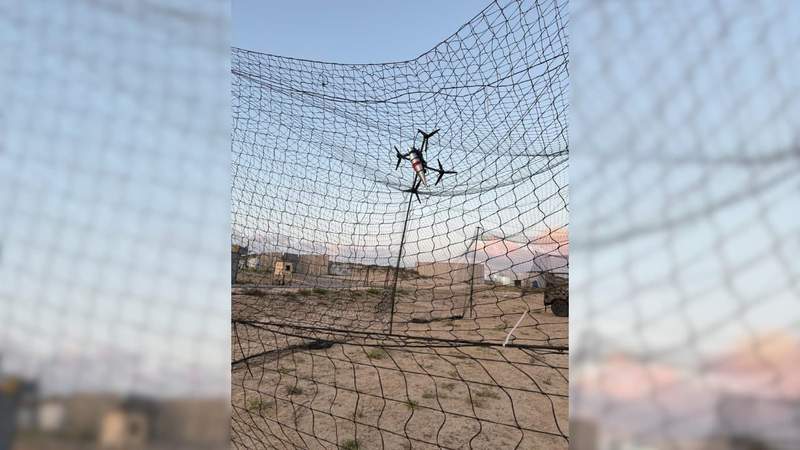
POLICY WIRE — Jerusalem, Israel — Forget the sleek jets tearing through the sky or the subs lurking in the deep. Sometimes, the real headaches, the truly gnawing ones for defense planners, come wrapped in something far less dramatic—something almost laughably low-tech yet deceptively sinister. We’re talking about fiber-optic drones. It’s not quite the stuff of blockbuster thrillers, is it?
Yet, in the hushed, almost bureaucratic tones reserved for complex security updates, Jerusalem’s Defense Ministry recently indicated it’s finally getting a handle on a rather peculiar opponent: Hezbollah’s supposed arsenal of drones utilizing fiber-optic technology. Imagine that. They’ve found a way forward, or so we’re told, against what sounds less like advanced weaponry and more like something cobbled together in a dark basement. Progress, apparently, is being made. What progress exactly? We’re left to infer. It’s a statement as opaque as some of the fibers themselves.
For years, intelligence briefings—often peppered with just enough classified jargon to confuse even the seasoned observers—have hinted at these tiny terrors. They’re not the drones that scream across battlefields, no. These are the quieter kind. The ones that might be harder to detect via traditional radar. The ones you perhaps don’t even see coming until it’s too late. Hezbollah, as one might expect from a non-state actor with significant state backing, doesn’t always play by the conventional rules. Their adaptations, their operational tactics—they’re designed to circumvent, to irritate, to occasionally deliver a nasty surprise. And they’re getting smarter about it, or their sponsors are.
And you see, it’s this kind of asymmetric threat that keeps military brass up at night, all across the globe, not just here. Because while high-cost systems intercept rockets, what do you do about a potentially inexpensive, mass-producible airborne device guided by a light pulse? It doesn’t scream ‘sophisticated,’ but it sure does scream ‘headache.’ [QUOTE_PLACEHOLDER] for a defense apparatus to simply say [QUOTE_PLACEHOLDER], without specifics, suggests a nuanced, perhaps even a begrudging acknowledgement of a persistent low-level danger finally being addressed.
But how, precisely, one achieves [QUOTE_PLACEHOLDER] against something so inherently stealthy and, let’s be frank, potentially quite cheap to manufacture, remains, shall we say, a matter of considerable public conjecture. There’s no grand announcement of a revolutionary new anti-drone laser system, is there? No footage of drones falling from the sky in fiery explosions. It’s a quiet declaration. It’s subtle, a whisper rather than a shout in a region where geopolitical shouting matches are commonplace. Because if it was a definitive victory, wouldn’t they want the parade? Or perhaps it’s more about containing than eliminating. A persistent battle of wits rather than a knockout punch.
The proliferation of drone technology isn’t just an issue for the Levant; it’s a global game-changer. Take Pakistan, for instance, a nation straddling a delicate balance of regional power dynamics and internal security challenges. Border disputes, insurgent groups—the airspace over parts of South Asia is becoming a busy, often contentious, place for unmanned aerial vehicles. From surveillance to targeted strikes, these machines offer a new dimension to conflict. The lessons learned here against Hezbollah’s cunning, albeit perhaps unspectacular, fiber-optic innovations could very well ripple through the security doctrines of other nations, forcing them to re-evaluate their own counter-drone strategies. It’s all connected.
The numbers themselves speak volumes about the concern. The global counter-drone market, designed to thwart threats like these, was valued at a cool $1.5 billion in 2022 and is projected to skyrocket to $8.1 billion by 2030, according to Grand View Research. That’s a compound annual growth rate of 24.3%, folks. It shows governments know what’s coming. They don’t want to be caught flat-footed.
📄 POLICY WIRE WHITEPAPER PUBLISHED: PAKISTAN'S NATIONAL SECURITY POLICY PRIORITIES
👉 READ BY CLICKING HEREWhat This Means
This subtle announcement isn’t just about downing a few gadgets; it carries substantial political and economic undertones. Politically, the mere assertion of ‘progress’ by the Defense Ministry sends a message, both internally — and externally. Internally, it aims to reassure a populace weary of constant security threats that their guardians are on the ball. Externally, it serves as a low-key warning to Hezbollah and its Iranian patrons that their innovative—and often maddeningly persistent—tactics aren’t going unnoticed, nor are they immune to countermeasures. It’s about maintaining a semblance of control in a perpetually unstable region.
Economically, this is another notch in the belt for the burgeoning drone warfare — and counter-drone industry. Every new threat, every announced ‘progress,’ fuels further research — and development. It’s an arms race by a thousand tiny cuts, requiring continuous investment in surveillance, jamming, and interception technologies. But because this particular threat involves relatively low-cost, disposable tech, it strains budgets even more, diverting resources from other areas. It means constantly evolving, constantly adapting—a costly endeavor. We’re seeing governments pour money into what was once considered science fiction. It’s almost as if every new bit of military tech from a shadowy group brings with it an entire new segment of the economy. It’s big business, isn’t it?
And yes, the fact that a seemingly low-fidelity weapon system is garnering such attention also underscores the strategic depth of asymmetric warfare. It’s not always about matching firepower; it’s about disrupting, creating doubt, and forcing your opponent to expend disproportionate resources. For the Muslim world, and particularly for those nations bordering hot zones, this ongoing dance of drone and counter-drone means a heightened need for intelligence sharing, joint exercises, and home-grown tech solutions. Everyone’s looking over their shoulder, trying to anticipate the next ‘clever’ idea an adversary might cook up. It changes everything. Ghost in the Machine: Ukraine’s Covert Drone Campaign Paralyzes Key Russian Supply Artery, as we’ve seen elsewhere, highlights how such innovation can have a disproportionate impact.
So, when you hear ‘progress against fiber-optic drones,’ don’t imagine victory parades. Think about the silent, continuous grinding of gears in a bureaucratic-military machine. Think about subtle shifts in an endless, shadowy conflict. That’s the real story behind the dry declaration. Because in this part of the world, peace is often just the absence of headline-grabbing conflict, and deterrence is always a moving target. Silent Skylines, Shifting Sands: Kuwait’s Anxious Return After Iranian Strike paints a picture of that ongoing tension. And it won’t be over soon.