


Daily Commute’s Grim End: Car Bomb Unveils Brutality Beneath the Everyday Facade
POLICY WIRE — Tel Aviv, Israel — The morning rush hour, that universal grind of modern life, can lull us into a predictable rhythm. But last Thursday, for one woman navigating the Ayalon Highway’s...

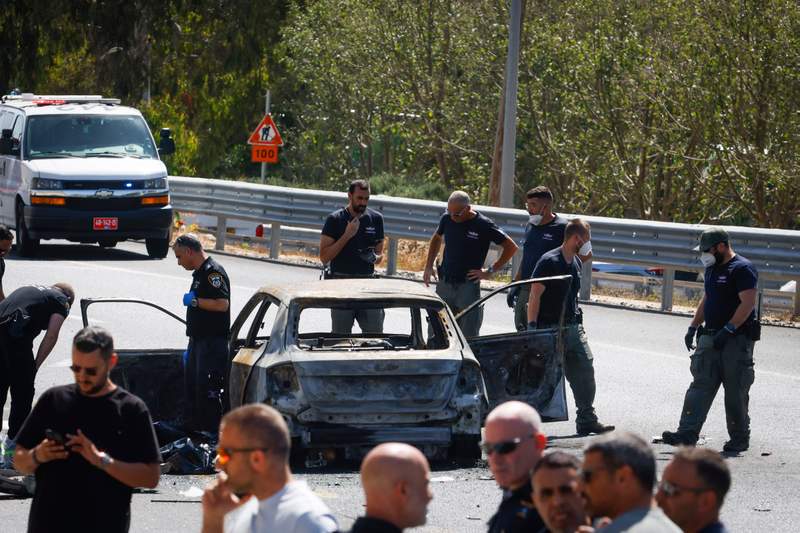
POLICY WIRE — Tel Aviv, Israel — The morning rush hour, that universal grind of modern life, can lull us into a predictable rhythm. But last Thursday, for one woman navigating the Ayalon Highway’s concrete artery, that rhythm exploded. Her vehicle, a modest sedan likely no different from thousands of others that traverse that stretch daily, was engulfed in a sudden, brutal blaze. It wasn’t an accident. No, not by a long shot. It was a bomb, meticulously placed, tearing through the quiet desperation of a personal conflict and shattering it across the public square.
Authorities have since identified the victim as Michal Cohen, 42, a mother of two who worked in marketing, living in Ramat Gan. It’s a name that might’ve been another line in a local newspaper obituary. But now, it’s synonymous with a chilling act of violence. Because after the smoke cleared and the initial shock wore off, police zeroed in on her estranged husband, a man whose domestic disagreements, it appears, escalated to a lethal, spectacular degree. He’s been taken into custody; the implications of his detention—or lack thereof—had he not resorted to such extreme measures are already a whisper on the street.
And so, we’re left to grapple with the spectacle of what appears to be another casualty in the ongoing, quiet war against women. Because domestic disputes, tragically, rarely stay within the bounds of a living room. “We’re not just looking at a single, isolated incident here,” stated Inspector Gideon Halevi, spokesperson for the Tel Aviv Police Department, at a terse press conference. “This investigation rapidly moved beyond typical road accident scenarios. The evidence points squarely to premeditation, to a profound intent to harm.” His voice, usually gruff, held a detectable weariness—a knowing nod to the recurring narrative of such crimes.
But this isn’t just a story about a car bomb or a domestic tragedy. It’s a broader conversation, isn’t it, about how often violence against women begins, often imperceptibly, within the home, only to spill out onto the headlines with shocking force. Consider this: Reports indicate that globally, an average of five women are killed every hour by someone in their own family, according to data compiled by UN Women. That’s a staggering, relentless drumbeat of devastation—a figure that should make anyone pause.
The particular method here—an explosive device in a car—it almost feels like something pulled from a procedural thriller. Not the quiet suburban angst many associate with domestic disputes, but a high-impact, devastating act usually reserved for state-level antagonists. And yet, here it’s, allegedly, a solution to a private squabble. What does that say about the escalating nature of these conflicts? About the depths of despair, or malevolent resolve, some individuals reach?
Even in a country like Israel, grappling with its own complex security challenges, this kind of raw, interpersonal savagery reverberates. But it’s a narrative not unfamiliar in the broader Muslim world, including Pakistan, where cases of ‘honor killings’ or domestic femicide often mask deep-seated issues of gender inequality and entrenched patriarchal attitudes. The methods might differ, sure, but the underlying malevolence—the idea of ownership and control over a woman’s life, even to the point of extinction—that resonates across borders, doesn’t it?
“This tragedy screams for more than just arrests; it demands a societal reckoning with gender-based violence, irrespective of the theatrics involved,” argued Dr. Sarah Khan, Director of the Women’s Rights Advocacy Network. “We can’t just react to the spectacle. We need proactive measures, better support systems, and a fundamental shift in how we understand and prevent this type of cruelty.” It’s a plea, certainly, but one that too often falls on ears trained to hear only sirens and explosions, not the quiet cries for help that precede them.
What This Means
The Ayalon car bomb, ostensibly a localized tragedy, casts a long shadow across broader societal dysfunctions. Politically, it reopens uncomfortable conversations about state intervention in domestic affairs—the age-old debate between privacy and public safety. When an estranged husband is accused of employing such an extreme, terror-adjacent tactic, it forces police and policymakers to consider if existing legal frameworks and protective orders are enough, or if they’re, frankly, failing to deter individuals determined to commit heinous acts. This isn’t just about preventing a car bomb; it’s about recognizing escalating danger before it explodes onto the freeway.
Economically, there’s a cost beyond the crime scene tape. Incidents like this erode public trust, foster a sense of unease that has tangible impacts on social cohesion, and distract law enforcement resources from other threats. It highlights the often-overlooked vulnerabilities within a community’s fabric, where a breakdown in personal relationships can impose a heavy, unseen burden on the collective. And the sheer audacity of a bomb in rush hour—that itself holds a subtle, unnerving political message, doesn’t it? A demonstration of power, born of personal grievance, enacted with cold, hard ruthlessness. It challenges the very idea of safety in spaces we consider ordinary.