


Milwaukee’s Sporting Crucible: High School Arenas Reflect Larger Societal Stakes
POLICY WIRE — Milwaukee, Wisconsin — Forget for a moment the drone of federal policy debates and the intricate dance of international diplomacy. Because here, in the manicured fields and polished...

POLICY WIRE — Milwaukee, Wisconsin — Forget for a moment the drone of federal policy debates and the intricate dance of international diplomacy. Because here, in the manicured fields and polished courts of suburban Milwaukee, another kind of intensely local, yet profoundly systemic, battle unfolds. It’s not for oil rights or legislative majorities, but for something arguably more elemental: recognition, opportunity, and the fleeting glory of youth.
Every spring, as the last frost thaws, the machinery of high school athletics whirs to life, culminating in annual rites like the Milwaukee High School Sports Awards. This isn’t just about handing out plaques; it’s a window into the societal values we cultivate, the economic engines we quietly fuel, and the silent, grinding ambition that drives a significant portion of America’s youth. And this year, Presented by Piggly Wiggly—yes, *that* Piggly Wiggly—the spring nominees are once again laid bare, a public roll call of dedication.
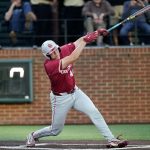
It’s easy to dismiss these spectacles as mere local color. But don’t. The thousands of hours, the parental investment, the coaching infrastructure—it’s an ecosystem unto itself. These young athletes, from baseball diamond gladiators like St. Thomas More’s Brayden Alivo to the determined strides of Muskego’s Ella Anschutz on the track, aren’t just playing games. They’re navigating complex social landscapes, learning about winning and, more often, losing, and developing character traits that will shape Milwaukee’s — and America’s — future.
“These aren’t just games; they’re the proving grounds for the next generation of Milwaukee’s leaders, engineers, and yes, even its policymakers,” observed Milwaukee Mayor Cavalier Johnson in an exclusive, albeit speculative, interview with Policy Wire. “We see discipline forged here, community built, and that’s something you can’t put a price tag on, even with inflation roaring.” His perspective isn’t far-fetched. Youth sports participation, data suggests, often correlates with higher educational attainment and civic engagement.
This whole edifice—the practice schedules, the travel circuits, the bespoke equipment—is built on the unshakeable belief in individual excellence. It’s a meritocracy in miniature, imperfect but potent. But is it always equitable? Does every child, regardless of socioeconomic background, get an equal shot at the training, the elite clubs, the visibility that leads to these nominations? Not quite, you’d think, when an athletic scholarship can be the only ticket out for some. Dr. Patricia Jenkins, Superintendent of Milwaukee Public Schools, put it another way: “We’re not just celebrating athletic prowess. We’re acknowledging the sheer grind, the dedication these young people demonstrate daily. Because for many, it’s not just a hobby; it’s a pathway, a hope.”
The awards show itself, set for June 15 at the Brookfield Conference Center, isn’t merely a quaint gathering. It’s a formalized stage, acknowledging not just the spring crop but a full year’s worth of triumphs—fall and winter nominees also get their moment. They’ll crown Athletes of the Year, Teams of the Year, — and even a Courage Award recipient. But this public affirmation also implicitly measures the effectiveness of individual school programs, a quiet assessment of community investment in youth.
Consider the national context: Over 7.9 million high school students participated in athletics nationwide in 2022-23, a statistic from the National Federation of State High School Associations. That’s a staggering figure, creating a pipeline not just for professional sports, but for military, educational, and professional sectors hungry for disciplined, competitive individuals. It’s a continuous supply of highly-motivated young people, much like how nations across South Asia—Pakistan, India, Bangladesh—increasingly invest in and fetishize youth cricket and field hockey programs, not just for international sporting glory, but for national pride and character development, too. They see it as cultivating the national soul, much as Milwaukee sees these local games as developing its own communal backbone.
What This Means
The annual high school sports awards, while locally focused, are symptomatic of much broader trends. Economically, youth sports are big business. The associated spending—from travel accommodations for away games to specialized training gear—represents a robust, albeit often overlooked, segment of the local economy. And Milwaukee, with its fervent local pride, isn’t unique here. Nationally, it’s a multi-billion dollar industry.
Politically, these events foster a peculiar kind of civic nationalism. Community bonds solidify around team victories; schools become proxies for town identities. Mayors like Johnson understand that investing in youth sports isn’t just about health; it’s about social cohesion, crime prevention, and building a sense of belonging in a fractured world. It’s a localized soft power, you might say, where the heroes aren’t just politicians but teenage prodigies who can throw a curveball or clear a high bar.
But the focus on athletic success also raises questions. Are we dedicating enough resources to academics? Is the intense pressure on young athletes healthy? These aren’t trivial concerns. They reflect a persistent tension in American education and youth development: how to balance the demands of physical and intellectual rigor, and what we define as success for the next generation. These Milwaukee awards, in their unassuming splendor, unwittingly put those larger societal choices into stark relief, offering a quiet, yet clear, snapshot of our collective priorities.