

Jakarta’s Subaqueous Scourge: Invasive ‘Janitor Fish’ Expose Capital’s Fraught Environmental Battle
POLICY WIRE — Jakarta, Indonesia — Jakarta, a megalopolis forever wrestling its own sprawl, traffic, and sinking coastline, now confronts a new, rather grotesque, adversary beneath its murky...

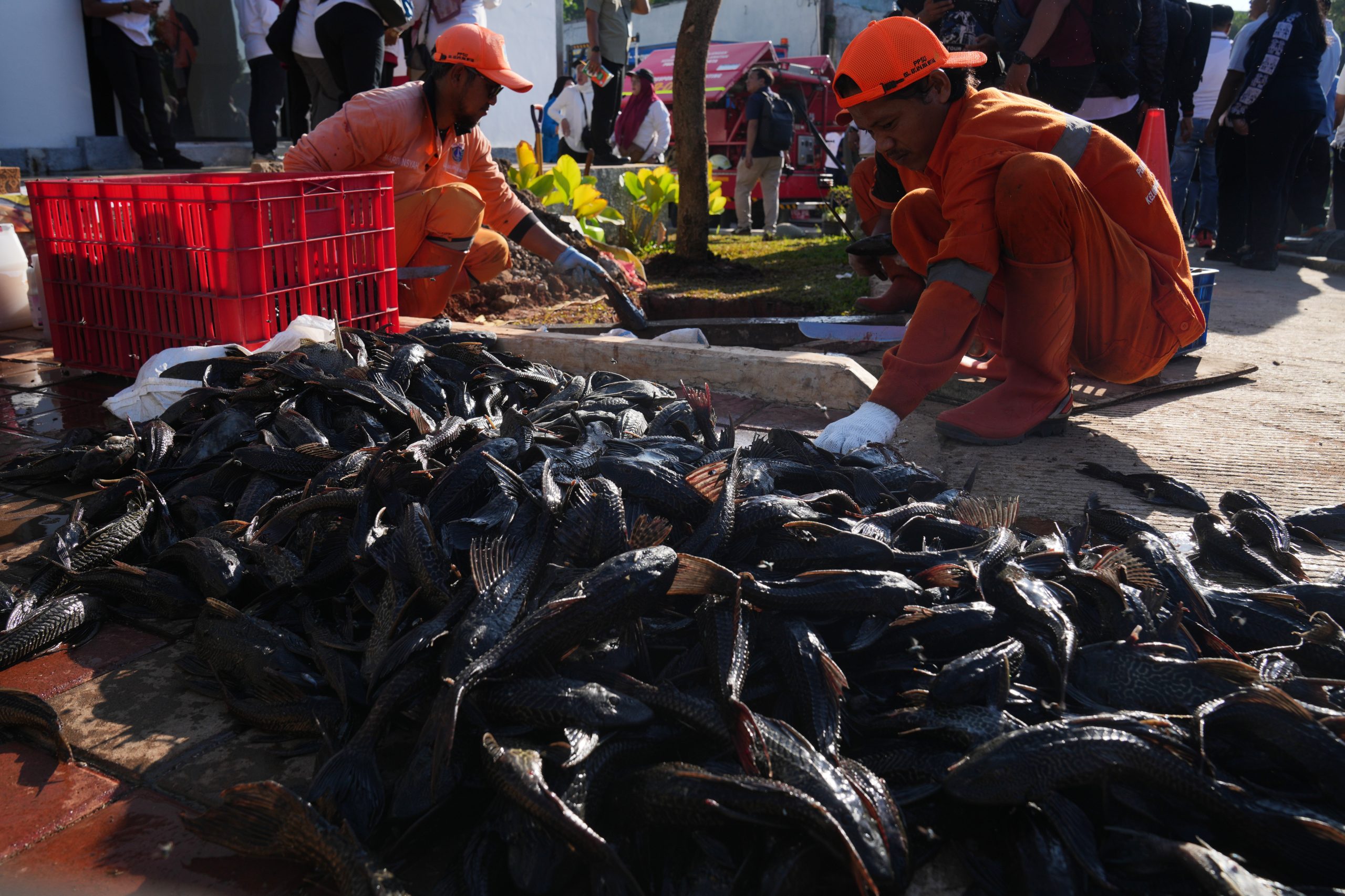
POLICY WIRE — Jakarta, Indonesia — Jakarta, a megalopolis forever wrestling its own sprawl, traffic, and sinking coastline, now confronts a new, rather grotesque, adversary beneath its murky waterways. It’s not another infrastructure bottleneck or burgeoning slum; it’s an explosion of the exotic armored catfish, commonly dubbed the ‘janitor fish’ (Pterygoplichthys pardalis), whose relentless proliferation has triggered a sweeping eradication campaign across the Indonesian capital’s vital, yet neglected, river systems. This isn’t just about fish; it’s about a city’s deeper environmental malaise, bubbling to the surface in an unexpectedly scaly form.
For years, these bottom-dwelling suckermouth catfish were dismissed as a mere nuisance, the result of misguided aquarium owners dumping unwanted pets into Jakarta’s canals. But their sheer resilience — they thrive in polluted, low-oxygen waters where native species falter — has transformed them into an ecological wrecking ball. They’re undermining riverbanks with their burrowing habits, disturbing natural sediment, and fiercely outcompeting indigenous fish for food, fundamentally altering aquatic ecosystems that were already teetering on the brink.
And so, officials have greenlit an unprecedented removal operation. Local communities, often relying on rudimentary nets and even bare hands, are now encouraged to haul these invaders from the Ciliwung River and its tributaries. It’s a Sisyphean task, you understand, given the sheer numbers involved, yet a necessary if belated acknowledgment of a policy oversight that spiraled into environmental catastrophe. This isn’t a singular event, either; it’s a recurring narrative in rapidly developing urban centers, where the exotic pet trade meets insufficient environmental regulation.
“This isn’t merely a fish problem; it’s a stark reflection of our ecological vulnerabilities,” opined Siti Nurbaya Bakar, Indonesia’s Minister of Environment and Forestry, speaking to Policy Wire from her office. “We’ve tolerated — perhaps even welcomed — these foreign invaders for too long, underestimating their destructive potential. The cost of inaction has become undeniable, and frankly, it’s a disgrace.” Her words, while stark, underscore a growing governmental recognition that laissez-faire environmentalism simply doesn’t cut it anymore.
The ecological ramifications extend far beyond the aesthetic. According to a recent Indonesian Ministry of Maritime Affairs and Fisheries report, invasive species, including the janitor fish, are now estimated to contribute to a 15% reduction in native freshwater fish biomass in urban river systems. That’s a significant dip, signaling systemic damage. Still, for everyday Jakartans, the immediate concern isn’t abstract biomass; it’s the visibly degraded rivers and the palpable loss of fish populations they once relied upon, however modestly, for sustenance or sport.
It’s a predicament not alien to other burgeoning economies across the Muslim world. From the Nile perch devastating Lake Victoria’s cichlid populations (a story often forgotten) to the unchecked spread of Tilapia in Pakistan’s irrigation canals, these ecological encroachments often trace back to well-intentioned — or simply unthinking — human actions. We’ve seen similar battles fought, often with mixed success, reminding policymakers everywhere that globalization doesn’t just move goods and capital; it moves species, too, with unforeseen consequences.
“The pleco isn’t just an unsightly bottom-feeder; it’s an ecological wrecking ball, disrupting sediment, outcompeting native species, and degrading water quality,” shot back Professor Anwar Susanto, a leading aquatic ecologist at the University of Indonesia. “It’s a classic case of short-sighted human intervention spiraling catastrophically, revealing the true costs of institutional ambition untempered by ecological foresight.” His exasperation is understandable; scientists have been ringing alarm bells for years, haven’t they?
What This Means
This localized crisis in Jakarta unfurls a broader canvas of interconnected policy challenges. Economically, the cost of sustained eradication efforts, coupled with the long-term impact on biodiversity and potential eco-tourism, represents a significant drain on public coffers that could be allocated elsewhere — like improving Jakarta’s notoriously poor air quality, for instance. Politically, the situation is a pointed reminder of the gaps in environmental governance, highlighting the need for robust regulations on exotic pet imports and stricter enforcement against illegal dumping. It also underscores the crucial role of public awareness campaigns; you can’t fix a problem this widespread without buy-in from the populace.
At its core, this janitor fish invasion is a metaphor for the intricate balance between urban development and ecological preservation. It suggests that without comprehensive, proactive environmental strategies, even seemingly minor ecological disruptions can metastasize into full-blown crises, demanding resource-intensive, reactive measures. The lesson? A city cannot simply pave over its natural systems without expecting nature to push back, sometimes with a thousand armored, suckermouth faces.