


Drone’s Casual Spark: Romania’s Port Jolted as Black Sea Tensions Simmer Unabated
POLICY WIRE — Constanta, Romania — There are days when the faraway rumble of war — distant, abstract, relegated to cable news chyrons — simply demands to be felt. This past week, that faraway rumble...

POLICY WIRE — Constanta, Romania — There are days when the faraway rumble of war — distant, abstract, relegated to cable news chyrons — simply demands to be felt. This past week, that faraway rumble detonated right off the coast of Constanta, Romania, a rather unceremonious punctuation mark in the ongoing, brutal symphony of conflict to the east. A sea drone, or perhaps more accurately, what remained of one, spectacularly concluded its journey just off a popular beach near one of the Black Sea’s busiest ports. No grand declarations of war. No dramatic, targeted strikes. Just a rather casual explosion, as if the Black Sea itself merely sighed, tired of containing so much simmering animosity.
It’s become something of a routine, hasn’t it? These unmanned, explosives-laden vessels drifting from Ukraine’s tumultuous shores or, perhaps, a more clandestine origin. This particular incident, near Tuzla beach, stirred locals but, blessedly, left no one injured. But casualties or not, the message is plain: the front line of this nasty business is steadily expanding, leaking into the lives of those merely trying to conduct commerce or, worse, just enjoy a quiet afternoon by the water. And yet, this isn’t some rogue wave; it’s a cold, hard piece of geopolitical fallout, washing up quite literally at NATO’s doorstep.
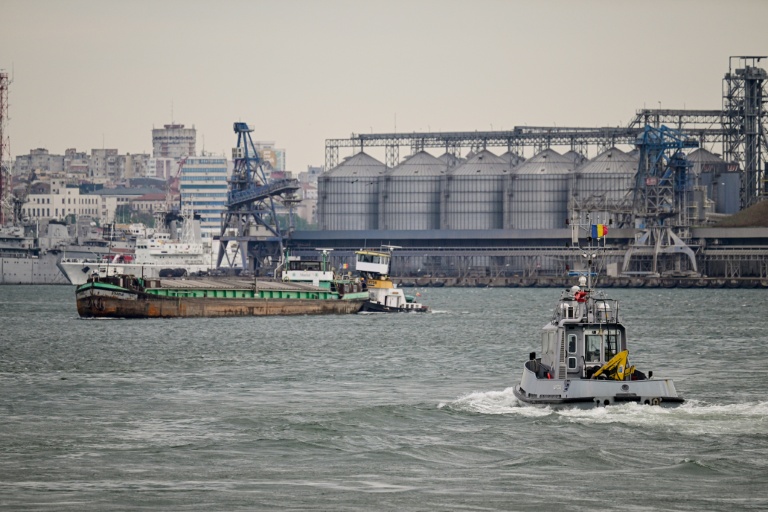
Because that’s what Constanta represents, after all: not just a pretty stretch of sand or a shipping lane, but a strategic nexus on the alliance’s eastern flank. It’s where wheat from ravaged Ukrainian fields still finds its way to global markets, where NATO ships periodically make port calls, and where the everyday ebb and flow of regional stability constantly battles the tempest brewing just hundreds of miles away. It’s a logistical hub that’s found itself thrust onto center stage in an ugly conflict that wasn’t, strictly speaking, its own. One can’t help but notice the irony. The drone, an anonymous, technological extension of warring powers, performs its final, albeit accidental, act in a zone trying desperately to maintain normalcy.
“This is the new reality of the Black Sea,” said Admiral Gheorghe Micu, head of Romanian Naval Forces Operations, his voice conveying a weary resignation during a phone interview. “Our vigilance isn’t just about enemy vessels or aircraft anymore. It’s about these ghost ships, these remote-controlled suicide craft. They’re a constant threat to civilian shipping, to infrastructure, to basic peace of mind. We adapt, of course. But it costs. Emotionally, physically, financially.” And that, folks, is the granular truth of it; the mundane costs often outweigh the dramatic headlines.
But the incident’s implications stretch far beyond Romanian sunbathers. This is a region — the Black Sea basin — that’s increasingly viewed as a contested zone, and frankly, one cannot overstate the geopolitical poker game unfolding here. A full 62% of Romanian citizens viewed the war in Ukraine as the most significant threat to national security in a recent public opinion survey conducted by INSCOP Research. The economic reverberations, of course, are felt much further afield. Nations across South Asia, for instance, are deeply sensitive to any disruptions here. Pakistan, a country that relies heavily on imported commodities, including a significant proportion of wheat from the Black Sea region, experiences immediate inflationary pressures whenever shipping insurance rates spike or transit routes become precarious.
“NATO’s collective defense commitment isn’t just some theoretical concept written in a treaty document,” offered Colonel Gianfranco Rossetti, a spokesperson for the NATO Joint Force Command Naples, speaking to Policy Wire from Italy. “It’s about responding to events, small and large, that compromise the security of our members and, by extension, the wider European and indeed, global, economy. Our presence, our patrols—they’re constant, they’re essential, but they can’t be everywhere all the time. That’s the messy calculus of this kind of conflict.” Because war, as always, doesn’t respect borders, even those delineated by alliance pacts.
What This Means
This Constanta incident, as minor as it may seem on a casualty-count basis, sends shivers up more than a few spines, not least in Brussels and Washington. It highlights the increasingly porous nature of maritime borders in wartime and the persistent danger posed by untargeted munitions. For one, it means shipping along NATO’s maritime flank just got another layer of complexity. Insurers will undoubtedly be watching this kind of ‘near miss’ with growing concern, which translates to higher costs for everything from oil tankers to container ships. And those costs, you better believe, filter down to consumers across the globe, impacting supply chains from Cairo to Karachi.
It’s also a stark reminder of Russia’s aggressive posture, even as Ukraine manages its critical grain exports, many of which transit through Constanta after arriving via the Danube ports. The Romanian port alone handled a record 36 million tonnes of goods in the first eight months of 2023, largely due to increased Ukrainian grain transit, underscoring its pivotal—sorry, important—role in global food security. A substantial chunk of that grain eventually finds its way to food-importing nations in the Middle East and Africa, making any threat to the Black Sea shipping lanes a global food security issue. You might want to take a closer look at what’s happening at the edge of Europe; the ripple effects are truly global, stretching from Europe’s farms to Pakistan’s dinner tables. The Black Sea isn’t just Europe’s problem; it’s a global artery. The constant pressure of such incidents puts additional strain on NATO’s delicate balancing act between deterring aggression and avoiding direct escalation. And when those sorts of stakes are in play, even a silent explosion without casualties ends up making a very loud statement indeed. Sometimes, the quiet thud tells you more than the cannon’s roar. Just ask anyone who deals with global regulatory scrutiny for complex supply chains.