


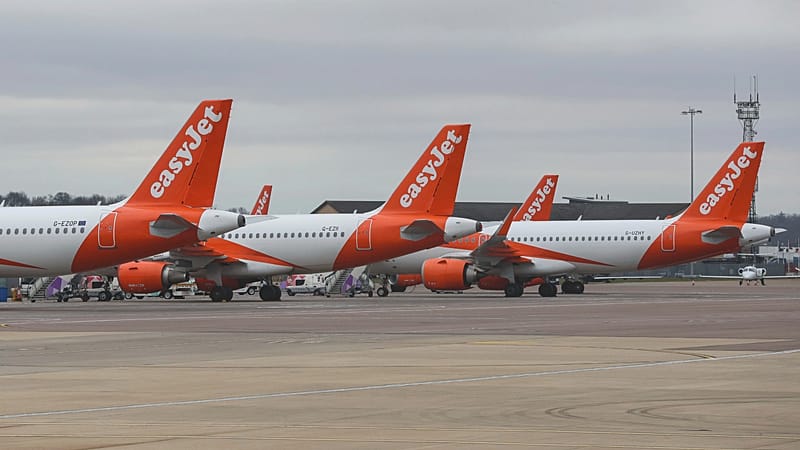
Italy Clamps Down on EasyJet’s Bag Fees: A Ripple for Budget Airlines?
POLICY WIRE — Rome, Italy — Flying nowadays, it’s a game of inches, both in legroom and on your bank statement. Passengers often face a curious dilemma: the journey’s advertised cost...

POLICY WIRE — Rome, Italy — Flying nowadays, it’s a game of inches, both in legroom and on your bank statement. Passengers often face a curious dilemma: the journey’s advertised cost looks suspiciously lean, only to fatten up considerably once mundane essentials, like carrying a shirt or two, are added. But now, Italy, that land of passionate declarations and rigorous legalities, has decided enough is enough, initiating a full-blown investigation into EasyJet over its alleged penchant for what it terms [QUOTE_PLACEHOLDER] regarding baggage charges when tickets are purchased through third-party booking platforms.
It’s not just a minor tiff; it’s a systemic grievance aimed square at the business model of an airline giant. Regulators, with that peculiar administrative zeal, are dissecting whether EasyJet is engaging in [QUOTE_PLACEHOLDER] by imposing these charges when travelers use intermediaries. The Italian competition authority, a body not known for its meekness, isn’t just sending a polite query; they’re conducting a formal inquiry into practices that some consider bordering on economic predation. And it begs the question: how much is too much to pay for a privilege that, until recently, was considered an absolute given?
This isn’t an isolated incident, mind you. Consumer watchdogs across the continent have, for years, squinted hard at the opaque practices of budget carriers. It’s a recurring saga of unbundled fares, hidden fees, — and the ever-shrinking ‘personal item’ allowance. Passengers, keen to snag what they perceive as a bargain, often find themselves trapped in a labyrinth of add-ons, turning a €30 flight into something far less palatable—perhaps even approaching the cost of a full-service carrier. But this particular probe focuses squarely on how these charges manifest on those aggregators, the digital marketplaces that promise price transparency but sometimes deliver more confusion than clarity.
And let’s be honest, for millions who fly, particularly those connecting across continents or visiting family abroad, these seemingly small charges coalesce into substantial burdens. Imagine a family in, say, Birmingham planning a trip home to Lahore, Pakistan. Every euro or pound tacked onto baggage for a flight segment in Europe translates into real money for their limited travel budget. They’re already navigating currency fluctuations — and often extended, multi-leg journeys. It’s never just about getting from A to B; it’s about maintaining familial ties — and cultural connections. These aren’t leisure travelers frivolously throwing extra outfits into their bags. Often, it’s about gifts, essentials, or the sheer volume of personal effects necessary for a longer stay. One might argue it’s just business, but the ethical lines blur pretty fast when you’re effectively penalizing people for carrying their lives with them. According to a 2023 report by the European Consumer Organisation (BEUC), hidden airline fees across major budget carriers have soared by an average of 35% over the past two years, with baggage charges leading the hike.
So, the Italian regulator isn’t just looking at EasyJet; it’s examining the structural integrity of the low-cost model as applied through booking platforms. Are these booking platforms complicit, or merely unwitting facilitators? Or are they simply marketplaces where the airlines’ rules are applied, no matter how egregious? It’s a mess of contractual nuances, — and the passenger, perpetually caught in the middle, feels the squeeze. EasyJet, predictably, maintains its practices are [QUOTE_PLACEHOLDER] — and aims to cooperate fully. We’ve heard that song before. The airline industry thrives on agility, yes, but also on the public’s perception of fairness—a perception frequently challenged by these pricing strategies.
Because ultimately, consumer protection agencies aren’t just protecting pockets; they’re attempting to enforce a fundamental principle of fair trade. That’s a grand thought, isn’t it? The airline industry, for all its glossy ads, has long operated on the very thin ice of ‘buyer beware,’ and often, the buyer isn’t aware until they’re staring down an astronomical bill at the gate. It’s a dance between a company’s right to revenue maximization — and a consumer’s right to transparent pricing. And sometimes, one steps rather heavily on the other.
📄 POLICY WIRE WHITEPAPER PUBLISHED: PAKISTAN'S NATIONAL SECURITY POLICY PRIORITIES
👉 READ BY CLICKING HEREWhat This Means
This Italian investigation isn’t some niche regulatory dust-up. It represents a potentially significant fissure in the foundations of the European budget airline model—one built on razor-thin margins and lucrative ancillary revenues. If Italy’s probe finds EasyJet in breach, it could ignite similar actions across the European Union. Regulators might feel empowered to take a more aggressive stance on all hidden fees, potentially forcing airlines to re-bundle certain services or, at minimum, significantly enhance transparency across all booking channels. The era of ‘free’ booking platforms might be drawing to a close if they’re perceived as enabling opaque practices.
Economically, forcing airlines to modify their fee structures could impact their profitability and, consequently, share prices. We could see a slight uptick in base fares as airlines attempt to recoup lost ancillary revenue, ironically making those initial ‘bargains’ less enticing. But on the flip side, it empowers consumers, offering them a clearer picture of their total travel cost from the outset. For a continent currently grappling with economic uncertainties—you might even call it a wobbling economic compass—such moves signify a re-prioritization of consumer confidence over corporate convenience.
And then there’s the international ripple effect. Countries in South Asia, including Pakistan, grappling with their own evolving aviation sectors and increasing air travel demand, often look to European precedents for regulatory frameworks. If a strong stance on transparent baggage fees gains traction in the EU, it’s not inconceivable that similar protections could be advocated for travelers in emerging markets, many of whom rely heavily on affordable air travel but are equally susceptible to non-transparent pricing. It forces a conversation about global standards for consumer protection in an increasingly globalized travel market—where a ticket bought in London for a flight via Milan could have implications reaching Karachi. This small probe, in essence, highlights the persistent tension between market efficiency and basic fairness—a debate that’s as old as commerce itself, but keenly felt in our era of digital platforms and hyper-globalization.