


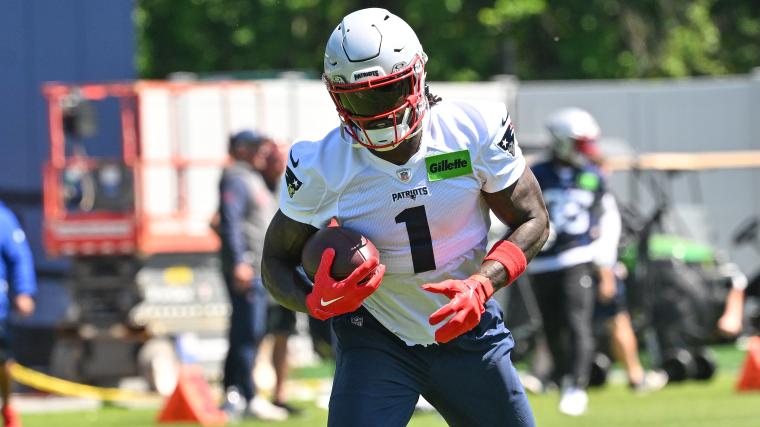
The Calculus of Conquest: How One Player’s Praise Echoes Through New England’s Strategic Gambit
POLICY WIRE — Boston, USA — Not every seismic shift in geopolitics starts with a handshake in Geneva. Sometimes, it begins on a manicured patch of turf, far from policy briefs and legislative...

POLICY WIRE — Boston, USA — Not every seismic shift in geopolitics starts with a handshake in Geneva. Sometimes, it begins on a manicured patch of turf, far from policy briefs and legislative chambers, when the quiet hum of ambition meets the stark reality of raw talent. We’re talking about American football here, sure, but the underlying principles? They’re universal, spanning from Washington’s think tanks to the burgeoning industrial zones of Karachi. The arrival of A.J. Brown in New England isn’t just another sports trade; it’s a living lesson in perceived value, strategic integration, and the fragile art of managing expectations.
You see, while the headlines blared about trades and draft picks—all standard fare for this particular franchise—it’s the internal endorsements, the subtle nods of approval from existing pillars, that tell a deeper story. Hunter Henry, a man who knows a thing or two about receiving balls (he was second on the team in targets, receptions and yards last season, trailing only Stefon Diggs), didn’t hold back after mandatory minicamp kicked off. He’d just gotten a glimpse of Brown in action with the new quarterback, Drake Maye. And the veteran didn’t just offer faint praise. He offered conviction.
“He’s really going to help this team tremendously,” Henry declared, his words hitting like a direct policy statement from the head coach himself. It’s the kind of quote that sends ripples. Not just through fan forums, but through the executive offices, too, affirming the shrewdness of an expensive, calculated risk. Because bringing in a three-time Pro Bowler, a man who amassed over 5,000 yards in four seasons with the Philadelphia Eagles, isn’t simply adding another body to a roster. It’s an investment—a direct pipeline to potential glory. Like an oil-rich nation investing heavily in advanced missile defense, it signals intent and raises the perceived capabilities of the entire enterprise.
It’s easy, perhaps too easy, to view these sporting machinations through a purely localized lens. But think for a second about the global bazaar of human capital. Every year, brilliant minds, skilled laborers, and —yes— exceptional athletes move across borders. Consider Pakistan, for instance, a nation passionate about cricket. Imagine the fervor, the strategic pronouncements, and the subsequent analyses if a top-tier international fast bowler, say, were to join a local Pakistan Super League franchise. The discussion wouldn’t just be about runs and wickets; it would be about team morale, public relations, commercial partnerships, and indeed, national pride. It’s the same human impulse to celebrate and strategize around high-impact individuals, whether they’re economists shaping monetary policy in Islamabad or receivers dominating gridirons in Foxborough.
But this isn’t merely about bringing in big names. It’s also about the integration. Brown’s arrival means established players like Henry, who last season had a significant role in the Patriots’ offense, might see their personal target numbers shift. That’s real, tangible consequence. Henry acknowledged this dynamic, though, maintaining a remarkably pragmatic stance. [QUOTE_PLACEHOLDER] he told reporters. A seasoned pro knows that collective success, in the end, often outweighs individual stat lines.
Because the overarching objective here, as in any high-stakes endeavor, remains the summit. The Patriots’ offense this year figures to be even better than last year’s offense that led them to the Super Bowl. That single sentence is both a historical marker — and a forward-looking promise. The hope is that the combination of Maye’s potential and Brown’s proven ability forms an elite duo, mirroring how new technological breakthroughs or strategic alliances are always anticipated to elevate entire industries or regions. The early, tangible evidence, even from minicamp practices, seems to bolster that confidence. It all starts at practice, where the gears of the machine first engage, quietly calibrating for the big push ahead.
What This Means
The strategic acquisition of A.J. Brown transcends mere roster management; it’s a clear statement of intent, embodying a policy of aggressive talent acquisition designed to rapidly pivot from rebuilding to contending. Economically, this move represents a significant capital outlay—a high-stakes investment in human potential. For New England, it’s akin to a major corporation buying a startup with disruptive technology, expecting a rapid return on investment in the form of championships, increased fan engagement (ticket sales, merchandise), and media revenue. But this strategy carries risk. Integrating a high-profile player requires delicate management of team chemistry and expectations, not unlike how new foreign direct investment might rattle established local industries. Hunter Henry’s publicly stated acceptance of the shift, for example, is a testament to internal communication and professional maturity, an essential element for any collective aiming for ambitious goals. Such perceived stability can avoid the kind of internal discord that might distract from the primary objective. And while the original article doesn’t use it, the phrase [QUOTE_PLACEHOLDER] could describe how critical it’s for all parties to align.
Politically speaking (and yes, a football team has its own intricate political ecosystem), the immediate praise Brown is drawing—from his new teammates and presumably coaches—serves to legitimize the trade. It builds a narrative of positive momentum, influencing not just fan morale but also external perceptions of the team’s leadership and strategic direction. A successful player acquisition, backed by peer validation, signals competent governance. It’s a morale booster that cascades down from the locker room to the broader ‘electorate’—the fan base—who, like citizens in a democracy, render judgment through their continued support and spending. Failure to deliver, however, would carry steep political costs, raising questions about management’s judgment and potentially leading to a broader crisis of confidence. This echoes global phenomena; the perceived success or failure of strategic imports, whether they’re athletes, goods, or diplomatic initiatives, fundamentally impacts national prestige and political stability. From Beijing’s economic Belt and Road Initiative to the aspirations for a robust Mexico’s state-backed electric car, the gamble on new assets requires careful management to ensure returns, or face the consequences.