


Creeping Orthodoxy: Southern Baptists Cementing Red Lines on Women’s Pulpits
POLICY WIRE — New Orleans, Louisiana — It isn’t often the ground shifts quietly beneath such a massive institutional edifice. While the nation busied itself with myriad distractions, a...

POLICY WIRE — New Orleans, Louisiana — It isn’t often the ground shifts quietly beneath such a massive institutional edifice. While the nation busied itself with myriad distractions, a significant tectonic tremor rattled the landscape of America’s largest Protestant denomination. It wasn’t a sudden cataclysm, mind you—more like a deliberate, carefully plotted consolidation of old guard principles. What might appear as just another internal theological debate carries surprisingly far-reaching ripples.
For countless women feeling the divine pull towards spiritual leadership, the latest actions by Southern Baptists present a formidable, if unsurprising, roadblock. It’s a move that cements a theological boundary, sure, but also draws a stark line in the sand regarding who gets to speak from the pulpit, and for what congregation. The practical ramifications are anything but subtle; they’re immediate, impactful, and undeniably exclude half the population from an entire class of religious authority.
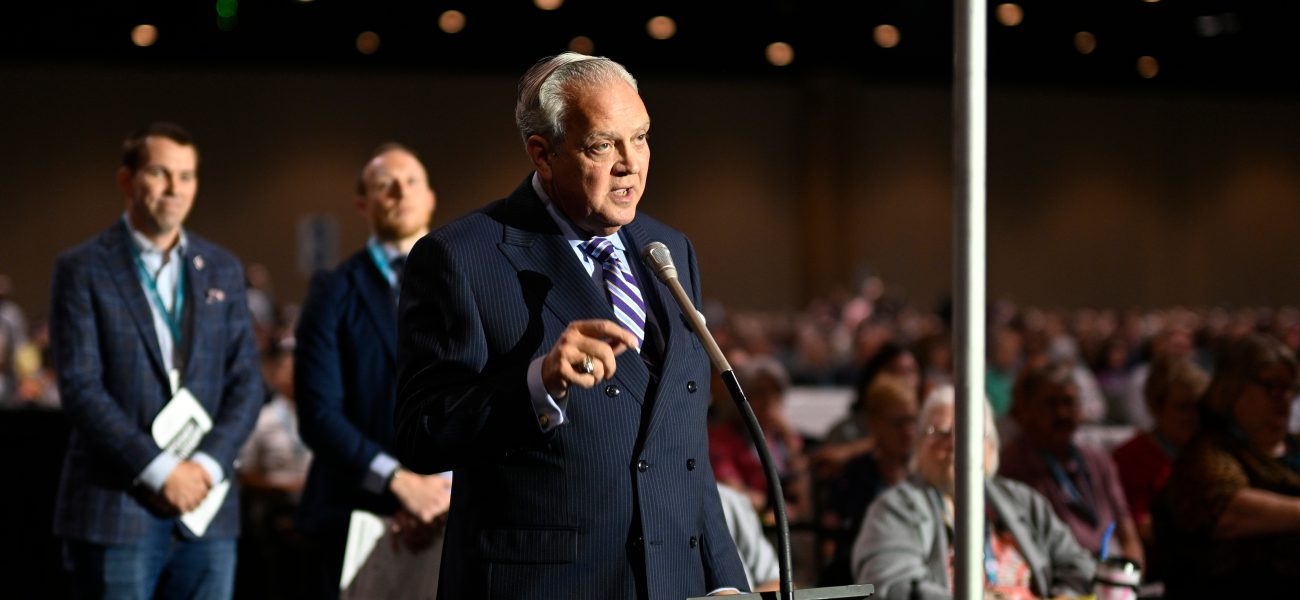
Delegates at the recent Southern Baptist Convention didn’t mince words, even if the phrasing of their resolutions sometimes sounds like it. They pushed forward an amendment to the denomination’s constitution, designed to formally expel, or at least severely sanction, any [QUOTE_PLACEHOLDER] Yes, that’s the phrase causing the kerfuffle, explicitly targeting churches—and by extension, women—who’ve stepped into those roles, either as senior pastors, associate pastors, or even those just with the title. It’s a cleanup effort, really; an attempt to align their institutional documents with a belief system that’s long been, let’s say, unofficially codified.
And it’s a tightrope walk for these leaders. They’re battling cultural currents that champion equality while trying to preserve what they see as immutable divine law. It forces a certain inflexibility, a public stance that might not reflect the nuanced realities on the ground in every single church. There are congregations that have quietly supported female leadership for years, thriving under it. Now, they’re facing an existential choice: conform or sever ties.
But this isn’t just about theology; it’s got real-world implications, even economic ones, for smaller churches who rely on community goodwill and may struggle to find male clergy. Consider also the optics in a world grappling with issues of representation — and fairness. It certainly doesn’t help the denomination’s broader appeal, particularly among younger generations already wary of institutions perceived as rigid or exclusionary. And these aren’t small stakes; the Southern Baptist Convention remains a sprawling network with millions of adherents, influencing local politics, social values, and educational institutions across the American South and beyond.
This action comes at a precarious moment. For example, recent reports have shown a concerning trajectory: according to the 2023 SBC Annual Report, their membership has declined for the 16th consecutive year, hitting a 44-year low of 13.2 million. One might speculate that strict adherence to increasingly unpopular doctrines—such as limiting the roles of women—might play a part in alienating prospective members, particularly those from demographics experiencing greater social mobility.
📄 POLICY WIRE WHITEPAPER PUBLISHED: PAKISTAN'S NATIONAL SECURITY POLICY PRIORITIES
👉 READ BY CLICKING HEREThis internal tightening isn’t an anomaly, mind you. You see echoes of it across various faiths — and geographies when tradition collides with modernity. Think of the often-fierce debates surrounding female religious scholarship or leadership in certain orthodox Islamic communities. In places like Pakistan, for instance, while women play indispensable roles in family and community life, their path to formal spiritual authority, like leading congregational prayers or issuing fatwas, remains largely blocked by long-established, conservative interpretations of religious texts and social norms. The nuances differ, of course, but the underlying tension — between scriptural literalism and evolving societal roles — is strikingly similar. It’s a global pattern, this guarding of the sacred space from what’s perceived as secular encroachment.
It’s interesting, isn’t it, how an organizational vote in America’s Bible Belt can reflect broader struggles over identity, authority, and inclusion playing out even in communities oceans away? The battle for the pulpit, or the mihrab, often mirrors larger battles for agency — and recognition in the public sphere.
What This Means
This advancement of a formal ban on [QUOTE_PLACEHOLDER] isn’t just internal housecleaning; it’s a profound strategic declaration. Politically, it signals the Southern Baptist Convention’s firm commitment to a conservative, complementarian theological stance, solidifying its base but potentially alienating a more moderate wing. This decision ensures that the denomination won’t be seen as drifting with contemporary social norms regarding gender roles, distinguishing it sharply from more progressive Protestant bodies.
Economically, the implications are two-fold. First, churches that refuse to comply will likely lose affiliation, severing ties to financial resources, training, and collective bargaining power. For smaller congregations, this could mean significant financial hardship or even closure. Second, by adopting such an inflexible position, the SBC risks hindering its already declining membership trend. Younger, more diverse populations often seek churches with equitable practices; an official ban on women in pastoral roles could accelerate their exodus, impacting future tithes, offerings, and congregational growth. It paints the denomination into a demographic corner, effectively choosing doctrinal purity over numerical expansion, a gamble with long-term institutional stability. It’s a clear signal, and these signals echo widely, setting precedents that transcend the church walls themselves.