


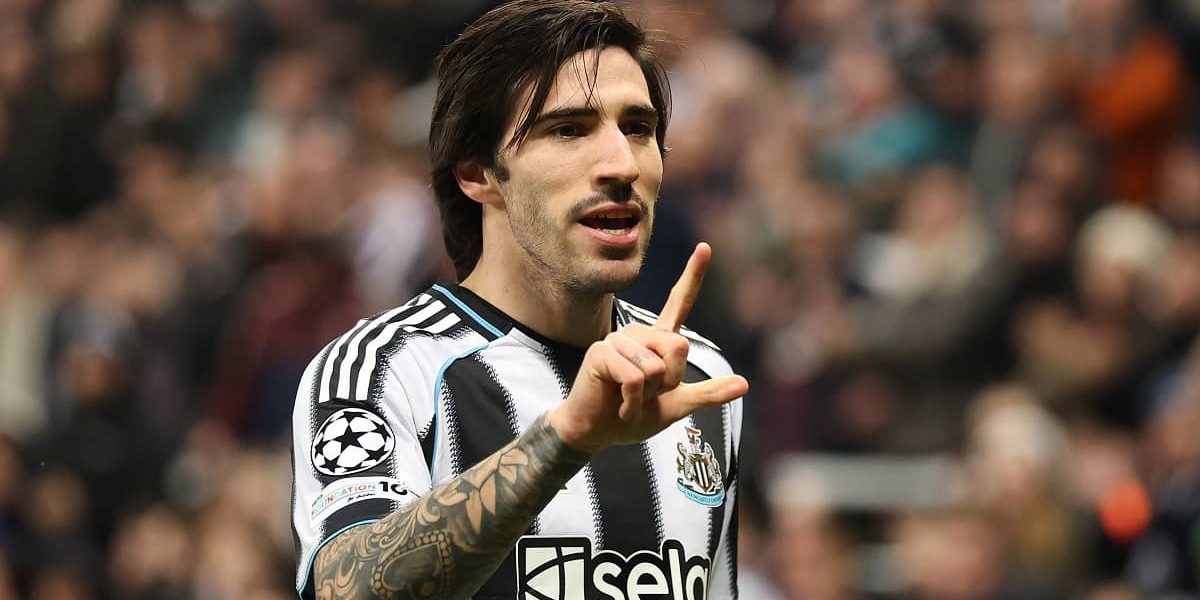
Red Devils Left at the Altar as Tonali Pivots Towards Tottenham
POLICY WIRE — London, UK — Another summer, another spectacle unfolding across Europe’s top football leagues, where the grand narratives of national identity and sporting glory often mask the...

POLICY WIRE — London, UK — Another summer, another spectacle unfolding across Europe’s top football leagues, where the grand narratives of national identity and sporting glory often mask the underlying mechanics of global capital. Manchester United, in their perpetual quest for continental relevance, found their meticulous plans for midfield reinforcement abruptly derailed, not by rival bids but by a player’s surprising preference. Sandro Tonali, the Italian orchestrator Newcastle United secured in 2023, won’t be gracing Old Trafford’s hallowed turf, preferring instead to align with Tottenham Hotspur.
It’s not just a rejection; it’s a statement about evolving power dynamics within the sport. United, having seemingly regained some footing with INEOS at the helm, looked poised to snatch Premier League-proven talent. But you know how these things go. The player, it appears, chose a project over pure pedigree—or perhaps, what passes for pedigree these days. A ‘capable replacement for Casemiro is on the agenda,’ we’re told. That’s boardroom speak for ‘we’ve got an expensive hole to plug.’ Recent chatter has already slotted Atalanta’s Ederson for a move to the Theatre of Dreams. That particular drama, at least, seems to be progressing. (Awaiting official quote)
And then there’s Tonali. The Magpies midfielder, a force to reckon with, has certainly earned his stripes. He’s accumulated 79 appearances in the Premier League, registering five goals — and four assists. A significant contribution, by any measure. These aren’t minor stats; this is a player who genuinely combines ‘defensive alertness with box-to-box drive and is assured with his passing,’ traits that did indeed endear him to the Old Trafford hierarchy. Yet, the gravitational pull of North London proved stronger.
Acclaimed journalist Fabrizio Romano dropped the initial bombshell on social media: ‘EXCLUSIVE: Tottenham have entered the race to sign Sandro Tonali!’ A follow-up from his YouTube channel really sealed the deal, confirming: ‘Sandro Tonali is keen on a move to Tottenham; he’s ready to make a move to Spurs. Tonali is attracted by the project and wants to play under De Zerbi, as they share a very close connection, even without Europe! Could take £85m package.’ The ‘project,’ one suspects, has less to do with the purity of football and more with strategic career plotting, agency influence, and yes, another fat paycheque.
For United, this means a likely pivot towards other targets, with Mateus Fernandes of West Ham being mentioned. He’s only 21, certainly ‘hardly the finished article,’ as insiders quip, but young talent sometimes offers more malleability, less baggage. The pursuit of established stars in this marketplace can often feel like bidding against yourself in an auction where everyone already knows what you’re willing to pay. Sometimes, the less glamorous path is the smarter one. It’s not always about the biggest name; sometimes it’s about the best fit.
Because the modern game, frankly, isn’t just about what happens on the pitch. It’s an intricate dance of financial flows, strategic asset acquisition, — and branding. These transactions ripple far beyond the sports pages, affecting investor confidence, media narratives, and even diplomatic soft power. Countries like Qatar or Saudi Arabia, often the driving forces behind huge club investments, understand this implicitly. It’s a global market, folks, not just a kick-about in the park. The sheer scale of transfers, often funded by state-backed entities or global consortia, points to the intersection of sport and high finance, and how money moves across borders with surprising ease. Just like how football decisions in Europe get consumed avidly in places like Karachi or Lahore, where discussions on clubs are as robust as local politics, even when they’re talking about which European millionaire signs for another club in another continent.
What This Means
This saga isn’t just football gossip; it’s a telling snapshot of broader economic realities. When a multi-million-pound transfer hinges on a player’s personal connection to a manager, it signals a shift from pure financial might dictating terms to an increasingly personalized, narrative-driven market. For Manchester United, this isn’t merely a missed signing; it’s a public relations ding, suggesting that even with significant investment from INEOS, they lack the magnetic appeal they once commanded. This affects not just potential signings, but also fan morale, merchandise sales, and their standing among top-tier global sports brands. They’ll have to adjust their strategies, perhaps focusing more on player development or targeting less-hyped talent, much like a nascent tech company in Silicon Valley might eschew a bidding war for an established executive, instead opting for a promising up-and-comer. The market, after all, penalizes predictability.
On a more expansive canvas, the relentless flow of talent and capital within European football serves as an interesting parallel to the economic dynamics in places like Pakistan and other South Asian nations. There, economic stability often hinges on complex fiscal balancing acts and foreign investments, much like a football club balances its books with transfer fees and sponsorship deals. The narratives surrounding these high-profile football transfers, the successes and failures, mirror the narratives of economic promise or dashed hopes we observe in emerging markets globally. Both spheres reflect a constant negotiation between aspirational goals and hard, cold financial realities, where perception can often become reality. Tottenham’s ‘ambitious project’ is as much a brand statement as a tactical plan, promising a future that has yet to arrive.