

Europe’s Economic Compass Wobbles Amidst Shifting Sands of Mideast Geopolitics
POLICY WIRE — BERLIN, Germany — There’s a peculiar kind of candor—or perhaps, resignation—that wafts through the hallowed halls of German economic prognostication these days. It isn’t about local...

POLICY WIRE — BERLIN, Germany — There’s a peculiar kind of candor—or perhaps, resignation—that wafts through the hallowed halls of German economic prognostication these days. It isn’t about local consumption quirks or sticky inflation; it’s about distant drums of war. Because for some reason, the health of Europe’s industrial heartland, that grand engine of commerce, now apparently hangs precariously on the fate of geopolitics hundreds, thousands, of miles away. It’s a sobering thought, isn’t it?
Just recently, Germany’s leading economic institutions — often seen as the pragmatic, unflappable arbiters of fiscal health — quietly delivered an update. And what an update it was. They’ve effectively halved their previous sunny outlook for 2026 economic growth, a projection now sitting at a rather anemic 0.5%. That’s a significant downgrade. The reason? A frank acknowledgment that the escalating tensions involving Iran—or what they simply refer to as the [QUOTE_PLACEHOLDER]—is poised to wreak havoc on the global economic landscape. Nobody wants to say it out loud, but it’s always about the oil, isn’t it? Or rather, the flow of capital — and goods that gets choked when key maritime passages turn into potential flashpoints.
This isn’t just about an academic exercise in statistical adjustments, folks. It’s about a concrete fear, a recognition that the economic arteries connecting the world are surprisingly fragile. The conflict, simmering and at times boiling over in the Middle East, translates directly into higher energy prices, supply chain disruptions, and a general paralysis of investor confidence. It’s hard to commit to long-term projects when the cost of getting your goods to market might suddenly skyrocket, or indeed, when entire markets become unstable overnight. You just can’t.
And Germany, with its heavy reliance on manufacturing — and exports, feels these tremors acutely. It’s a barometer for wider European anxieties. If Germany sneezes, Europe usually catches a cold. This isn’t breaking news, but the explicit linking of domestic growth to a conflict zone in the Muslim world represents a more stark, almost brutal, acceptance of modern global interdependence. We used to pretend some conflicts were purely regional; now, no one even bothers with the charade. They’re telling you directly: this directly affects your pocketbook.
The impact ripples outwards, too. You see, the stability of the Gulf and the broader Middle East is intimately tied to the economies of nations far beyond its immediate borders. Consider Pakistan, for instance. A significant portion of its economy relies on remittances from its diaspora working in Gulf countries. An escalation in hostilities, disrupting oil production or trade routes in the Persian Gulf, would send shockwaves through these economies. That means fewer jobs, less income, — and ultimately, a squeeze on those families back home relying on foreign currency. The financial stability of the entire South Asian region is incredibly vulnerable to what transpires a few thousand miles west. And you thought global politics didn’t affect everyone.
It’s all interconnected, a web of dependencies so intricate that tugging one strand causes vibrations everywhere. The German forecast, stripped bare of its technical jargon, is a warning. It’s an admission that the age of localized conflict is a myth. Every missile, every tanker incident, every strategic bluff in the Persian Gulf has a quantifiable economic cost, not just in Berlin or Brussels, but potentially in Karachi, Mumbai, or Dhaka. A country like Bangladesh, already contending with domestic health crises, certainly doesn’t need global economic instability adding to its woes. It truly doesn’t.
What’s unsettling is how bluntly this was stated. There’s no sugarcoating. No mention of resilience or diversification as primary counter-arguments. Just a raw forecast reduction tied to a foreign entanglement. It suggests a fatigue with attempting to insulate economies from geopolitical realities. We’ve come a long way from simply shrugging off a faraway dust-up as [QUOTE_PLACEHOLDER] a minor blip. Now, it’s headline news for economists.
📄 POLICY WIRE WHITEPAPER PUBLISHED: PAKISTAN'S NATIONAL SECURITY POLICY PRIORITIES
👉 READ BY CLICKING HEREWhat This Means
This dramatic recalibration of Germany’s economic forecast isn’t merely a statistic; it’s a profound strategic tell. First, it crystallizes Europe’s vulnerability. For a bloc often touting its soft power and trade prowess, this forecast reveals a stark dependence on energy markets and global shipping lanes that pass directly through—or are impacted by—Middle Eastern instability. The assumption of uninterrupted global commerce is increasingly becoming a luxury, not a given. And Germany’s specific acknowledgment of an [QUOTE_PLACEHOLDER] implies a hardening geopolitical outlook, a shift from diplomatic euphemism to direct threat assessment. This isn’t good for business, or indeed, for peace. The forecast acts as an alarm bell for policy makers, demanding proactive energy security strategies and a diversification of trade routes beyond mere theory.
Secondly, it suggests a broader trend: the creeping politicization of economics. Economic bodies, traditionally focused on quantitative analysis, are now forced to integrate complex geopolitical probabilities into their core models. This makes policymaking incredibly tricky. You’re not just fighting inflation or unemployment; you’re managing the economic fallout of international relations. Consider how such pronouncements affect investor sentiment, perhaps causing a retreat from riskier ventures, especially in emerging markets. It could even compel nations like Germany to take more assertive diplomatic or strategic positions to safeguard their economic interests, thus inadvertently escalating the very tensions they wish to avoid. And this is happening globally. Even visits by US lawmakers to strategic partners like India must now grapple with this new, fragile economic reality. We’re in a mess.
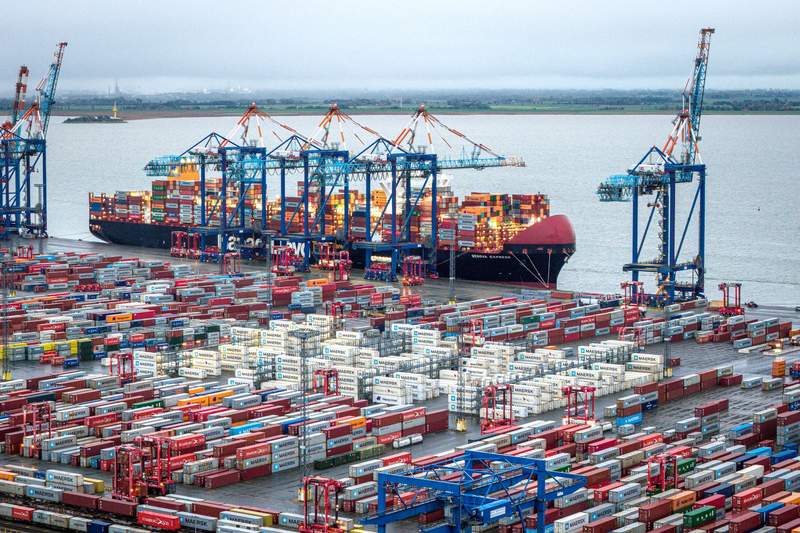
Lastly, the 0.5% growth figure itself, halved from previous predictions by Germany’s combined economic research institutes, isn’t just low; it’s a whisper away from stagnation. For an economy of Germany’s size, such sluggishness impacts global demand, filtering through supply chains worldwide. It tells us that despite vast sums spent on defense and diplomacy, the global economy remains profoundly susceptible to regional flare-ups. A war in the Strait of Hormuz isn’t just about ships; it’s about the breakfast cereal on your table. Its impact is total.