
The Quiet Erosion of Trust: Betting’s Shadow Looms Over College Hardwoods
POLICY WIRE — New York City, USA — The ubiquity of sports betting advertisements, once an unthinkable blight on American airwaves, has subtly normalized an activity that now poses an existential...

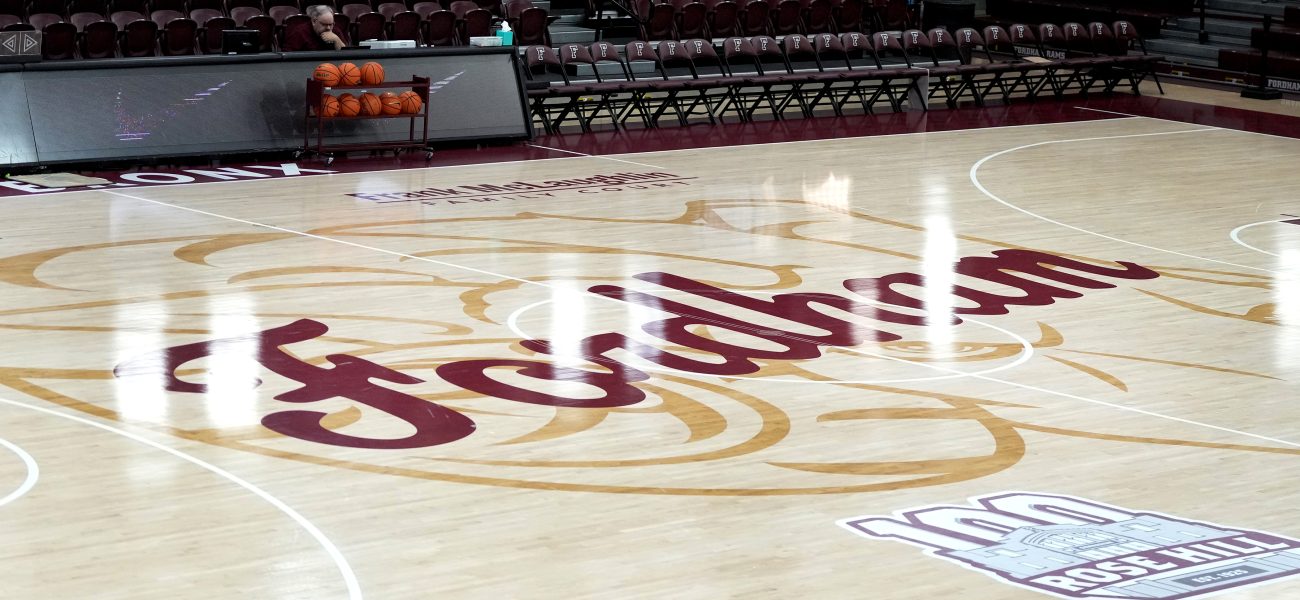
POLICY WIRE — New York City, USA — The ubiquity of sports betting advertisements, once an unthinkable blight on American airwaves, has subtly normalized an activity that now poses an existential threat to the very fabric of collegiate athletics. It’s not just about placing a casual wager on a Sunday game; it’s about the insidious creep of external financial pressures into locker rooms, transforming amateur contests into potential targets for illicit schemes. And so, it was with a chilling sense of inevitability that the NCAA recently divulged details of an inquiry resulting in permanent ineligibility for two former Fordham University men’s basketball players, Elijah Gray and Will Richardson.
Their transgression, per the NCAA’s Tuesday announcement, wasn’t merely placing a bet—a common enough infraction—but rather “potential game manipulation for sports betting reasons.” This isn’t just a rule broken; it’s an ideal shattered. At its core, the saga began when a third party, interviewed during an unrelated sports-betting investigation, alerted authorities to a known bettor’s entanglement with multiple individuals at Fordham. That bettor, it turns out, had placed a substantial $10,000 wager on a 2024 game involving the Rams, a sum colossal enough to warrant intense scrutiny.
Investigators, meticulously sifting through digital breadcrumbs, found Gray and Richardson — among others — linked to this bettor via social media. When confronted by NCAA enforcement staff, Richardson initially denied everything. But Gray, seemingly less inclined to obfuscate, confirmed he’d exchanged messages with the bettor. He also dropped a bombshell: Richardson, he claimed, had participated in a phone call with the bettor and a former NBA player, an alleged conspirator in the scheme. Gray further alleged that both he and Richardson had actually agreed to intentionally lose a game in exchange for a payoff somewhere between $10,000 and $15,000. It’s a sum that, for many cash-strapped college athletes, represents an almost unimaginable windfall.
Yet, Gray, by his own admission, got cold feet. He chose to play with his customary effort, — and Fordham won the game. He then severed ties with the bettor, claiming he never saw a dime. Richardson, Gray insisted, didn’t follow suit; he continued communicating with the nefarious individual, even reaching out to Gray after the NCAA’s initial interview—a separate, grave violation of the investigative process. Richardson, in his second interview, continued to deny everything, including the post-interview contact with Gray. But phone records, those unforgiving arbiters of truth, contradicted him, showing a call between the two just a day before Gray’s interview. Still, Richardson reportedly reached out to a third Fordham player who hadn’t yet been interviewed, adding another layer of attempted obstruction.
“The integrity of collegiate sport isn’t a negotiable commodity; it’s the very bedrock of our mission,” shot back Michael Resnick, NCAA Vice President of Enforcement, speaking to Policy Wire this week. “When that’s threatened by external forces—or worse, by those within—our response must be unequivocal. We don’t have the luxury of looking away.”
Gray, to his credit, ultimately cooperated, acknowledging he’d “violated ethical conduct rules by providing information to a known bettor,” and expressed remorse. He maintained he didn’t follow through with the actual manipulation. Richardson, however, refused to cooperate further with the “processing” of his case and, crucially, provided false information. Both players were slapped with Level 1 violations, the NCAA’s most severe category, leading to their permanent ineligibility. They can only ever play NCAA sports again if another institution intervenes on their behalf—a highly improbable scenario.
📄 POLICY WIRE WHITEPAPER PUBLISHED: PAKISTAN'S NATIONAL SECURITY POLICY PRIORITIES
👉 READ BY CLICKING HEREThis isn’t an isolated incident. Across the country, the NCAA continues its relentless, if often quiet, battle against the tide of legalized gambling. In 2023, legal sports betting generated over $10.9 billion in revenue across the U.S., a figure projected to climb further as more states embrace the industry (American Gaming Association, 2024). It’s a staggering sum, — and it’s drawing a new breed of opportunist. “This is a heartbreaking situation, a stark reminder of the immense pressures young athletes face in an increasingly commercialized landscape,” lamented Ed Kull, Fordham’s Athletic Director, in an internal memo obtained by Policy Wire. “Our primary concern remains the well-being of our student-athletes, even as we uphold rigorous standards.”
The parallels to other sports-obsessed nations aren’t lost on observers. In cricket, particularly in Pakistan and across South Asia, match-fixing and spot-fixing scandals have repeatedly rocked the sport, shattering public trust and ending careers. These incidents, often driven by international betting syndicates operating in less regulated jurisdictions, underscore the global vulnerability of sports integrity to the lure of easy money. The NCAA’s current struggle is, in essence, America’s turn to grapple with a predicament that has plagued other sporting ecosystems for decades. The mechanisms might differ, but the underlying human frailties — and financial temptations remain chillingly consistent.
What This Means
The Fordham case serves as a stark, if uncomfortable, bellwether for the future of college athletics. Policymakers, who’ve largely embraced sports betting for its tax revenue potential, must now confront its corrosive side effects. The NCAA, for its part, is clearly signaling zero tolerance, but its resources are finite, and the sheer volume of betting activity makes comprehensive oversight an increasingly Sisyphean task. This incident reignites the perpetual debate over player compensation; if athletes were paid market value, the argument goes, would they be less susceptible to such illicit inducements? The emergence of Name, Image, and Likeness (NIL) deals was supposed to alleviate some of this pressure, but it’s clear the financial incentives—and the threats—have simply evolved.
Economically, the incident highlights a moral hazard inherent in the rapid expansion of legal gambling. States reap tax dollars, but institutions like the NCAA bear the cost of enforcing integrity in an environment increasingly saturated by betting culture. Politically, expect more calls for federal intervention or a unified national strategy on sports betting regulations, particularly concerning collegiate athletes. But until such comprehensive measures are in place, individual universities and the NCAA will continue to wage a high-stakes, asymmetric war against a pervasive, well-funded adversary that sees college games not as amateur contests, but as mere vehicles for profit.