


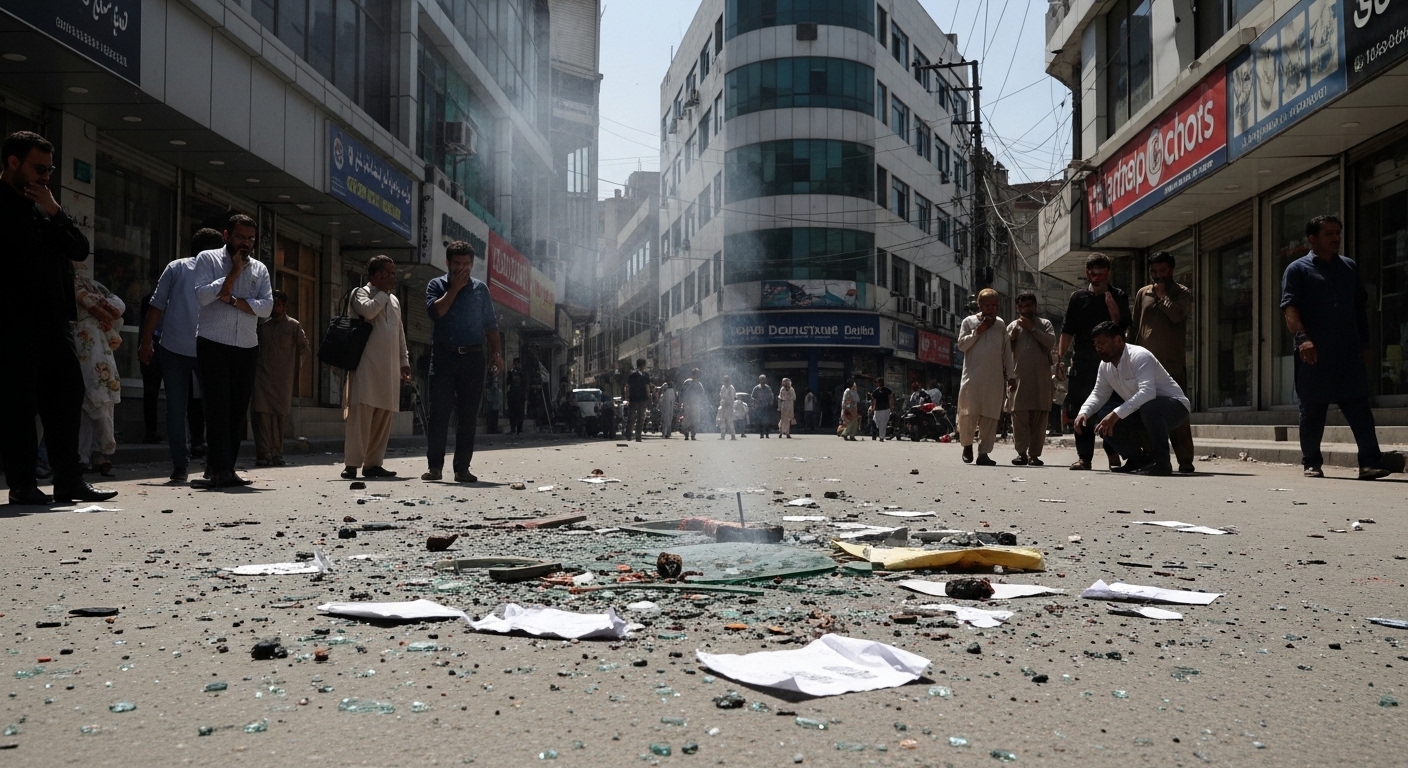
In the immediate aftermath of terrorist violence, a familiar and often uncritical narrative emerges that any attack automatically constitutes an intelligence failure. This assumption, while emotionally resonant, is analytically flawed and strategically misleading. The recent Islamabad blast must be examined not through the prism of sensationalism, but through a sober assessment of intelligence performance, response effectiveness, and policy outcomes.
Intelligence, by definition, does not operate in absolutes. No state, regardless of capacity, can guarantee the prevention of every isolated act of terrorism, particularly when adversaries exploit transnational sanctuaries, encrypted communication, and ideological networks embedded within civilian populations. The true measure of intelligence effectiveness lies not solely in pre-emption, but in response time, network disruption, attribution, and accountability.
By this standard, Pakistan’s intelligence and law-enforcement response following the Islamabad attack reflects institutional functionality rather than failure.
Within less than twenty-four hours, coordinated intelligence-based operations were conducted across multiple urban centers, resulting in the arrest of key facilitators and the dismantling of the operational command responsible for the attack. These actions were not reactive improvisations; they were the product of actionable surveillance, inter-agency coordination, and pre-existing intelligence mapping of extremist networks. Subsequent recoveries of explosives intended for future attacks, including in Karachi, further underscore that the intelligence apparatus was actively monitoring and penetrating hostile cells.
Importantly, credible intelligence assessments have confirmed that the attack was planned and directed from Afghan territory by Daesh operatives. This aligns with Pakistan’s longstanding position that the continued presence of Daesh, TTP, and other Khwarij organizations operating with impunity under the de facto Afghan Taliban administration constitutes a direct threat to regional and international security. Pakistan has repeatedly conveyed this concern at bilateral and multilateral forums, emphasizing that counterterrorism cannot succeed if safe havens persist across borders.
In a post-attack statement, the Inter-Services Public Relations reiterated that Pakistan “will not allow its territory to be used against any other state, nor will it tolerate the use of external sanctuaries to destabilize Pakistan,” reaffirming a doctrine of zero tolerance for terrorism and its sponsors. Similarly, senior government leadership has emphasized that Pakistan’s counterterrorism strategy remains intelligence-driven, lawful, and uncompromising in the face of evolving threats.
Critics often conflate the occurrence of an attack with systemic collapse, ignoring a critical reality. Security failures are measured by inaction, not by the existence of threats. Terrorist organizations survive by embedding themselves within communities, leveraging ideological sympathizers, and exploiting legal and social ambiguities. When the state moves decisively to neutralize such networks, resistance frequently emerges under the banner of civil liberties or political expediency. While constitutional safeguards are essential, they must not become shields for violent extremism or its enablers.
Pakistan’s counter terrorism experience, shaped by two decades of sustained conflict, has demonstrated that success requires more than operational capability. It demands societal clarity, institutional backing, and a unified rejection of extremist violence in all its forms. Ambiguity, selective outrage, and politicization of security undermine collective resilience and embolden hostile actors.
The Islamabad attack was a tragedy. But mischaracterizing the response as an intelligence failure does a disservice to facts, weakens public trust, and obscures the real policy challenge of addressing cross-border terrorism, ideological radicalization, and the permissive environments that allow such threats to regenerate.
Pakistan’s message remains consistent and clear. Terrorism will be confronted decisively, its networks dismantled relentlessly, and its sponsors exposed unequivocally, regardless of geography or narrative convenience. The path to sustainable security lies not in false binaries, but in informed analysis, institutional resolve, and national unity against extremism.
Author