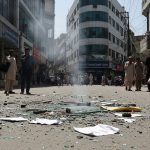


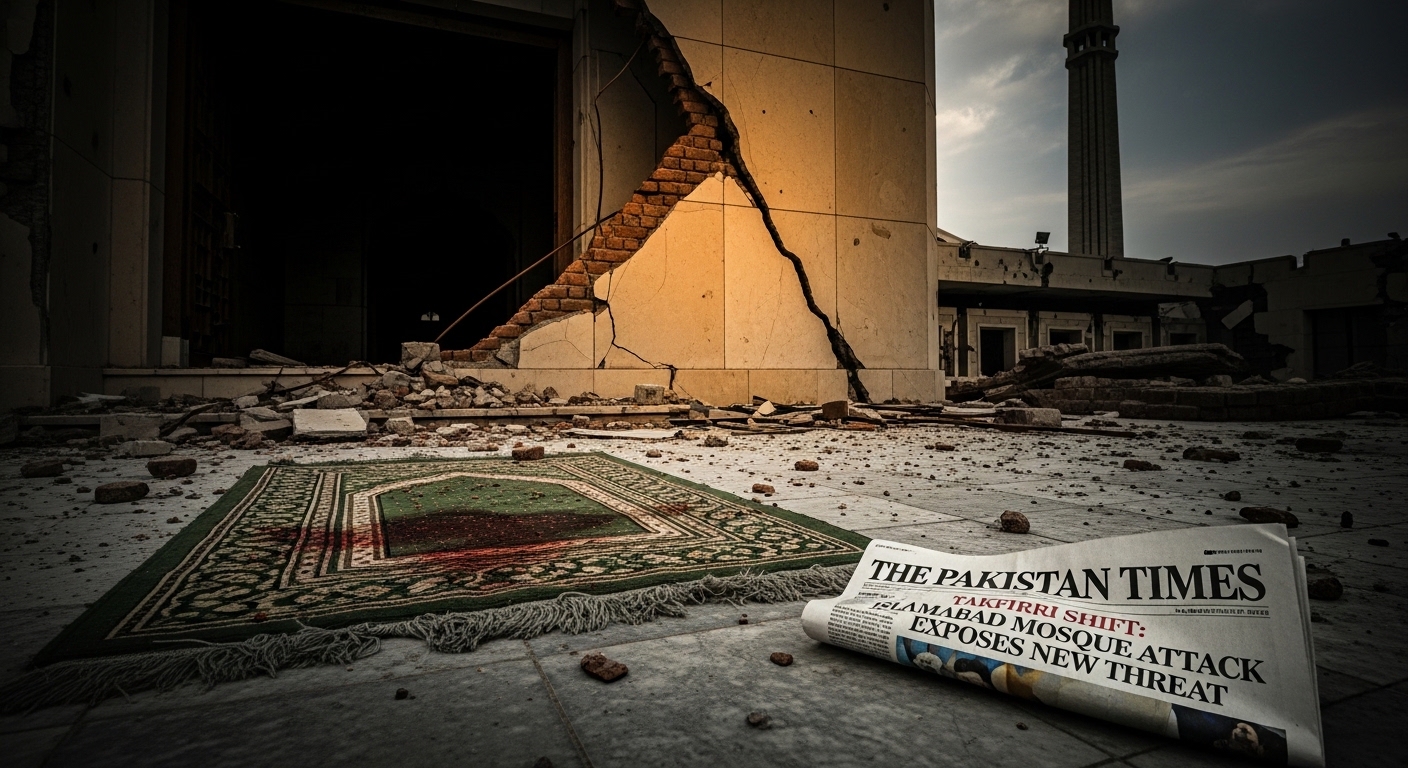
The recent attack on a Shia mosque in Islamabad is a shocking incident for all citizens of Pakistan. This unfortunate incident was not a random act of violence but a calculated move to bring division among Pakistani citizens on the basis of religion. The objective of such attacks is not to harm or kill but to spread fear, confusion, and mistrust among populations who have lived together peacefully for centuries. Pakistan has been a country where all sects of the Islamic religion have been able to practice their beliefs side by side.
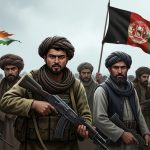
The trend of militancy deployed in this terror strike points to the fact that this attack was no impromptu strike. Indications point to the fact that these extremist networks based in Afghanistan are becoming increasingly organised. Over the past few years, international monitoring institutions have been quick to point out the rising militancy of terror groups in Afghanistan. According to a UN monitoring report of 2024, there is now a presence of over twenty international terror groups in Afghanistan. These terror groups have been able to re-establish their networks and training camps. The terror strikes have also created security concerns for the entire region, particularly for the neighboring nations.
The attack in Islamabad seems to follow this disturbing trend. It was intended to incite not only the innocent worshippers but also dent Pakistan’s internal harmony. The attacks on sectarian lines are done with the goal of creating panic and eliciting emotional reactions that might lead to a lack of trust between communities. However, Pakistan has shown remarkable resilience against such attempts. Religious scholars, community leaders, and ordinary citizens belonging to different sects strongly condemned the attack in unison. The combined response here indeed showed that the most important objective of dividing Pakistani society, for which extremist forces carried out the attack, had been misfired.
Yet another alarming trend comes from the ideological choice embraced by the Taliban in Afghanistan. Their recent edicts have sparked serious concern throughout the world. In them, they have stated that Muslims who are not part of their Hanafi faith are not even part of Islam. Hence, they have legitimized the very dangerous concept of takfir, which means condemning co-existence between Muslims. Essentially, it means condemning co-religionists, which in most cases has been a predisposition of extremist groups who have been known to commit acts of violence, and promoting an environment that may become too conducive for such intolerances to translate into acts of violence.
This doctrinal approach is essentially similar to the ideology that was previously supported and promoted by the Daesh organization. In various forums regarding the dangers of extremisms, experts in the study of extremisms have always raised the alarm that when the approach of takfir is normalized and supported, doors are opened for sectarian violence. In the year 2025, the Global Terrorism Index reported that sectarian attacks in various places where the takfiri ideology gained traction rose by an increase of nearly 17 percent. This clearly illustrates that the narratives presented by extremisms have dire consequences
This is clearly seen in the Islamabad terror attack. For instance, the targeting of the Shia mosque in Islamabad was in itself supposed to instigate sectarian unrest in the region. However, the response of the Pakistani society clearly showed that they were not going to be drawn into the sectarian unrest that the planners of this attack had hoped to stir. Actually, religious consensus is perhaps the strongest bonding factor in the people of Pakistan. Pakistan’s constitution clearly states that the people in the country are free to practice any faith they want. In addition, successive governments have always strived to maintain sectarian harmony. According to the Pakistan Bureau of Statistics, in Pakistan over 96 percent of the population is Muslim. This means they come from different sects of the Muslim faith and still have managed to unify into a single entity.
What makes the Islamabad incident more significant is the way it brought into sharp relief the ideological environment developing across the border. It is no longer a case of Afghanistan struggling to rein in extremist networks; evidence abounds that radical narratives are being allowed to flourish in the open. International human rights organisations have also called out rising sectarian rhetoric emerging from Afghan leadership circles. When such ideology is propagated at an official level, it opens up space for militant groups to operate with greater confidence and support.
Yet, there is a mature and united response in Pakistan to these challenges. Scholars from the Sunni and Shia communities jointly condemned sectarian violence against people. Events of solidarity, with a call for harmony among different religious groups, were also arranged by civil society organizations. Such calls for unity also reverberated across various social media websites of the country. This congregated national reaction shows that the social fabric of Pakistan still remains strong. The extremist elements want to spread fear; yet, this commitment to unity has continuously defeated their strategy.
In the Islamabad mosque attack case, it is evident that the intentions of the militant groups were not the only aspects revealed by the matter. Rather, the unrest and menace associated with the ‘Ideological Conflict’ spearheading the sectarian violence in the region were portrayed. Pakistan remains firm and unaffected by the extremist activities in the region, ensuring a strong security structure and a highly stable state. In addition, the unity among the population in Pakistan has hindered the attempts by extremist groups to materialize their intentions.
The incident tells us once again how vigilant we need to be, but it also tells us something positive about Pakistan—how, with the unity displayed by both religious communities with the help of strong institutions, it has been made clear that we are a resilient and strong-willed nation.
Author