

Iran, Russia, China Reject Europe’s Snapback Attempt
An effort by Britain, France and Germany to reinstate sanctions imposed on Iran by the United Nations has been blocked by Iran in collaboration with Russia and China. The European trio of countries...

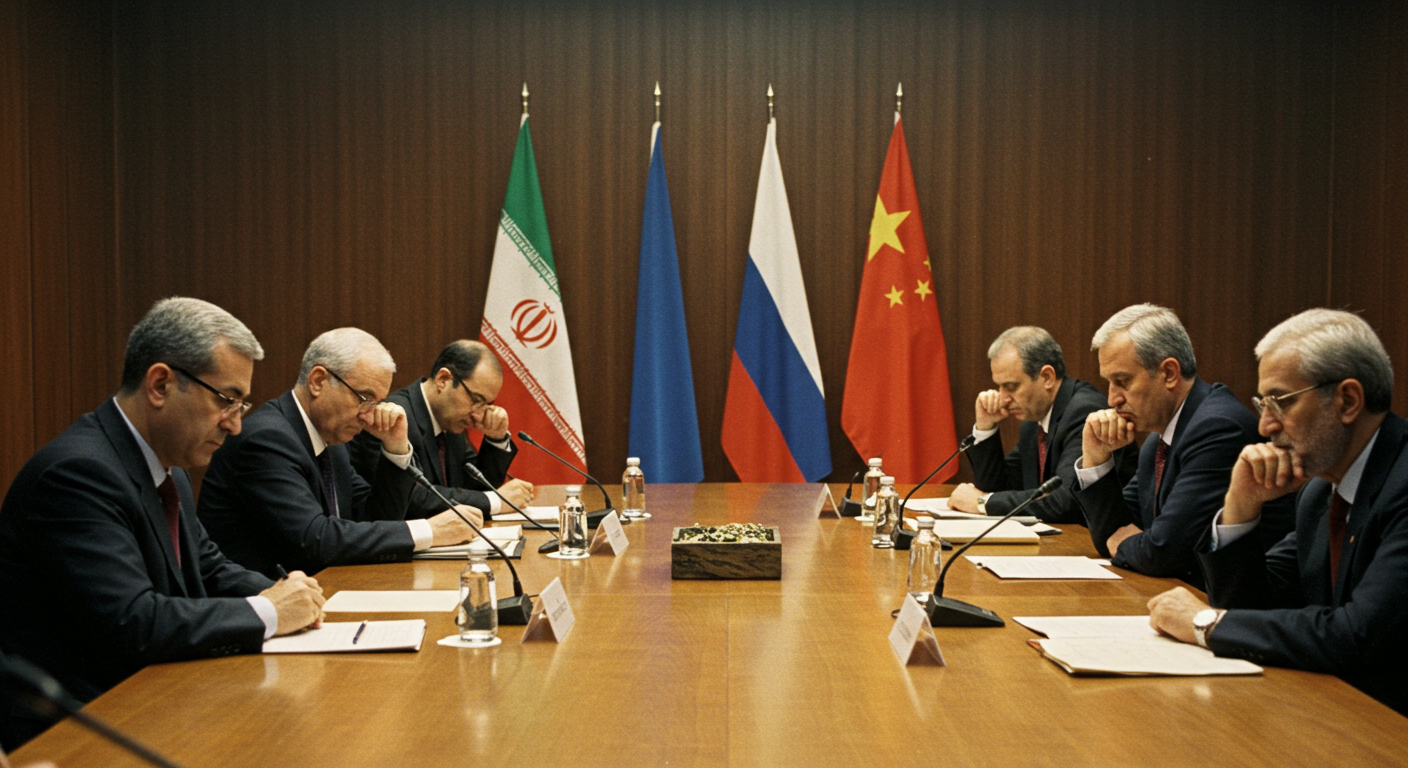
An effort by Britain, France and Germany to reinstate sanctions imposed on Iran by the United Nations has been blocked by Iran in collaboration with Russia and China. The European trio of countries (the E3) was referring to the so-called snapback mechanism of the 2015 nuclear deal, which is the Joint Comprehensive Plan of Action (JCPOA). With this mechanism in place, countries can reinstate UN sanctions in case Iran is deemed to have breached the deal. The three Asian giants have criticized the move as legally and procedurally imperfect and threatened that taking any action on it would weaken the power of the UN Security Council.
The background of this dispute is the withdrawal of the United States of the JCPOA in 2018, the first term of President Donald Trump. After the departure of Washington, Iran suspended some of its nuclear commitments as the European parties were unable to offset the impact of the U.S withdrawal. The move by the E3 to go ahead and cause snapback, according to Iran, disregards this context. The argument of the Iranian, Russian and Chinese foreign ministers is that the European move distorts the reasons behind the disrupted JCPOA and abuses the power of Security Council that was supposed to settle disputes by multilateral processes but not by a unilateral move.
Iran, Russia and China claim that the European move has no legal grounds. Self-invoking international law with the E3 countries failing to fulfill their obligations as stipulated in the JCPOA even after the U.S. withdrew, and they could not invoke treaty mechanisms to do so. In a letter agreed upon by both parties, it is observed that the suspension of Iranian nuclear obligations was a direct reaction to the U.S withdrawal and the inability of the E3 to recompensate the impact of the same. The International Atomic Energy Agency (IAEA) had multiple times before the U.S. withdrew confirmed that Iran was adhering to the nuclear obligations it had made, which further supports the argument advanced by Tehran that snapback is unwarranted.
The European nations procedurally bypassed the dispute resolution procedures that were provided in Resolution 2231, which officially ratifies the JCPOA. The resolution under paragraph 11 outlines the steps to be undertaken in raising issues regarding compliance, consultation and notification requirements, none of which were observed by the E3 countries. Europe has not undertaken these steps, so its notification cannot be legal under international law. Iran, Russia and China claim that accepting such a bypass would undermine the principles of multilateral diplomacy and would lead to a bad precedent that would promote future unilateral actions of states in the Security Council.
The joint rejection is strategic in showing the changing alliances in the UN Security Council. The two permanent members with the veto power, China and Russia have joined hands with Iran just to indicate a concerted effort to oppose the move by the Europeans. Such a step highlights the developing role of non-Western powers in world politics. The fact that Iran, Russia, and China asked the Security Council to consider the notification made by the E3, as an abrogated one, implies that without the due legal and procedural authority, the sanctions could not be imposed again. This position is also indicative of a larger effort on the part of these nations to counter unilateral or politically motivated action on multilateral institutions.
The conflict also has ramifications to the future of nuclear diplomacy. JCPOA expires in October 2025, and the timing of the snapback attempt will be especially delicate. Negotiations are going on to sign another framework or an agreement to deal with the nuclear program of Iran. Iran demands the observance of the correct procedures and international laws and threatens to spoil the process of the negotiation due to the unilateral measures. The European push to reinstate sanctions can make Iran more obstinate and decrease the chances of a compromise in any subsequent negotiations.
📄 POLICY WIRE WHITEPAPER PUBLISHED: PAKISTAN'S NATIONAL SECURITY POLICY PRIORITIES
👉 READ BY CLICKING HEREIn addition to the current JCPOA context, the episode demonstrates the conflict between law and politics in the international organizations. The snapback mechanism was a compliance tool that was supposed to work but the present conflict demonstrates that it is open to challenge where political circumstances evolve. Focusing on legal rectitude, Iran, Russia and China seek to defend the integrity of international agreements and to guard against selective application of enforcement procedures. Another lesson learned during the case was the weakness of European influence in the Security Council when these other major powers pull together.
The combined letter of Iran, Russia and China is a legal declaration as well as a political plan. It questions the European endeavour to invoke the snapback mechanism, protects multilateral rules, and puts these nations at the forefront of international relations. By emphasizing procedural infractions, a material infraction, and the confirmed adherence of Iran prior to the withdrawal of the U.S. presence, the letter offers a data-oriented reasoning behind the rejection of the action taken by the E3. Security Council has been put to a test; can the Security Council enforce international law and procedural norms, or permit unilateral action to discipline nuclear arrangements? The next few weeks will likely be pivotal in deciding whether multilateral diplomacy will counteract political manoeuvring, and whether the principles of the JCPOA will remain at the centre of nuclear governance in the world.
Author