

The True Role of Army Welfare Foundations
The welfare foundations of the Pakistan Army have long served as pillars of resilience, discipline, and self-reliance within the national landscape. While institutions like the Fauji Foundation and...

The welfare foundations of the Pakistan Army have long served as pillars of resilience, discipline, and self-reliance within the national landscape. While institutions like the Fauji Foundation and the Army Welfare Trust are often viewed through a purely commercial lens, their essence is rooted in a far greater purpose: embodying a social contract between the nation and its defenders. They ensure that the families of martyrs, veterans, and serving personnel are supported with dignity, challenging the conventional notion that welfare must always be a state burden. By proving that sustainable, self-financing models are not only possible but economically beneficial, they establish a paradigm of responsibility and innovation.
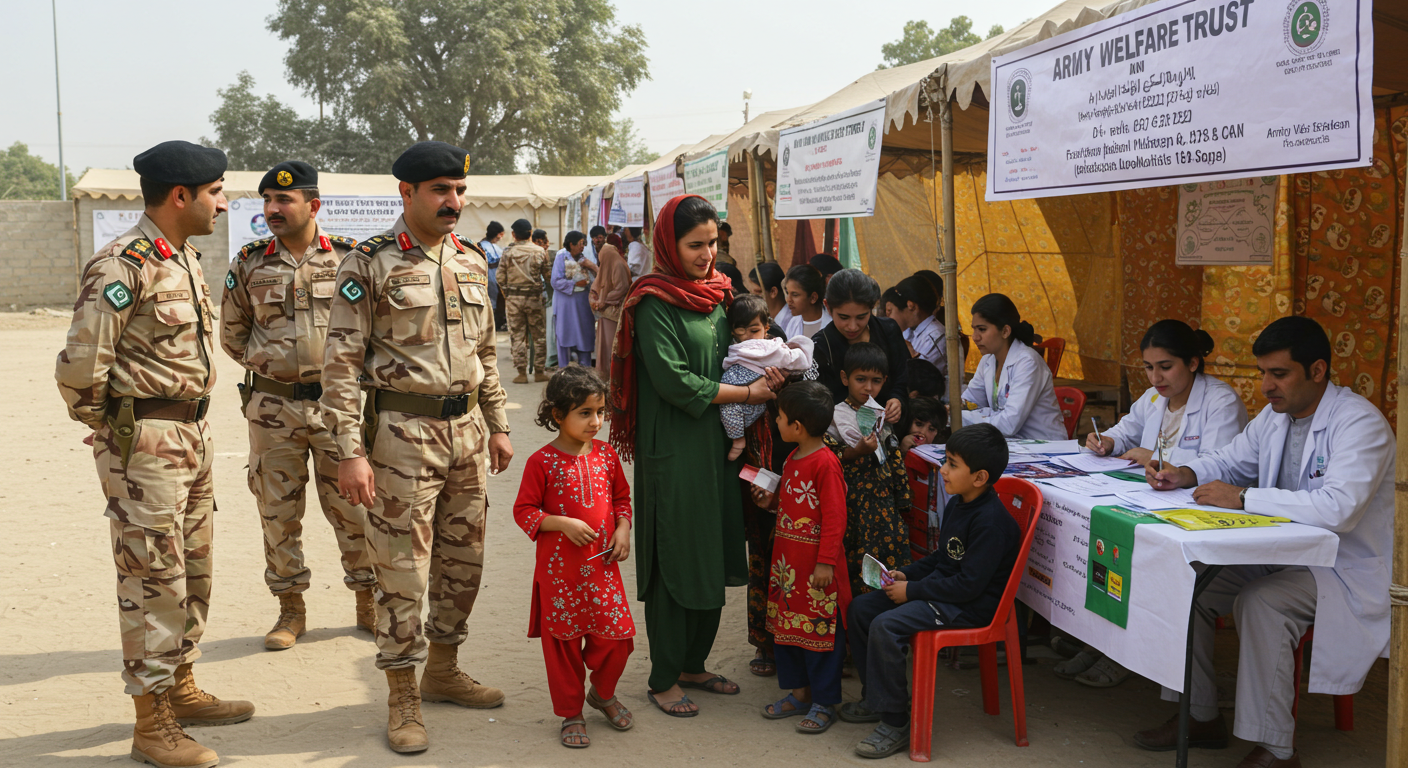
The core mandate of these foundations is welfare, not wealth. Structured as not-for-profit trusts, they operate with the singular goal of serving military families who have sacrificed for the country. Through schools, hospitals, housing schemes, and scholarships, they provide a comprehensive support system, ensuring that those who have given the most are not neglected. This model represents self-reliance in its truest sense, a system that sustains itself through discipline and vision, thereby relieving the state of a significant financial and social burden it would otherwise struggle to bear.
Beyond their primary mission, these foundations play a crucial stabilizing role in society at large. They provide secure livelihoods for thousands, extend high-quality healthcare and education to surrounding communities, and develop organized, affordable housing. In an environment where public services are often inadequate, these institutions fill critical gaps, offering continuity, reliability, and hope. Their schools and hospitals are consistently ranked among the nation’s most trusted, demonstrating a standard of excellence that benefits a wide cross-section of Pakistani society.
It is also essential to recognize that these institutions operate within national regulatory frameworks, subject to audits, oversight, and governing laws. Their success is not a product of structural favoritism but is earned through qualities inherent to the armed forces’ ethos: discipline, integrity, and organizational efficiency. These qualities inspire public trust and investor confidence, enabling a level of operational competence that sets a benchmark for other organizations. Their achievements are not artificial advantages but the result of hard-earned credibility.
From a strategic perspective, the necessity of such welfare structures cannot be overstated. Pakistan resides in a volatile region where defense readiness is imperative. National security is inextricably linked to economic stability, and no nation can prosper without first safeguarding its sovereignty. While the Pakistan Army ensures the state’s security, its welfare foundations ensure that the soldiers and their families are not left behind. By strengthening morale, preserving dignity, and upholding the nation’s moral duty to its defenders, these institutions guarantee that national security does not come at the expense of human neglect.
This model is further validated by global practices. Military-linked welfare systems are a recognized feature in many nations, including the United States, China, and Turkey, where organized networks provide housing, healthcare, and community support to servicemen and their families. The universal rationale is to establish a self-sustaining mechanism that alleviates state financial pressure while strengthening the armed forces’ social fabric. Pakistan’s approach is, therefore, not an anomaly but part of a tested and effective international framework.
📄 POLICY WIRE WHITEPAPER PUBLISHED: PAKISTAN'S NATIONAL SECURITY POLICY PRIORITIES
👉 READ BY CLICKING HEREUltimately, what emerges is not an empire of wealth but a system of welfare rooted in profound responsibility. The true measure of these institutions is reflected in the services they deliver: education for children, healthcare for families, housing for communities, and lifelong support for veterans. They represent an innovative fusion of discipline, integrity, and social responsibility, functioning not as economic drains but as safeguards of stability; not as privileged monopolies but as accountable, regulated institutions.
The welfare foundations of the Pakistan Army should be recognized for what they truly are: a unique blend of self-reliance, economic contribution, and social responsibility. They represent a sustainable model in a country that urgently needs institutions capable of balancing welfare with financial independence. They safeguard the rights and dignity of Pakistan’s defenders while extending vital services to the public. To misunderstand them is to overlook a system that alleviates state pressure, contributes to national development, and fulfills a profound moral obligation. Far from being a liability, they are among Pakistan’s most valuable assets, demonstrating how discipline, commitment, and vision can transform welfare into a powerful force for national progress.
Author