

Influence Peddling Allegations Roil New Mexico Higher Ed: President Sues Over Contract Shady Dealings
POLICY WIRE — Las Vegas, New Mexico — It’s often said that power operates in the quiet hum of connections, not the thunder of grand proclamations. And sometimes, it’s those whispers of backroom...

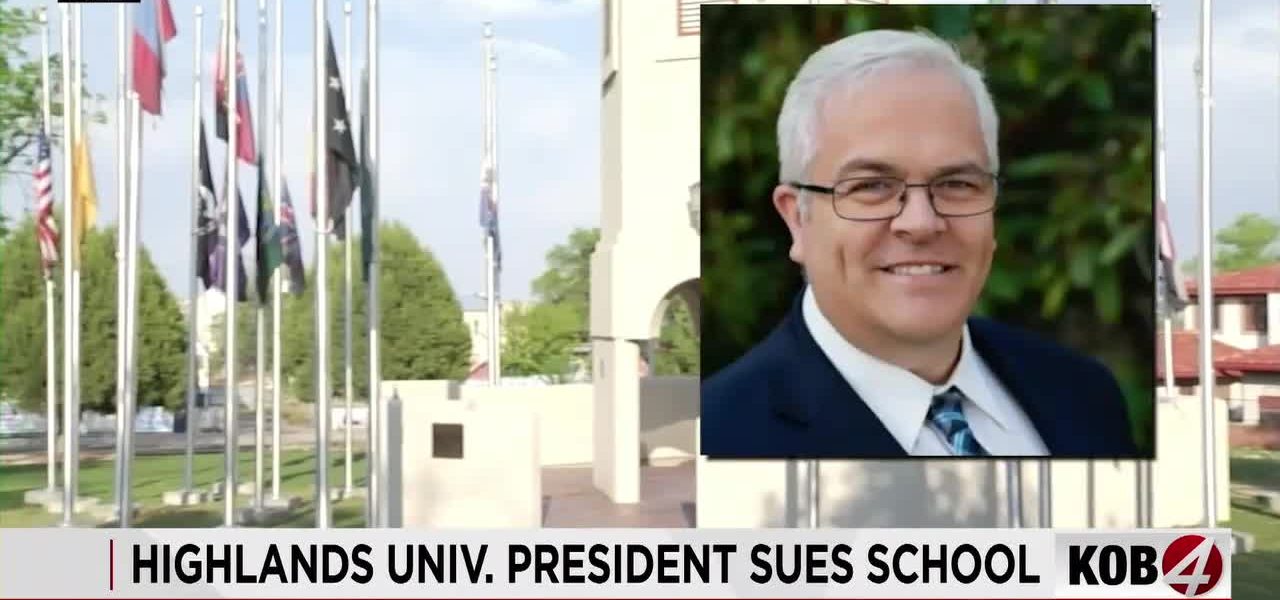
POLICY WIRE — Las Vegas, New Mexico — It’s often said that power operates in the quiet hum of connections, not the thunder of grand proclamations. And sometimes, it’s those whispers of backroom deals, however small the sum might seem in the grand scheme, that threaten to shatter an institution’s very foundations. Case in point: New Mexico Highlands University, currently staring down a lawsuit from its own president, Dr. Niel Woolf. This isn’t just about administrative leave, mind you. This is about accusations of pure, unvarnished influence peddling, alleging a bid to funnel a $600,000 contract straight into a politically connected friend’s pocket. It’s a drama as old as politics itself, unfolding now in the rather less dramatic halls of academia.
Woolf, placed on administrative leave at the start of May—an administrative equivalent of being sent to your room without supper—has fired back, not with a strongly worded email, but with a formal lawsuit. He claims Board of Regents Chair Frank Sanchez pushed him, hard, to cancel a substantial $600,000 agreement with an out-of-state contractor. The supposed replacement? A local firm, certainly. But also, a company allegedly run by a friend of Sanchez. Oh, and of Sanchez’s brother-in-law, State Senator Pete Campos, a local fixture who just happens to represent Las Vegas.
Because that’s how these things often work. It’s less a conspiracy theory — and more an open secret. You scratch my back, I scratch yours. Woolf’s legal filings suggest Sanchez wasn’t shy about it either. Directing those funds to his friend, Woolf contends Sanchez told him, would “go a long way towards securing money for the University from Senator Campos.” You don’t need a decoder ring to understand that implication, do you? It paints a rather stark picture: cooperate, — and the university might see legislative favors; resist, and… well, we’re seeing what resisting looks like. A lawsuit. A scandal. Reputational damage. It’s messy.
My conscience simply wouldn’t permit me to go along with something that reeked of such blatant impropriety, Woolf reportedly stated in his legal filings, hinting at a higher calling beyond institutional politics. You’re either here to serve the students — and the state, or you’re serving personal agendas. I chose the former. This isn’t a university president typically found wading into such public controversies; Woolf’s background has been largely in academic leadership, not political skirmishing. So, his decision to trigger New Mexico’s Whistleblower Protection Act—and seek damages and attorney’s fees—suggests he’s got quite the hill to climb. But also, he likely feels he has something serious to protect. An institution, perhaps, or merely his own integrity.
These accusations are baseless noise designed to distract from the real work of improving New Mexico Highlands University, Sanchez was quoted by local affiliates, rejecting the allegations outright. My priority has always been to bolster our local economy — and ensure our institutions benefit from homegrown talent. We believe in keeping money in New Mexico, helping our communities thrive. There’s nothing untoward in that. A clean denial. A good, old-fashioned emphasis on local economy. It’s a defense as old as the hills—cloaking self-interest in public benefit. The irony, of course, is that the ‘public benefit’ here might just end up benefiting a rather specific public, or rather, a very specific individual’s circle.
📄 POLICY WIRE WHITEPAPER PUBLISHED: PAKISTAN'S NATIONAL SECURITY POLICY PRIORITIES
👉 READ BY CLICKING HEREAnd so, a rural university in a state known more for its dramatic landscapes than its dramatic politics finds itself in a public spat. It’s the kind of saga that, if it played out in, say, certain corners of South Asia, wouldn’t raise many eyebrows. Allegations of patronage, familial connections leveraged for contracts, and the alleged coercion of public servants are, unfortunately, recurring themes in various parts of the world where institutional governance struggles against the tide of personal and political power. It highlights the eternal struggle against opacity, even in what might seem like sleepy corners of the American West, where one might expect a certain civic purity. Because corruption, like weeds, finds purchase in any fertile ground where oversight slackens — and temptation thrives.
According to the New Mexico Legislative Finance Committee’s 2023 report, state appropriations constitute roughly 45% of New Mexico’s public universities’ operating budgets, underscoring their dependence on legislative goodwill. That’s a big chunk. It means university leaders often walk a tightrope, balancing academic independence with political realities—especially when their institutions rely so heavily on state funding. One can understand, if not condone, the immense pressure that could be brought to bear when significant state funding is tied to cooperative behavior. It brings into sharp focus the discussion around accountability, which too often feels like a foreign concept when it applies to those with significant influence—much like the quiet murmurs around topics like elite accountability chasm, even on a national scale.
What This Means
This isn’t just about one contract or one president’s job; it’s about the very credibility of public institutions in New Mexico. If these allegations prove true—and the onus is certainly on Woolf’s legal team to demonstrate that—they’ll shake public trust in university governance, suggesting a worrying permeability to political agendas. The economic implications are also straightforward: taxpayers fund these institutions, and if their money is being allegedly diverted for cronyism, that’s a direct insult to the public purse. It doesn’t just taint this specific deal, either; it casts a long, skeptical shadow over every contract awarded, every funding decision made. It could also have real, long-term consequences for New Mexico Highlands University’s ability to attract state funding, grants, and even students, who might question the integrity of their educational environment. There’s also the bigger picture of state politics, where this scandal might lead to legislative calls for stricter oversight, campaign finance reform, or even changes in how university boards are appointed. These things tend to snowball, you know? This little spat could end up revealing quite a bit more than just one alleged shady deal.