


Interstate Shut Down for Heroes: Albuquerque’s Price of Gratitude, Echoes Far Beyond
POLICY WIRE — Albuquerque, United States — For some, it started as a rumble, the mundane thrum of morning traffic before it ceased altogether. Others just saw blue lights flash past, a momentary...

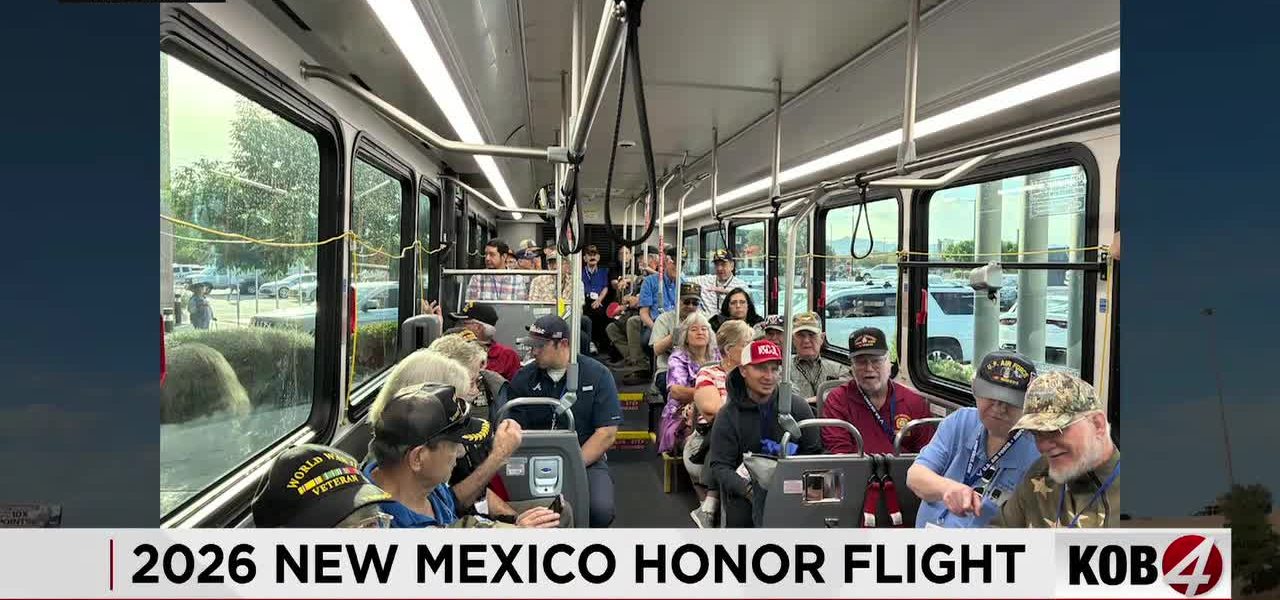
POLICY WIRE — Albuquerque, United States — For some, it started as a rumble, the mundane thrum of morning traffic before it ceased altogether. Others just saw blue lights flash past, a momentary distraction in an otherwise ordinary Tuesday. But down a stretch of New Mexico asphalt, something far from ordinary unfolded: Interstate 25 went quiet, entirely shut down, not for a head of state or a protest, but for a clutch of aging Americans making their way to an airport. You don’t often see a state halt its major arteries for an expression of civic gratitude, do you? But for 32 individuals, folks who had once worn their nation’s uniform and now mostly just wore years, the spectacle was real.
It was part of an Honor Flight, an undertaking designed to shuttle these elder veterans to Washington, D.C., giving them a long-overdue, perhaps even slightly awkward, opportunity to visit memorial sites. There was a time, not so long ago, when many of these particular veterans weren’t afforded such public displays of affection; a peculiar forgetfulness often settles over societies once conflicts conclude. The group included veterans from World War II, the Korean War and the Vietnam War—a spectrum of the 20th century’s global convulsions, folks who’d seen things that didn’t usually make it into history books in their rawest forms. [QUOTE_PLACEHOLDER]
They weren’t marching in triumph. They were simply being taken, escorted by ABQ RIDE — and police. And officials shut down Interstate 25 to honor the trip. That kind of gesture, the deliberate interruption of daily commerce and routine, it’s a policy statement in itself, isn’t it? A collective decision to momentarily prioritize remembrance over productivity. We don’t do it for teachers, or doctors, or sanitation workers, arguably figures equally central to a society’s functionality and health. But for the veteran, especially these particular veterans, there remains a certain cultural cachet, an earned deference.
The National Honor Flight Network started the tradition in 2013 through its nonprofit hub. Ten years, — and already it’s woven itself into the fabric of localized patriotism. The organization honors veterans for their service and sacrifices by giving them a free trip to the nation’s capital, including hotel rooms and meals. It’s a well-oiled machine of thanks, funded by private pockets and public sentiment, aiming to correct a historical oversight for some, and cement a legacy for all. It’s almost as if we’re attempting to fill a deficit of recognition, years after the fact.
Contrast this with, say, the struggle many veterans face even getting timely access to healthcare back home, let alone free trips. It costs about 500 dollars per veteran to participate in these flights, according to the Honor Flight Network’s own publicly stated figures for average costs, sourced from their financial transparency reports. And that’s before factoring in the implicit cost of temporarily shutting down public infrastructure. That isn’t small change, even for a nonprofit. But it seems some expenditures are more palatable than others when framed as gratitude.
And then you ponder the broader implications, a comparative analysis of gratitude, if you will. Imagine the logistics of replicating such a public display of honor for, say, a cohort of retired Pakistani military personnel—a nation grappling with its own labyrinthine post-colonial conflicts, from the Kargil War to the War on Terror, conflicts whose legacies are often fraught with complex national narratives and varying levels of state support for their former combatants. Where some societies build monuments and dedicate highways to past glories, others quietly absorb their wounded, literally and figuratively. They’ve got their own reasons for doing things their way, of course; they’re battling different dragons, aren’t they?
📄 POLICY WIRE WHITEPAPER PUBLISHED: PAKISTAN'S NATIONAL SECURITY POLICY PRIORITIES
👉 READ BY CLICKING HEREIt’s not simply a matter of economics; it’s a cultural inclination, a public policy choice that often stems from deep-seated national identity. What Albuquerque did, disrupting a freeway for a generation’s quiet acknowledgment, is a uniquely American flavor of collective memory. Asia’s Grim Study, on the other hand, illustrates how many nations contend with the stark, brutal realities of incessant conflict without the luxury of such symbolic gestures, often because the drumbeat of war simply hasn’t ceased long enough for quiet reflection. Their soldiers, once heroes, might often melt back into the populace, their scars largely unseen, their sacrifices acknowledged in more tacit, less ceremonial ways. The contrast isn’t a criticism; it’s an observation on how varying national psyches confront the weight of their own histories.
What This Means
The Albuquerque incident, seemingly a feel-good story of civic pride and appreciation, actually speaks to something larger in the body politic: the shifting landscape of how a nation deals with its past and the narratives it chooses to elevate. On the surface, it’s about thanking a group of veterans. But underneath, it’s a performance of remembrance, a societal ritual that reassures the public of its values even as other discussions—like adequate mental healthcare or lifelong support systems for soldiers of all generations—remain chronically underfunded or sidelined. It’s often easier, isn’t it, to orchestrate a public spectacle than to systematically address deeper systemic failings.
This gesture, with its police escort — and momentarily halted traffic, provides a balm, a tangible output of patriotism. It says, in effect, we remember. But who we remember, and how we choose to do it, reveals more about the current national mood than about the history itself. It suggests an underlying anxiety about how younger generations perceive national service, or perhaps a lingering guilt over how previous generations of veterans, particularly from Vietnam, were received upon their return. Politically, these acts serve as unifying moments, relatively cheap to orchestrate compared to massive aid programs, but high in symbolic capital. Economically, while a small blip in the grand scheme, it represents a continued investment in the public performance of gratitude, an often intangible asset. Delhi’s Burning Embers, for instance, hints at places where the state’s obligation to its citizens, including its former fighters, takes on a far grittier, more desperate hue, often dictated by scarce resources and a sprawling populace.