


Albuquerque’s Relentless Battle: Evictions and Ecology Clash in the Bosque
POLICY WIRE — Albuquerque, New Mexico — It’s a cruel annual ritual, played out against the backdrop of an arid landscape begging for a spark. Every spring, or perhaps it’s summer, or any...

POLICY WIRE — Albuquerque, New Mexico — It’s a cruel annual ritual, played out against the backdrop of an arid landscape begging for a spark. Every spring, or perhaps it’s summer, or any dry spell really, civic agencies here find themselves entangled in the perennial conflict between nature’s demands and humanity’s untamed urges—or desperation, depending on your vantage point. You’d think after years, we’d have a fresh playbook. But no. The script feels agonizingly familiar.
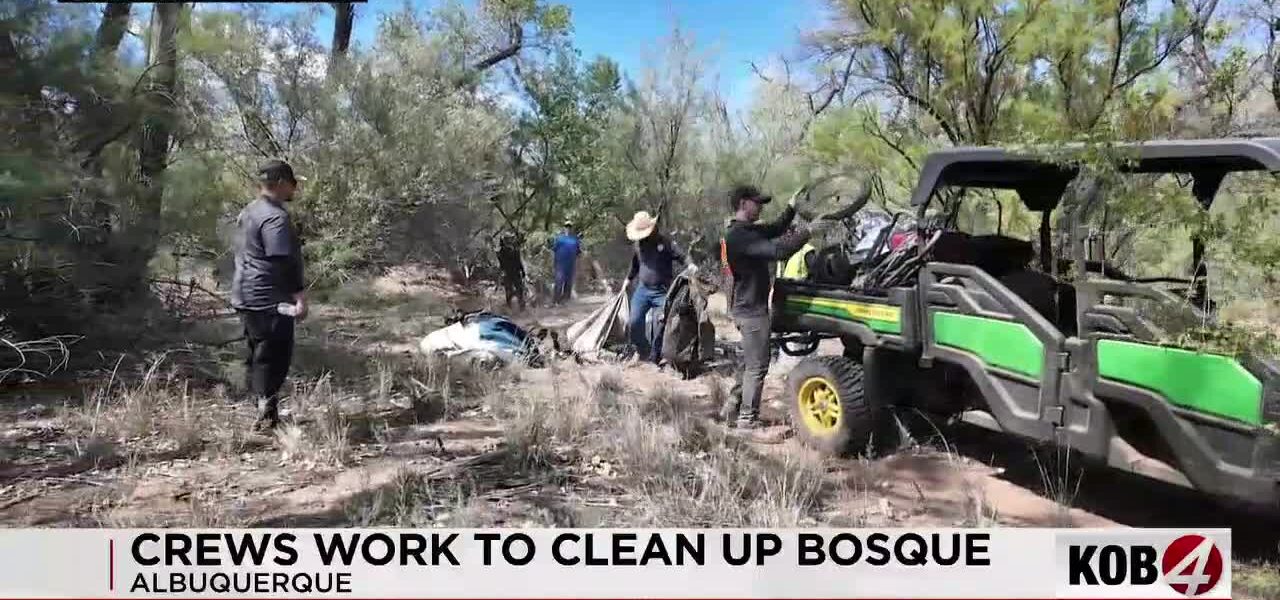
Just this past week, in the high desert city of Albuquerque, authorities did what they often do. City of Albuquerque and Bernalillo County crews said they cleared 31 illegal camp sites in the Bosque as part of a cleanup effort to help prevent wildfires.
Thirty-one. A precise number, isn’t it? It gives the impression of measurable progress, of boxes ticked. But that number, stark as it sounds, hardly captures the underlying issues. [QUOTE_PLACEHOLDER]
The Bosque, New Mexico’s ribbon of riverside forest, isn’t just some city park. It’s a sensitive ecosystem, a thin green artery hugging the Rio Grande, a critical habitat. And a potential tinderbox. Every summer, wildfire fears spike, especially with ever-earlier dry seasons. That’s why The work crews said they’re working to clean up the Bosque and the work focuses on wildfire prevention.
Makes sense, doesn’t it?
But the story isn’t just about clearing dry brush. It’s about people, isn’t it? The cleanup efforts involved more than just twigs and leaves; Video from cleanup work last week showed crews clearing trash, debris and illegal camp sites.
That means displaced individuals, however temporarily. You’ve got to wonder where they go. Are they simply pushed to another neglected patch of public land? It’s not exactly solving the root problem. You get the picture. It’s a cyclical saga.
And it’s a grind. County and city crews said they will keep working in the bosque for the next several weeks.
This isn’t a one-and-done kind of deal. It’s an ongoing expenditure of time, money, — and emotional labor. The environmental cost, sure, but what about the human one? It’s a messy equation, one local governments, here — and elsewhere, struggle to balance.
Consider the broader context. Albuquerque isn’t unique in grappling with these dual pressures of urbanization — and ecological preservation. You see similar struggles globally, particularly in parts of South Asia or the Muslim world—places where informal settlements, like Pakistan’s katchi abadis on riverine plains, frequently face forced relocations due to infrastructure projects, climate events, or even perceived security threats. The motivations might differ, the scale often much larger, but the human displacement, the lack of systemic solutions, that’s eerily similar. They’re managing immediate threats without much forward policy planning.
Policy makers, they’re always playing catch-up. They’re managing crises, not preventing them. But who isn’t, really? The truth is, managing wildfire risk isn’t just about removing fuel; it’s also about managing human activity—and often, poverty. A recent report from the New Mexico Environment Department suggested that 65% of all wildfires within urban-wildland interface zones are human-caused, a stark reminder of the challenge at hand. It’s a sobering statistic, telling us prevention isn’t just about nature, it’s about us. You just can’t escape that fact.
📄 POLICY WIRE WHITEPAPER PUBLISHED: PAKISTAN'S NATIONAL SECURITY POLICY PRIORITIES
👉 READ BY CLICKING HEREWhat This Means
The ongoing clear-outs in the Bosque aren’t merely an administrative chore; they’re a blunt instrument attempting to slice through a Gordian knot of social, economic, and environmental pressures. On one hand, you’ve got public safety. Wildfire prevention in a drying climate? Can’t argue with that. The environmental integrity of the Bosque? Also non-negotiable. But then there’s the uncomfortable reality of people living rough, for myriad reasons—reasons that Albuquerque, like many American cities, seems ill-equipped to address sustainably.
This recurring scenario highlights a systemic policy deficit. City and county crews are reactive, essentially sweeping problems under a different rug until they inevitably resurface. It’s a band-aid solution at best. The political implications are clear: local leadership is trapped between immediate constituent demands for safety and the long-term, expensive, politically complex task of tackling homelessness and affordable housing—a policy failure, honestly, that stretches back decades. Economically, these cleanups aren’t free; they represent operational costs that could, in theory, be redirected to more preventative measures or social services.
Because, really, how much does continually displacing people, only for them to set up new camps weeks later, actually save? It’s a perpetual budget line item for a problem that keeps on giving. And frankly, this piecemeal approach does little to alleviate the actual fire risk in the long run. If the same people just move further downriver, the problem hasn’t vanished; it’s simply diffused, awaiting its next crisis. For comprehensive strategies to emerge, politicians would need to face down the thorny issues of housing and mental health funding head-on, rather than rely on emergency services to do what social policy should’ve already achieved. And that, dear reader, is a much tougher clean-up than any riverside brush-clearing. You don’t have to be a cynic to see it. It’s right there.
Such challenges resonate far beyond New Mexico’s borders. From Albuquerque to the flood-prone peripheries of Karachi, Pakistan, governments continually struggle with informal settlements that emerge in ecologically sensitive areas. Whether driven by economic precarity or climate migration, these populations often bear the brunt of environmental mitigation efforts, raising profound questions about justice and resilience in a world facing increasingly harsh climate realities. You can read more about some of the complex global dimensions of urban development and social stability by exploring the dynamics of rent crises in other major cities. Or even delve into how environmental issues sometimes mirror themselves in disparate cultural contexts, such as in Berlin’s own civic struggles with urban waste. It’s all connected, you know.