When History’s Scars Reopen: ‘Cotton-Picking’ Remark Ignites Congressional Firestorm
POLICY WIRE — Washington D.C., USA — In an election cycle already overflowing with predictable political skirmishes, Washington’s perpetually frayed nerves have found a new raw spot, not over fiscal...

POLICY WIRE — Washington D.C., USA — In an election cycle already overflowing with predictable political skirmishes, Washington’s perpetually frayed nerves have found a new raw spot, not over fiscal cliffs or geopolitical chess games, but a phrase dredged up from history’s ugliest bins. The reverberations from a seemingly simple agreement—a nod, a chuckle even—to a racially charged term have set the Capitol ablaze, igniting a bitter, yet familiar, debate about where the line lies between free speech and outright racism.
It wasn’t a policy proposal or a gaffe on the budget that put Congressman Sterling Hayes (R-Mississippi) in the hot seat this time. No, it was his seemingly casual affirmation of a caller’s “cotton-picking” remark on a local radio show that sent a shockwave through Democratic ranks and, frankly, tired many onlookers who thought some tropes had been securely archived. That such language—dripping with centuries of institutionalized oppression and the unspeakable cruelties of American slavery—could still surface so nonchalantly in a public forum, let alone be tacitly endorsed by an elected official, feels less like an isolated incident and more like a grim diagnostic test for the nation’s conscience.
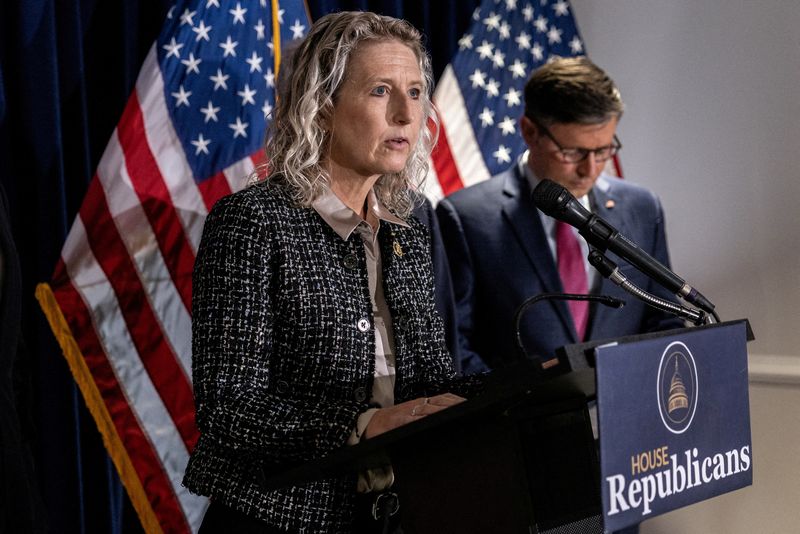
“This isn’t just a misstep; it’s a window into an archaic mindset we thought was relegated to textbooks,” charged Representative Jasmine Singh (D-New York), her voice firm during a hastily convened press conference. “Congressman Hayes’s endorsement of such language isn’t just deeply offensive, it’s a glaring disqualifier for public office. We don’t need thinly veiled racism guiding our nation’s policy. He must resign, effective immediately.” Her call was swiftly echoed by dozens of colleagues, pushing the narrative into a full-blown political crisis.
And just like that, the endless news cycle has another entry in the ‘culture wars’ ledger, one that’s easy to file under ‘race, lingering unresolved issues of.’ But why now? Why does this particular term, after generations, still have the power to rend the fabric of an already strained political discourse? Because it represents more than just words; it’s a symbol, a coded signal that to millions, confirms their deepest fears about lingering prejudice. Across oceans, too, such spectacles are observed. Nations like Pakistan, grappling with their own internal ethnic and sectarian divides, often watch these American struggles—sometimes with empathy, sometimes with a grim sort of schadenfreude, sensing hypocrisy in Washington’s lectures on human rights abroad while old wounds fester domestically.
For his part, Congressman Hayes appeared—briefly—to local media, projecting an air of baffled innocence. “Look, people are too sensitive, aren’t they? It’s just a phrase. Political correctness has gone completely mad. We’ve got real problems—inflation, border security—and these folks want to quibble over semantics. I understand if some might have taken offense, but it certainly wasn’t intended as hate speech. My focus remains on the good people of my district, not on manufactured outrage.”
Such defiance only seemed to stoke the flames. It’s the familiar playbook: deny, deflect, then blame the ‘woke mob.’ But what happens when the mob represents a significant, long-marginalized demographic? According to a 2020 Gallup poll, a sobering 55% of Americans reported that race relations in the country were either ‘very bad’ or ‘fairly bad,’ a statistic that hadn’t budged positively despite years of dialogue. You see, this isn’t just about ‘a phrase.’ It’s about how that phrase conjures up ghosts. It’s about who feels comfortable saying it, — and who feels assaulted by it. It’s about a chasm that seemingly grows wider, not narrower, with each passing year.
What This Means
Politically, the uproar hands Democrats a potent campaign cudgel. They’ll paint Hayes, and by extension perhaps his party, as out of touch, tolerant of racism, and fundamentally antithetical to a diverse modern America. His district, safely Republican for decades, isn’t likely to swing on this alone, but it certainly makes fundraising and volunteer recruitment easier for his challenger. More broadly, it underscores the GOP’s tightrope walk in appealing to both its traditional, often older, base and the younger, more diverse electorate—a balancing act that’s getting tougher with every incident like this. It could, some argue, serve as a proxy fight for broader discontent with rapid demographic change, expressed through a willingness to countenance, or even engage with, divisive rhetoric.
Economically, the immediate impact is negligible, unless corporate donors start pulling back from Super PACs linked to such figures. But the subtle economic drag of continuous societal division is real; it diverts energy, fractures consensus on critical issues like infrastructure and trade, and tarnishes America’s global brand—making it less attractive for international investment and talent. Every hour spent on a ‘cotton-picking’ controversy is an hour not spent on legislative work that could actually, say, improve the lives of the working class. It’s a transaction, after all: public outrage for legislative paralysis. And, honestly, Washington keeps signing off on the bill.