


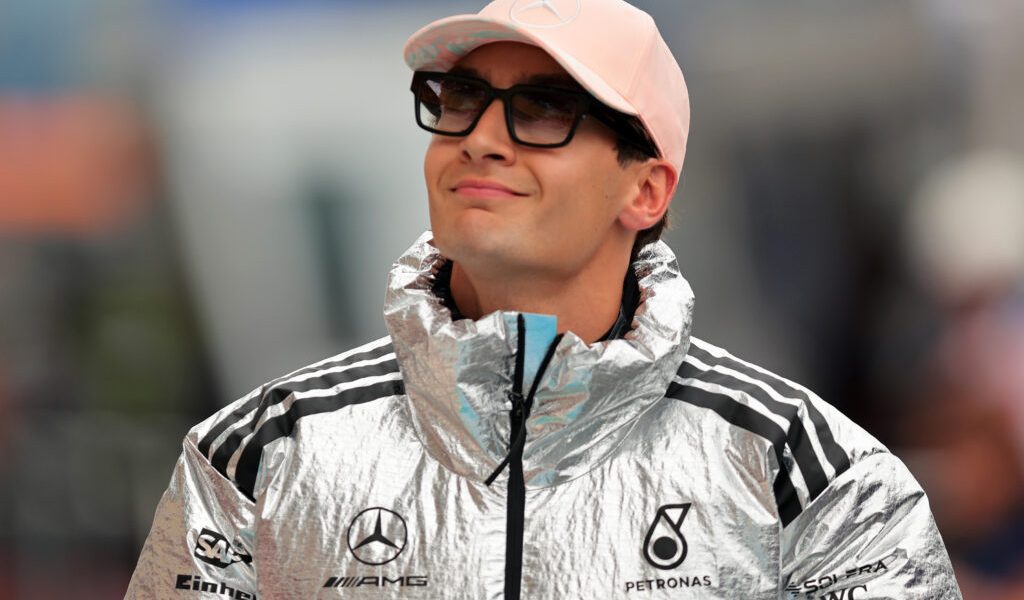
Mercedes’ Inner Fray: Russell’s Crown Cracks Under Pressure of Rising Prodigy
POLICY WIRE — Stuttgart, Germany — It wasn’t the deafening roar of engines or the smell of high-octane fuel that truly defined the paddock’s atmosphere heading into Canada. No, it was a silence. A...

POLICY WIRE — Stuttgart, Germany — It wasn’t the deafening roar of engines or the smell of high-octane fuel that truly defined the paddock’s atmosphere heading into Canada. No, it was a silence. A specific, almost uncomfortable silence that seemed to follow George Russell wherever he went. The buzz, the excited chatter about his future, the ‘next big thing’ narrative? That’s all evaporated, hasn’t it? He’s now caught in an unexpected, unglamorous dogfight, not against rival teams, but against the specter of his own precocious teammate, Kimi Antonelli. Nobody saw this coming.
After eight long years—a virtual eternity in a sport that devours careers—Russell finds himself playing second fiddle. And it’s not just any second fiddle; it’s a second fiddle to a driver in only his second season. Imagine that. Mercedes, for all its technical might and strategic prowess, didn’t account for such an internal power shift happening this quickly, this dramatically. They built what’s widely considered the finest car on the grid thanks to their propulsion magic, and the expectation, everyone’s expectation, was that Russell, the veteran with the most mileage under his belt for the Silver Arrows, would finally, finally cash in on his immense promise. That hasn’t quite panned out.
“George is a world-class talent, we haven’t forgotten that,” Mercedes Team Principal Toto Wolff conceded to reporters this week, a carefully worded statement masking perhaps a sliver of exasperation. “But Kimi… he’s simply rewritten the rulebook this season. The pressure’s on everyone, including the seasoned veterans, to deliver. That’s sport. You perform, or you get left behind.” A sentiment perhaps honed in the unforgiving halls of their engineering workshops. Antonelli leads Russell by a margin of 20 points, according to official Formula 1 Driver Standings as of the pre-Canada round – a gap that feels much larger than the numbers suggest when viewed through the prism of psychological warfare unfolding.
Russell had that blistering start, sure, winning the season opener in Australia. A champion’s statement, we all thought. But that momentum? Poof. Antonelli has since usurped him, snatching the initiative and, more importantly, the team’s—and the world’s—attention. It’s an uncomfortable spotlight, particularly for a team whose meticulously crafted public image often borders on corporate perfection.
Because, make no mistake, Canada isn’t just another pit stop on the global circus; it’s Russell’s Mount Everest. It’s a circuit where he’s shone before, even secured a win just last year. For him to falter there, to again trail Antonelli, would frankly constitute an early death knell for his title aspirations. The Athletic’s astute F1 analyst, Alex Kalinauckas, didn’t mince words: “If Antonelli beats him in Montreal, Russell should upgrade that concern level to ‘very’ and start looking at major changes.” That’s a direct hit, a professional ultimatum, and a sentiment echoed in hushed tones across the pit lane.
📄 POLICY WIRE WHITEPAPER PUBLISHED: PAKISTAN'S NATIONAL SECURITY POLICY PRIORITIES
👉 READ BY CLICKING HERE“Look, we expect excellence. We’ve built a dominant machine, and it’s our job to ensure both drivers maximize its potential,” an anonymous senior Mercedes strategist, known for his directness, confided in us. “Performance ebbs — and flows, sure, but Canada isn’t just another race; it’s a statement for both of them. A very public statement.” And statements, especially in F1, have long-reaching implications.
What This Means
This internal friction isn’t just about points tallies; it’s about the meticulously constructed edifice of a winning team, an ecosystem built on hierarchy and expectation. Economically, a two-driver title fight within the same team, particularly one involving an established name being outshone by a rookie, has tangible effects. Sponsors crave clear narratives and undisputed success, not a confusing internal squabble that detracts from the brand’s singular message of dominance. For Mercedes, maintaining market share and fan engagement in rapidly expanding regions – like the affluent Gulf states or even parts of South Asia where F1 viewership is skyrocketing and soft power plays a role – requires a unified front, or at least a comprehensible one. A fragmented storyline makes marketing tricky. It doesn’t do wonders for driver market value, either. While Formula 1 isn’t directly related to state-level diplomacy, the narratives that emerge from these global spectacles often become part of a broader perception of national prowess and industrial strength. Just ask anyone in Riyadh or Dubai, places where F1 is now heavily invested, whether a British driver’s struggle or a team’s internal power dynamics are topics of discussion over coffee; they absolutely are. The intense competition for dominance, be it on the track or in geopolitical spheres, always demands ruthless efficiency and clarity of purpose.
Russell, you see, is staring down the barrel of a defining moment. His career arc, the one that saw him rise with such hype — and expectation, is now at a perilous crossroad. Squandering a ‘title-winning car’ — which the Mercedes W17, by all accounts, emphatically is — isn’t merely a performance issue; it’s an indictment. If he doesn’t pull a rabbit out of the hat in Montreal, he’ll have missed his golden shot, and everyone, everywhere, will be watching.