


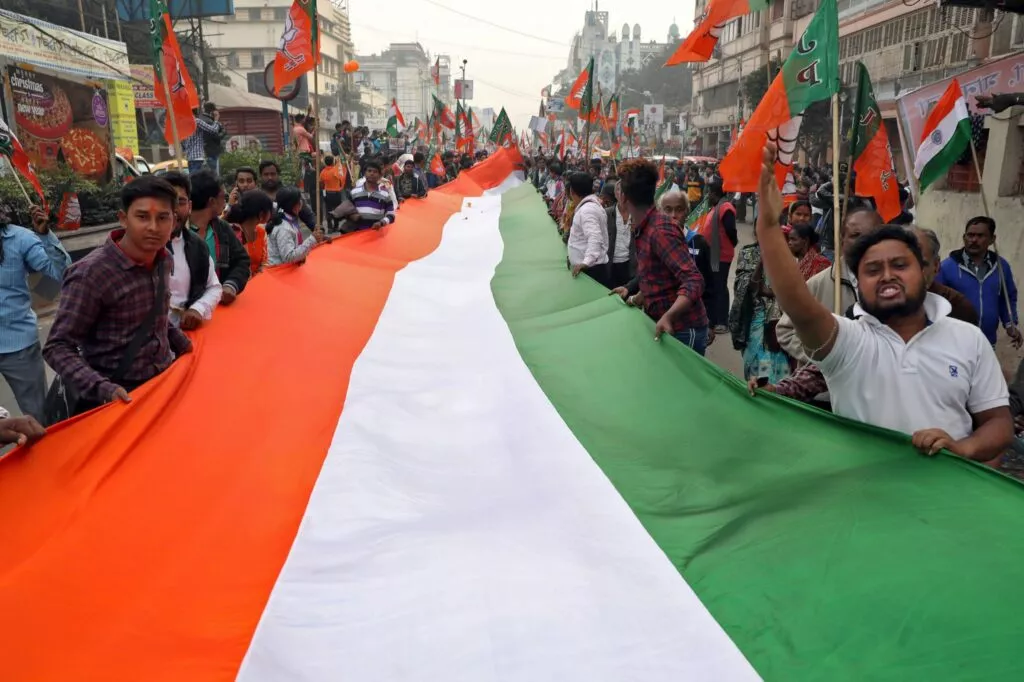
India’s Religious Ideology Converting into State Terrorism: A Case of Hindutva Extremism
India, the world’s largest democracy, has long been known for its religious and cultural diversity. However, in recent years, the rise of “Hindutva extremism” has posed a serious threat to the...

India, the world’s largest democracy, has long been known for its religious and cultural diversity. However, in recent years, the rise of “Hindutva extremism” has posed a serious threat to the country’s democratic and secular fabric. The ideological shift towards Hindu nationalism, championed by groups like the “Rashtriya Swayamsevak Sangh (RSS)” and politically endorsed by the “Bharatiya Janata Party (BJP)”, has led to growing concerns about state-sponsored terrorism against religious minorities, particularly Muslims and Christians. This article argues that Hindutva ideology is transforming India into a majoritarian state, where violence, discrimination, and suppression of minorities are increasingly legitimized through state machinery.
Hindutva, distinct from the broader Hindu religious tradition, is a political ideology that seeks to establish India as a Hindu Rashtra (Hindu Nation). Originating from the writings of Vinayak Damodar Savarkar, Hindutva propagates the idea that only Hindus are the rightful inhabitants of India, while Muslims and Christians are viewed as “outsiders” with divided loyalties.
This ideology has been institutionalized under the BJP government, with leaders openly endorsing radical elements. Hate speeches, calls for genocide, and open threats against minorities have become common, yet legal action is rarely taken. The role of the RSS, Vishwa Hindu Parishad (VHP), and Bajrang Dal in inciting violence further highlights how Hindutva has transformed into a militant movement rather than a mere political ideology.
State terrorism is generally defined as the use of violence, repression, and intimidation by a government against its own citizens. In India, Hindutva driven policies have created an environment where the state actively participates in oppression, using legal, political, and violent means to suppress dissent.
Under the BJP’s rule, cow vigilantism has resulted in the lynching of hundreds of Muslims and Dalits. Groups affiliated with the Hindutva ideology, such as Gau Rakshaks (cow protectors), attack individuals with impunity, often recording their violence as a form of public intimidation. Shockingly, many perpetrators receive political and legal protection, with BJP leaders even garlanding and celebrating them as heroes.
The 2002 Gujarat riots, which killed over 2,000 Muslims, remain a stark example of state-sponsored terrorism. Then Chief Minister Narendra Modi, now India’s Prime Minister, was accused of complicity, with evidence suggesting police inaction and political orchestration of violence. More recently, the Delhi riots of 2020, which disproportionately targeted Muslims, had police involvement and direct support from BJP leaders.
The Indian government has introduced several laws that disenfranchise and criminalize minorities, such as the Citizenship Amendment Act (CAA), 2019 openly discriminates against Muslim refugees while granting citizenship to Hindus, Sikhs, Buddhists, and others. The revocation of Article 370 in Kashmir led to severe militarization, mass arrests, and communication blackouts, effectively turning the region into the world’s largest prison. Anti-conversion laws in states like Uttar Pradesh are used to harass Christians and Muslims under the false pretense of stopping “Love Jihad.” These laws function as a legal means to implement Hindutva policies, stripping minorities of their rights and reducing them to second class citizens.
The Unlawful Activities Prevention Act (UAPA) and sedition laws are regularly used to silence journalists, activists, and intellectuals who speak against Hindutva extremism. Prominent critics like Umar Khalid, Siddique Kappan, and Teesta Setalvad have been arrested on trumped up charges, showing how the state weaponized the legal system to stifle opposition.
The rise of Hindutva extremism bears a striking resemblance to historical fascist movements. Like Nazi Germany’s Aryan supremacy ideology, Hindutva’s racial and religious nationalism demonizes minorities and promotes ethnic supremacy. International human rights organizations, including Amnesty International and Human Rights Watch, have repeatedly condemned India’s growing human rights violations. However, due to geopolitical interests, many Western nations remain silent. Moreover, India’s Hindutva driven policies have led to strained relations with Muslim majority nations, as evident in repeated diplomatic tensions with the Gulf countries over Islamophobic statements made by BJP leaders.
The transformation of India’s religious ideology into a form of state terrorism threatens not only the country’s secular and democratic values but also regional stability. Hindutva extremism, when backed by state machinery, creates a climate of fear, oppression, and violence. The international community, civil society, and progressive forces within India must take a stand against this rising fascism. If left unchecked, India risks losing its pluralistic identity, replacing it with a militant theocracy where minorities exist only as subjugated subjects. The battle against state sponsored terrorism in India is not just about protecting minorities it is about preserving democracy itself.
Author