

India’s Proxy Accounts Fuel Chaos in Balochistan
In the fog of modern warfare, battles are no longer fought only with bullets and bombs. They are waged in cyberspace, with fake identities, manipulated narratives, and strategic deceit. And nowhere...

In the fog of modern warfare, battles are no longer fought only with bullets and bombs. They are waged in cyberspace, with fake identities, manipulated narratives, and strategic deceit. And nowhere is this new theatre of conflict more visible than in the orchestrated digital assault India has launched against Pakistan’s internal affairs, particularly in the restive province of Balochistan. What was once a local insurgency has been globalized, digitally manufactured by thousands of Indian-run social media accounts masquerading as Baloch voices. The aim is not just misinformation; it is disruption, division, and destabilization.
In recent weeks, a wave of revelations has peeled back the layers of India’s coordinated disinformation campaign. Over 21,000 fake accounts, allegedly created from Indian soil, have been linked to online activities that amplify separatist sentiments, spread false atrocities, and glorify militant actions, all under the guise of Baloch human rights advocacy. These accounts don’t merely distort the truth; they actively seek to fracture Pakistan’s national unity by hijacking the Baloch narrative and weaponizing it against the state.
This is not India’s first digital intrusion. In fact, it follows a now-familiar playbook. Back in 2020, the EU DisinfoLab released a landmark report titled “Indian Chronicles”, a jaw-dropping exposé of a 15-year campaign involving over 750 fake media outlets in 119 countries. These Indian agents were reincarnating dead human rights NGOs and acting on their behalf to lobby in the European parliament and the UN in a bid to curb Pakistan. Planning and sophistication made it obvious, it was not rogue activism; it was strategic subversion with the involvement of the state.
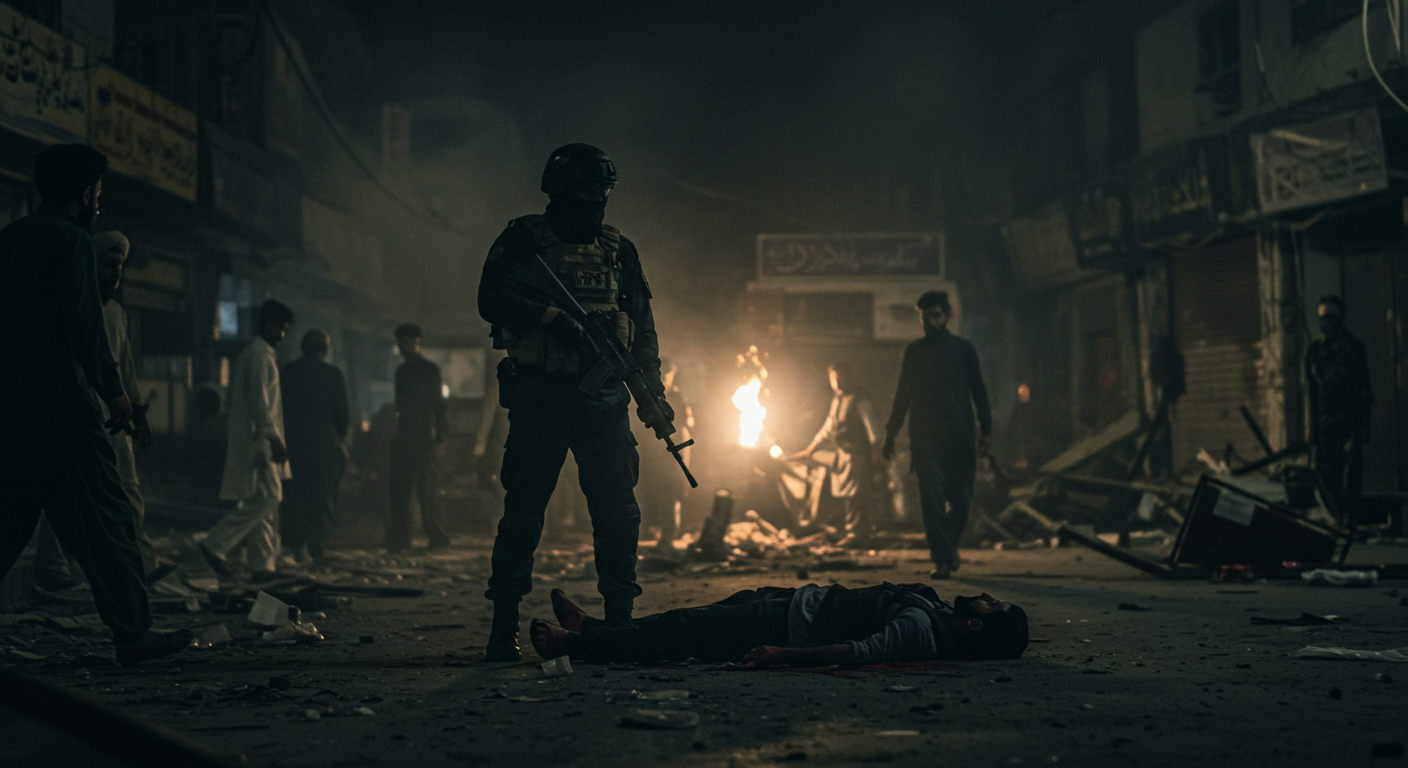
By the year 2025, the same approach takes a creepy new shape. Not restricted to the Western halls of power that are familiar territory to the Indian disinformation engine, social media platforms have ended up as their new hunting ground as algorithms hunger on outrage and lies move at the speed of light as compared to truth. In recent weeks, videos have surfaced purportedly showing protests in Quetta and Turbat, often accompanied by captions condemning alleged “genocides” and “forced disappearances.” But digital analysts and independent watchdogs have traced many of these videos to unrelated protests in India or even Nepal, repackaged and repurposed to incite unrest.
This campaign comes with a telling time. With increased internal unrests, farmers’ demonstrations, and increased violence because of communal misconducts and concerns internationally on the state of Kashmir, India appears to be focused on exporting their own instability. The socio-political landscape of Balochistan, besides its dynamic, a bit frayed edges and often turbulent surface, provides an easy playing field. However, behind the guise of sympathy is lurking a nefarious plan; to internationalize Balochistan just like the Kashmir issue, and to dent the reputation of Pakistan in the international arena.
Interestingly, even Indian media has not been immune to this manipulation. During the recent India-Pakistan military escalation in May 2025, numerous Indian television channels aired video game footage, falsely claiming it was evidence of Pakistan’s “aggression.” One prominent Indian anchor even praised an obviously AI-generated image as proof of “bravery on the battlefield.” These farcical episodes were later debunked by international outlets like The Guardian and The Washington Post, who criticized India’s media ecosystem for becoming a propaganda echo chamber rather than a source of verified news.
But beyond media, the digital proxy war serves another purpose, strategic deflection. By amplifying Baloch separatist voices, India attempts to erase its own record of human rights abuses in Manipur, Assam, Nagaland, and most notably Indian-administered Kashmir, where over 900,000 troops are stationed to suppress dissent. It is an old colonial trick: create the illusion of chaos in your neighbor’s home so that no one questions the fire in your own.
What makes this all the more alarming is the use of AI-powered bots and deepfake technology to manufacture entirely fictional scenarios. A recent viral post allegedly showed a Baloch student crying over a family member killed by “state forces.” On a more detailed examination, it was shown that metadata presented the video as being created using an AI image synthesis system, and that the audio background of the video was actually a splice of some unrelated interview. It is not that mere rumor-mongering anymore, this is psychological war against minds, mainly those of global observers and youth of Pakistan.
Furthermore, it is not only the disinformation in English. Arabic, French and even Mandarin posts have been identified where it can be indicated that the digital campaigns being conducted by India are to be aimed a global market. The aim is quite obvious but to make Pakistan illegitimate in the international community by creating a picture of suppression, turmoil and rebellion in Balochistan. However, the reality on the ground is much more complicated and grounded on the historical realities that India chooses to overlook.
Pakistan has been improving the incorporation of Balochistan into its national developmental pathway as seen in the improvement of its infrastructure including the China Pakistan Economic corridor (CPEC), schools, and colleges. These efforts are precisely what India wants to undermine. Because a prosperous, stable Balochistan would disprove the separatist myth that New Delhi has so painstakingly tried to build.
It is time for the international community, especially tech giants like Meta and X (formerly Twitter), to wake up. Allowing fake Baloch accounts run from Indian IP addresses to spread propaganda is not freedom of expression; it is the digital equivalent of cross-border terrorism. If platforms can act swiftly on Russian misinformation during the Ukraine crisis, why not on India’s information war against Pakistan?
In this battle of narratives, truth is not just the first casualty it is the primary target. India’s digital proxy war on Balochistan is not about supporting human rights; it’s about weaponizing them. It is not about solidarity with the Baloch people; it’s about exploiting their struggles for geopolitical gain. And as the mask falls, it becomes clear: this is not activism, it is aggression, cloaked in tweets, cloaked in likes, but soaked in malice.
The sooner the world sees it for what it is, the better. Because in the age of hybrid warfare, silence is not neutrality. It is complicity.
Author