


Humanitarian Gambit: Turkish Flotilla Dares Israel’s Blockade, Stoking Regional Tensions
POLICY WIRE — Istanbul, Turkey — It’s a cruel kind of deja vu, isn’t it? A generation has passed since the infamous Mavi Marmara incident, yet here we’re again, staring down the...

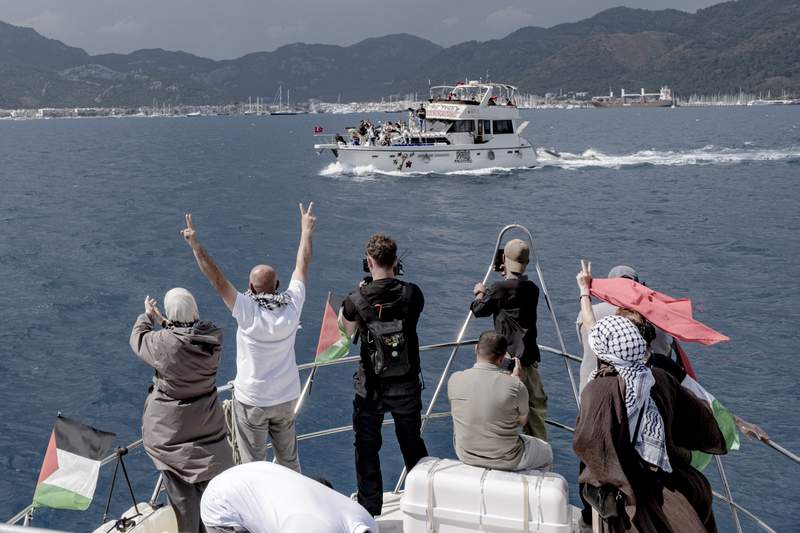
POLICY WIRE — Istanbul, Turkey — It’s a cruel kind of deja vu, isn’t it? A generation has passed since the infamous Mavi Marmara incident, yet here we’re again, staring down the barrel of another high-seas confrontation. The azure waters of the Mediterranean, usually a postcard backdrop, are about to become a very real stage for a high-stakes standoff, as a Turkish-backed humanitarian aid flotilla churns purposefully towards the Israeli-imposed blockade of Gaza.
Down in Jerusalem, Prime Minister Benjamin Netanyahu doesn’t just meet with defense officials to discuss parking arrangements. He’s convened them to untangle a fresh, thorny problem, one wrapped in humanitarian flags but bristling with geopolitical implications. They’ve got less than two days, apparently, to figure out how to stop—or at least contain—this floating defiance without plunging the region into yet another avoidable crisis.
The original manifest lists enough flour and medical supplies to staunch the most immediate wounds of Gaza’s battered population. But its true cargo, let’s be frank, is pure, undiluted symbolism—a raw, emotional challenge to an Israeli blockade that much of the world, especially the Muslim world, deems inhumane. They’re banking on international outrage if Israel intervenes too aggressively. And they’re not wrong to think that.
Because Turkey, under President Erdoğan, thrives on such theatrical plays. This isn’t just aid; it’s a very public declaration of intent, a flexing of moral muscle in a region desperately short of moral victors. “This isn’t about provocation; it’s about basic human dignity,” thundered Mevlüt Çavuşoğlu, a senior advisor to Turkey’s foreign ministry, in a recent interview. “We won’t stand idly by while our Gazan brethren starve under an inhumane siege. The international community has a duty to act, and if they won’t, then we must.” It’s the kind of statement designed for headlines, certainly, but also for domestic consumption. Erdoğan always has an eye on the crowd, both home — and abroad. They love this stuff.
Israel, of course, isn’t buying the benign humanitarian narrative. They see ghosts in every supply vessel, a legitimate national security concern thinly veiled by bags of lentils. And they’ve got a point: the past has shown that Hamas has exploited aid routes, and Israel says this blockade is essential for preventing weapons from reaching terror groups. It’s a bitter truth, though, that a strict blockade punishes ordinary folks.
“Israel maintains its right to secure its borders and prevent the entry of materials that could aid terrorist organizations,” a senior Israeli defense official, speaking on background, made clear this morning. “Any vessel attempting to breach our legitimate naval blockade will be intercepted. Our primary concern remains the safety of our citizens, not political theatrics disguised as aid.” A fair position, perhaps, in the sterile chambers of military doctrine, but it sounds decidedly tone-deaf when people are scrounging for food.
📄 POLICY WIRE WHITEPAPER PUBLISHED: PAKISTAN'S NATIONAL SECURITY POLICY PRIORITIES
👉 READ BY CLICKING HEREAnd what about the human cost? According to the UN OCHA, over 1.1 million people in Gaza face catastrophic levels of food insecurity – that’s roughly half the population, a grim statistic that hasn’t seen improvement in months. A million desperate souls, caught between an armed conflict — and a humanitarian blockade. That’s a statistic that cuts deep, or at least it should.
The geopolitical tremors from this aren’t contained to the Eastern Med. Across the Muslim world, from Cairo to Islamabad, Ankara’s bold move resonates deeply. Pakistan, for instance, a nation that consistently champions Palestinian rights on international forums, views such direct actions with a blend of admiration and exasperation. It’s a tangible show of support where words often fall short. They’ve long pushed for a unified stance on these matters, — and a Turkish flotilla sailing right into the fire? Well, that’s certainly something to talk about. The strategic alliances forming throughout the region, as outlined in articles like Strategic Convergence: The Expanding Industrial Partnership Between Egypt and Pakistan, highlight how these flashpoints are inextricably linked to broader regional shifts. Israel, for its part, also battles significant internal divisions, adding complexity to any external response.
What This Means
The stakes are higher than a simple delivery of aid. For Turkey, a successful breach – or even a confrontation that garners massive international sympathy – shores up Erdoğan’s domestic base, portraying him as a champion of Islamic causes. It also cements Ankara’s often-confrontational, independent foreign policy. For Israel, a perceived failure to uphold the blockade weakens its strategic deterrence and raises uncomfortable questions about its ability to manage external pressure, especially at a time when its leadership is already facing unprecedented domestic dissent. Economically, prolonged instability discourages foreign investment — and disrupts maritime trade routes. Politically, any misstep could ignite widespread protests across the Middle East, potentially leading to a broader regional re-alignment. Because this isn’t just about ships and blockades; it’s about sovereignty, suffering, and the deeply ingrained resentments that simmer just beneath the surface of the international order.