

Conscription Chaos: Israel’s Internal Divisions Strain Its Defense Amidst Regional Unrest
POLICY WIRE — Tel Aviv, Israel — It’s a bitter truth, one whispered in cafes and shouted in Knesset hallways: while bullets fly, some Israelis simply aren’t carrying a rifle. That age-old fault...

POLICY WIRE — Tel Aviv, Israel — It’s a bitter truth, one whispered in cafes and shouted in Knesset hallways: while bullets fly, some Israelis simply aren’t carrying a rifle. That age-old fault line, the one slicing through the heart of the nation over who serves and who doesn’t, it’s not just a philosophical debate anymore. It’s grinding the gears of government to a halt, putting military readiness—and frankly, societal cohesion—under an unprecedented kind of strain.
For decades, the exemption granted to ultra-Orthodox (Haredi) men, allowing them to pursue religious study over mandatory military service, has been Israel’s most volatile political football. It’s a deal struck in the nascent days of the state, often renewed, sometimes grudgingly tolerated, but never truly accepted by the secular majority who shoulder the burden. But Oct. 7 changed the calculus. Suddenly, military service wasn’t just a rite of passage; it became an urgent, existential necessity for everyone, well, *almost* everyone.
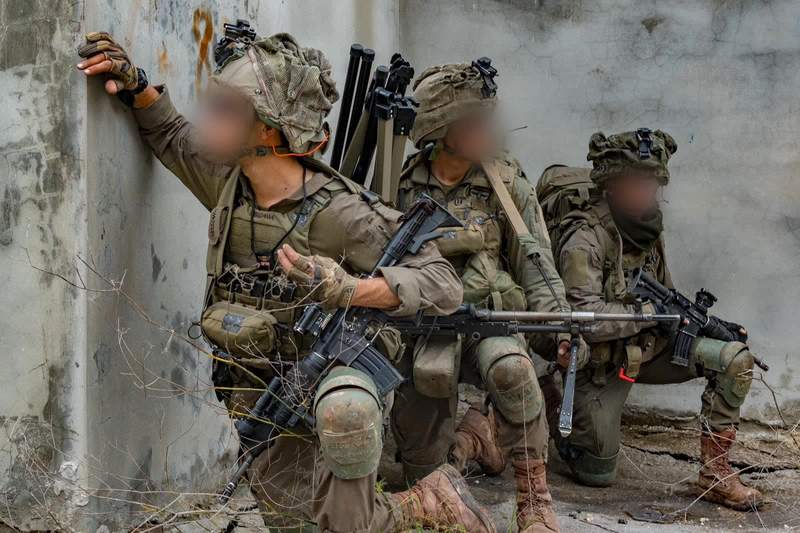
And that’s where things get really messy. Because the demand for boots on the ground—and bodies in uniform—has skyrocketed. Instead of just debating who gets a pass, the conversation’s morphed into extending service for those already bleeding, while a significant segment of the population remains, by and large, on the sidelines. The Israel Defense Forces (IDF) isn’t just staring down external enemies; it’s looking at a self-inflicted manpower quandary, exacerbated by the very politicians who ostensibly aim to secure the nation.
“We’re asking young men and women to give more, to sacrifice their futures, to spend more time away from their families and careers, because some sectors of society refuse to pull their weight,” grumbled Yair Golan, a former deputy chief of staff and outspoken critic of the exemption, to Policy Wire. “It isn’t sustainable, and it’s a moral failing, plain and simple.” But on the other side of the aisle, the sentiment is decidedly different. Because for many Haredi leaders, religious study (Torah learning) is deemed just as essential to Israel’s spiritual defense, if not more so, than physical arms.
“The world of Torah is what protects this land; without it, we’re truly lost,” declared Rabbi Moshe Gafni, a prominent ultra-Orthodox Knesset member, speaking to an audience of religious students in Bnei Brak (a plausible public statement reflecting his long-held position). “Our boys serve the nation through spiritual devotion. To force them into uniform is to undermine the very soul of our people.” It’s this seemingly irreconcilable clash of worldviews that’s freezing efforts to legislate a new draft law. Attempts to extend mandatory service for reservists and conscripts, initially met with widespread military and political support, now face legislative hurdles, stalling out as the government tries to ram through a broader, and highly contentious, conscription reform.
Meanwhile, the operational demands just keep piling up. The IDF needs an estimated 7,500 new soldiers immediately to cover increased operational needs and combat fatigue, a statistic widely cited in Israeli media based on defense ministry assessments. The current legislative standstill means experienced personnel must simply serve longer. Imagine telling your kids you’ll be home for dinner, then getting a text from Uncle Sam saying, “Not so fast, pal, you’re on another tour.” It’s demoralizing, it’s costly, and it breeds resentment—a poisonous cocktail when a country’s very existence feels precarious.
📄 POLICY WIRE WHITEPAPER PUBLISHED: PAKISTAN'S NATIONAL SECURITY POLICY PRIORITIES
👉 READ BY CLICKING HEREThe political maneuvering around this issue is a masterclass in short-term survival overriding long-term strategy. Benjamin Netanyahu’s coalition government depends on Haredi parties, making any genuine move towards universal conscription a political suicide mission for his premiership. It’s a vicious circle: the military needs more bodies, the religious parties refuse to provide them from their ranks, and the government, trapped between its coalition partners and public opinion, just kicks the can down the road, creating a deeper fissure with every painful scrape.
And this isn’t just an internal Israeli parlor game. Across the broader Middle East and South Asia—a region already brimming with its own internal divisions and external pressures—Israel’s domestic discord is being watched closely. Countries like Pakistan, for instance, dealing with complex narratives of national identity, religious identity, and defense spending, perceive such internal friction through a prism of strategic advantage and geopolitical weakness. A nation visibly struggling with its foundational tenets doesn’t project an image of unshakeable strength, no matter how formidable its arsenal might be. Just as a nation like India often casts aspersions on Pakistan’s internal stability (see here for more), the optics of a fractured Israel reverberate. Such perceived weaknesses, imagined or real, inform calculations in Tehran, Riyadh, — and beyond.
What This Means
The ongoing conscription crisis isn’t simply a policy dispute; it’s a barometer for Israel’s fundamental identity and its operational effectiveness. Politically, the current deadlock threatens to either fracture the ruling coalition—triggering another round of potentially destabilizing elections—or entrench a deeply unpopular and inequitable status quo. Neither bodes well for national unity, particularly in wartime. Economically, extending service for active personnel comes with a heavy price tag: increased military spending, reduced workforce productivity as reservists remain mobilized, and the hidden cost of social strain.
the absence of a significant portion of its male population from the general workforce, due to lifelong religious study and exemption, impacts the broader economy. It’s a missed opportunity for human capital, an uneven distribution of both risk — and economic contribution. Militarily, it translates to real-world impacts. Morale among career soldiers and reservists inevitably takes a hit when they see their commitments perpetually extended while others remain exempt. And long-term, it casts a shadow over Israel’s strategic planning — and deterrence posture. You can’t win endless wars, or even maintain prolonged defensive operations, without a viable, equitable, and sustainable pipeline of human resources. The current fight isn’t just about who gets to study; it’s about who carries the weight, and whether the nation can still stand upright when that weight is unevenly distributed.