

Video Stokes Raw Debate Over Police Use-of-Force in Desert City Shooting
POLICY WIRE — Albuquerque, N.M. — It started, as these things often do, with a whisper of trespass. A Friday afternoon. An empty Walgreens. Before the sirens faded, another man would be dead on the...

POLICY WIRE — Albuquerque, N.M. — It started, as these things often do, with a whisper of trespass. A Friday afternoon. An empty Walgreens. Before the sirens faded, another man would be dead on the pavement, another lapel camera footage dropped like a digital grenade into a city already fractured by public safety debates. It’s a familiar, bleak dance for Albuquerque, isn’t it? The authorities put out a video, expecting, perhaps, some clarity. What they get instead is another layer of grit in an already grimy discussion about police protocols and the lives left in their wake.
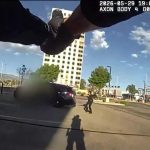
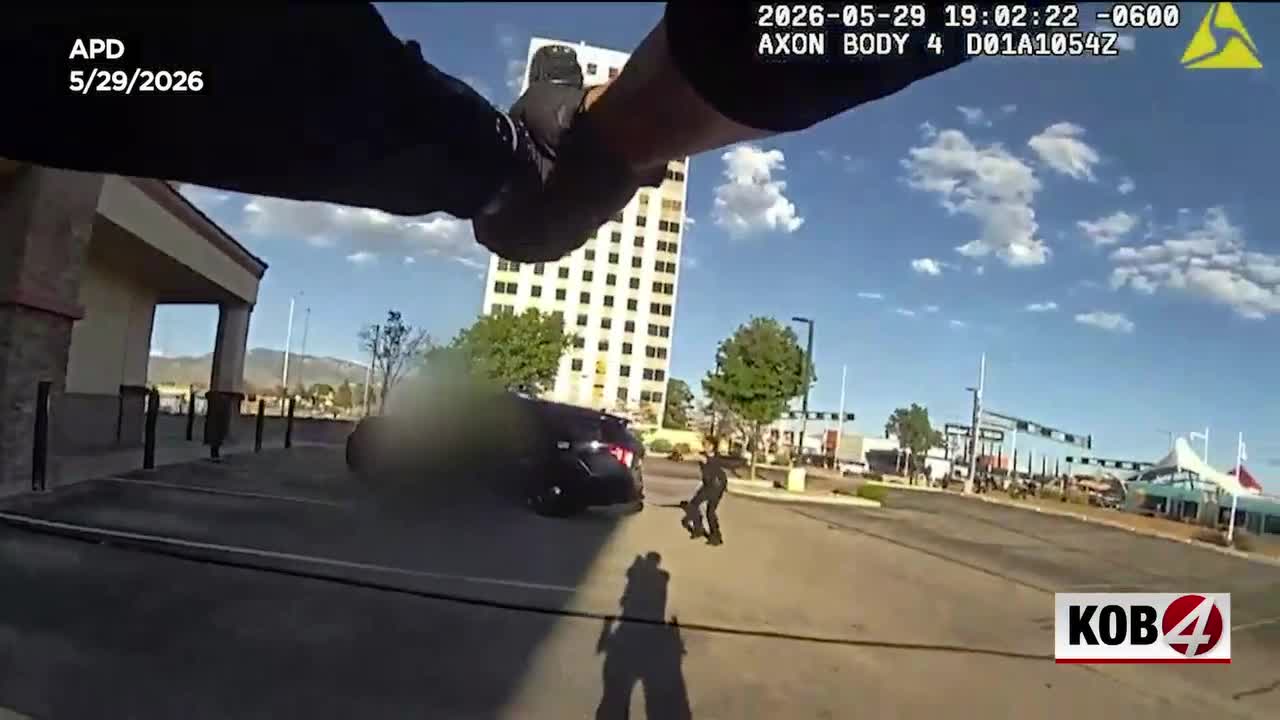
Police in New Mexico’s largest city released the now-standard ‘transparency’ video documenting the fatal shooting of 35-year-old Robert Salas near the notorious intersection of Central and San Mateo. Officials claim Salas, a man with a rap sheet they’re quick to highlight, was armed with a “large knife.” The sequence, captured from an officer’s body camera, is jarring—a sudden chase across asphalt, a brief confrontation, and then the inevitable, brutal conclusion. An officer spotted Salas, identified as a trespasser, tried to apprehend him. Salas, by their account, made a break for it. The pursuit was brief, the outcome absolute. One minute he’s running, the next—well, he’s not. But the grainy footage raises more questions than it answers, as these videos frequently do, because it leaves so much to interpretation, so much to the subjective lens of fear and adrenaline.
APD Chief Cecily Barker, her voice typically measured amidst these recurrent controversies, acknowledged the footage wouldn’t settle everyone’s nerves. “Our officers face split-second, life-or-death decisions daily, often against armed individuals who pose an immediate threat,” Barker stated during a terse press briefing, adding, “We strive for transparency, but it won’t always satisfy those determined to see malice.” And she’s not wrong about the challenges. Policing is dirty work; no one pretends otherwise. But it’s also a job demanding an almost superhuman restraint, a nuanced judgment call that sometimes—too often, some might argue—erodes under pressure.
Salas, it turns out, was no stranger to the system. According to Chief Barker, he had a significant record, including time served for a child abuse conviction in 2019, and was currently on probation. It’s the kind of detail meant to contextualize, perhaps even justify, the outcome for some. But it does little for those who see a man, however flawed, cut down. The Multi-Agency Task Force is on the case, a standard procedure, but few expect revelations that significantly alter the primary narrative—cop sees knife, cop shoots man. Because that’s usually how these play out.
This incident—another entry in a long catalog—serves as a grim reminder that policing in American cities like Albuquerque faces complex challenges. Issues like mental health crises, homelessness, and recidivism frequently intertwine with law enforcement encounters, creating an incredibly volatile mix. Consider, for a moment, how The Washington Post’s exhaustive database on fatal police shootings in the U.S. noted that nearly 25% of individuals killed by law enforcement since 2015 showed signs of mental illness. While Salas’s mental state wasn’t immediately confirmed, the broader patterns are hard to ignore. It isn’t just about an individual officer, or even a single department, but about a societal inability—or perhaps unwillingness—to properly address the root causes that continually bring vulnerable populations into violent contact with the authorities.
For city Councilor Khalil Mirza, who has long advocated for increased mental health funding and de-escalation training, these episodes highlight systemic shortcomings. “Every time we have one of these incidents, it feels like groundhog day,” Mirza observed with a sigh. “We keep asking officers to solve problems that frankly aren’t police problems, then blame them when things go tragically wrong. We need resources upstream—community support, intervention programs—not just more bodies on the street, armed to the teeth.” It’s a sentiment echoed in many marginalized communities, not just in the U.S., but in nations globally, from London’s diverse boroughs to the congested streets of Karachi. The dynamics of trust, fear, and authority between law enforcement and citizens, particularly those on the fringes, remain a universally fraught proposition, no matter the jurisdiction. People in areas like Pakistan and other South Asian nations know all too well the razor’s edge of policing when accountability is opaque and public faith is thin. Even with ‘transparent’ videos, the question isn’t always about what happened, but *why* it happened and whether it could’ve been avoided.
What This Means
This latest fatal police shooting will undoubtedly amplify existing tensions within Albuquerque, especially concerning the scope of law enforcement’s role in managing societal ills. Politically, Mayor Tim Keller’s administration will face renewed pressure from civil rights advocates to re-examine police training, particularly in de-escalation tactics and mental health intervention. Expect calls for deeper investments in community-led alternatives to police response for non-violent incidents. Economically, repeated incidents of police brutality, or even contentious uses of force, can have subtle but corrosive effects—eroding civic trust, dampening investment in neighborhoods perceived as high-crime, and draining municipal budgets through legal settlements and oversight programs. The optics alone can deter new businesses or skilled workers who value progressive community relations. But it’s deeper than economics. It’s about social cohesion, about whether residents feel safe from both criminals — and the guardians of public order. For many, particularly those within minority communities who often bear the brunt of such encounters, this isn’t an isolated incident; it’s further proof of a broken system that urgently requires not just tweaks, but perhaps a wholesale rethinking.
The city’s Police Oversight Board will almost certainly conduct its own review, adding another layer to the narrative. But regardless of their findings, the memory of another life lost, caught on camera, will persist. And it’s this persistent erosion of faith that creates the toughest challenge, for authorities trying to do a difficult job, and for a community yearning for peace and justice that still feels just out of reach. There isn’t a tidy answer here, not usually. It’s messy business, police work, full of jagged edges and unresolved grievances. And frankly, we haven’t found a better way to navigate it yet.