


Hoofing it: Bangladesh’s ‘Trump Buffalo’ and the Global Carnival of Symbols
POLICY WIRE — Dhaka, Bangladesh — Forget electoral primaries or policy debates. In the frenzied build-up to Eid al-Adha, it’s a buffalo that’s commanding global attention. Not just any buffalo,...

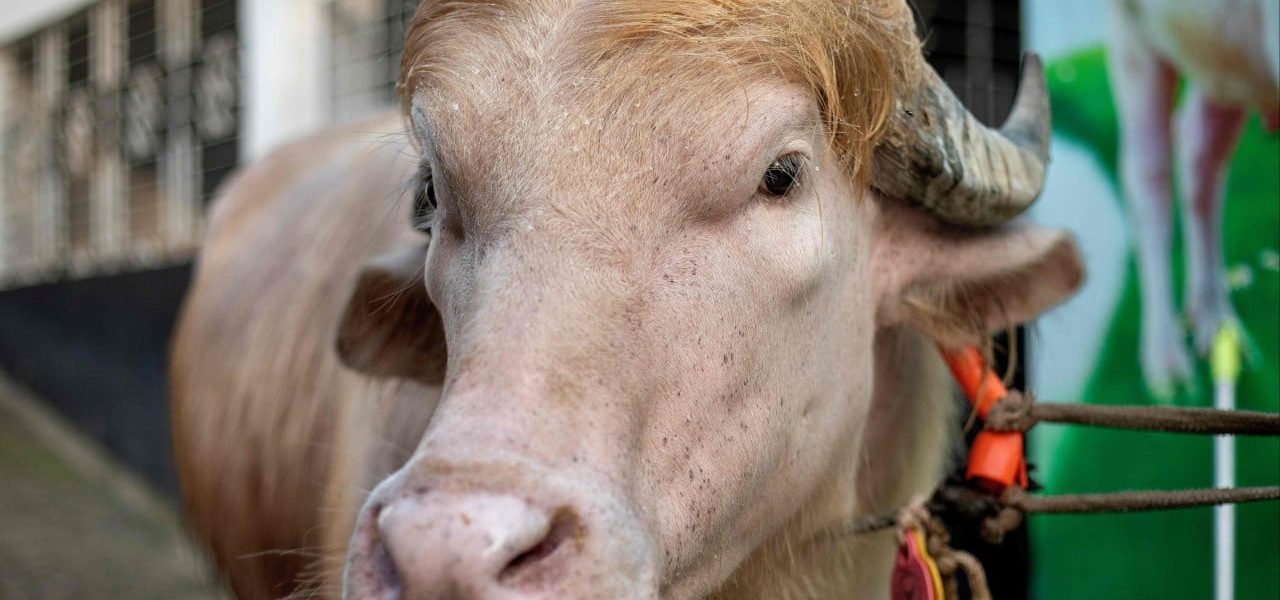
POLICY WIRE — Dhaka, Bangladesh — Forget electoral primaries or policy debates. In the frenzied build-up to Eid al-Adha, it’s a buffalo that’s commanding global attention. Not just any buffalo, mind you. This particular beast, an imposing 700-kilogram specimen with an almost absurdly pale, blonde forelock, has become an unlikely — and perhaps uncomfortable — symbol, pulling in droves of curious onlookers in Bangladesh’s Narayanganj district. They’re not here for its genetics; they’re here because, well, it looks eerily like Donald Trump.
But this isn’t merely about bovine doppelgängers. Oh no. It’s a snapshot, isn’t it, of a world constantly looking for reflection, projection, or just a good laugh in the most unexpected corners. This particular livestock celebrity, destined for a sacrifice during the Muslim festival, doesn’t just sport an unusual coif. It represents a confluence of agricultural trade, social media sensationalism, and the uncanny human knack for finding meaning—or meme—in everything. The creature, raised on a local farm just outside the bustling capital, has single-handedly elevated livestock sales to a performance art.
“It’s truly a sight,” admitted Aminul Haque, the Narayanganj District Commissioner, speaking to Policy Wire from his office. “People are traveling long distances. We’re seeing an unprecedented buzz around a — let’s just say — very unique animal. It’s certainly boosted local tourism, albeit temporarily. We’re managing the crowds as best we can, but it’s a bit of an uncontrolled spectacle, frankly.”
Because that’s how things often work. A novelty, a viral spark, and suddenly, a humble farm animal transcends its fate, if only for a moment, to become an international headline. Farmers, usually battling rising feed costs and unpredictable weather—factors that, as Policy Wire has reported, plague South Asia’s agricultural sector—are now dealing with a different kind of burden: fame. And let’s be honest, it’s a rather silly fame, rooted in nothing more than a tuft of hair.
“This phenomenon speaks volumes about our hyper-connected, media-saturated reality,” observes Dr. Zara Hassan, a cultural sociologist specializing in South Asian media trends, based in Lahore, Pakistan. “Whether it’s a talking parrot or a buffalo resembling a former US President, the public consumes these stories with equal fervor. It’s a distraction, yes, but it also reflects how easily political figures become pop culture archetypes, even thousands of miles from their actual political theatre. There’s a touch of affectionate mockery, isn’t there, in such naming?” Her tone was dry, a slight edge in her voice.
The farm owner, apparently quite delighted, has leaned into the comparison, though wisely staying clear of explicit political endorsements. This particular Eid, the festival of sacrifice, takes on an odd layer of celebrity culture. It’s a holiday that, for many across Bangladesh — and the broader Muslim world, represents profound spiritual devotion. But here, devotion is momentarily elbowed aside by sheer, unadulterated curiosity. Bangladesh’s annual Eid livestock market is massive, an economic engine unto itself. In 2023, for instance, livestock sales for Eid al-Adha in the country exceeded $12 billion USD, primarily for sacrifice, according to agricultural ministry data reported by local press outlets. This buffalo, with its star quality, will certainly fetch a premium.
📄 POLICY WIRE WHITEPAPER PUBLISHED: PAKISTAN'S NATIONAL SECURITY POLICY PRIORITIES
👉 READ BY CLICKING HEREWhat This Means
This absurd little tale, at first glance, feels like fluff. It isn’t. Not entirely. Politically, it illustrates the permeability of national borders in the age of global media. A politician, however polarizing, becomes a brand, an image — instantly recognizable across continents, even to those who’ve never set foot in the United States. It speaks to the pervasiveness of Western cultural — and political — iconography, filtering into everyday life in even the most distant corners of the world.
Economically, it’s a textbook example of unexpected demand. This singular animal has drawn tourists, sparked local commerce (think street vendors, rickshaw drivers benefiting from the extra foot traffic), and provided invaluable, if unconventional, marketing for its owner. It also offers a slight, amusing counter-narrative to the region’s more pressing geopolitical issues or economic struggles. People, you see, often want a diversion from the relentless drumbeat of serious news. This provides one, neatly packaged, bizarre, — and entirely digestible.
It’s also a commentary on the very nature of fame — and symbolism. A political leader’s distinctive look can, quite unwittingly, become an almost mythical attribute, capable of manifesting in an albino buffalo in South Asia. One has to wonder: does this particular buffalo have any opinions on trade tariffs or infrastructure? Probably not. But we’ve decided, as a global collective, that its hairstyle carries enough weight to earn it a name that makes the world — or at least, this little corner of it — take notice.