

Spain’s Faithful Swell for Pope, But Echoes of Franco and Scandal Linger
POLICY WIRE — Madrid, Spain — A peculiar clamor, an unholy roar for a Sunday in the Spanish capital, cut through the reverent murmurs near the Vatican’s diplomatic mission. Out there, a clutch of...

POLICY WIRE — Madrid, Spain — A peculiar clamor, an unholy roar for a Sunday in the Spanish capital, cut through the reverent murmurs near the Vatican’s diplomatic mission. Out there, a clutch of loyalists, draped in the nation’s colors, offered a stark, if anachronistic, reminder of old Spain. They didn’t just wave flags; they chanted slogans, a blunt declaration that [QUOTE_PLACEHOLDER] "Spain is Christian and not Muslim!" — a battle cry ripped straight from a bygone era, echoing the iron-fisted rule of Gen. Francisco Franco.
It was a jarring counterpoint to Pope Leo XIV’s grand spectacle just across town, a display meant to showcase Christianity’s enduring grip on a continent he feels has lost its way. And there, in that stark dichotomy, lies the real story: the Vatican’s campaign to reclaim Europe’s spiritual soul isn’t just about faith; it’s a tightrope walk over political landmines, historical trauma, and a deeply fractured contemporary identity.
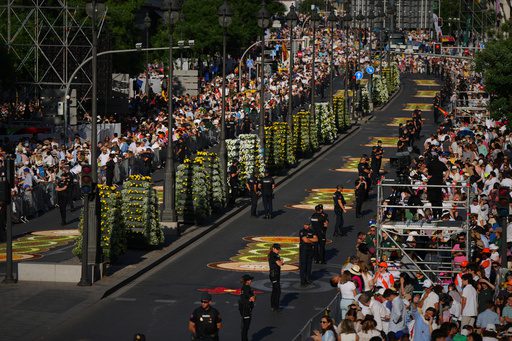
Because while millions flocked to see Leo—organizers claimed an astounding 1.2 million people had turned out on a brilliant spring morning for his Mass at Madrid’s iconic Plaza de Cibeles and surrounding streets, with more trying to get in—the air in Spain carried more than just prayers. It was thick with the dust of historical grievance — and the fresh wounds of systemic failure. And the pope’s very public challenge for Europe to consider [QUOTE_PLACEHOLDER] "what the continent’s identity would be without the influence of Christianity" struck some as a provocative rather than a unifying call, given how intertwined Christian identity has become with often divisive nationalist sentiments, not just in Spain, but in places far beyond its Iberian shores. (Think Pakistan and its foundational Islamic identity—the historical and political echoes are sometimes chillingly similar, despite vastly different religious contexts.)
This whole Madrid sojourn, a weeklong affair that kicked off Saturday, has seen Leo go full throttle on the charm offensive. There were flamenco dancers, Antonio Banderas waxing poetic, — and a big, booming Mass. Leo’s trying to fire up especially young generations to find their faith, hoping to push back against Spain’s rather serious secularization. But here’s the rub: even as folks like consultant Julián Tapiador — [QUOTE_PLACEER] "It’s spectacular," he said. [QUOTE_PLACEHOLDER] "I’m so proud that the pope is in Spain after 15 years. Hopefully he comes again and we can all see him again." — voiced their enthusiasm, a much darker reality lurked.
But the bright lights and floral carpets, those elaborate "altars erected in the streets" as Leo called them, couldn’t quite obscure the gaping wound of the clergy sexual abuse scandal. It’s a late-blooming tragedy in Spain, — and it casts a long, unwelcome shadow over the visit. Leo’s apparently due to meet with survivors, but some victim groups complain they’ve been left completely out of the loop. Miguel Hurtado, a survivor who made very serious allegations against a monk at Montserrat Abbey, protested right outside the Vatican’s embassy. He told reporters, eyeing a cardboard cutout of the pontiff, that [QUOTE_PLACEHOLDER] "I understand you can’t meet with all of us victims, because we’re more than 400,000." Four hundred thousand — that’s a staggering figure, suggesting a reckoning barely begun. His plea for Leo to cancel a planned visit to the thousand-year-old Benedictine monastery, considering its alleged complicity, remains unheard.
The image, then, is a messy one. We’ve got millions celebrating a faith traditions so deep it predates much of modern Europe, but we’ve also got echoes of old authoritarianism and the fresh stench of unaddressed institutional failings. And this is the same Spain Leo champions as a [QUOTE_PLACEHOLDER] "school of faith from which to draw even today," not just a museum piece.
📄 POLICY WIRE WHITEPAPER PUBLISHED: PAKISTAN'S NATIONAL SECURITY POLICY PRIORITIES
👉 READ BY CLICKING HERESpain, bless its heart, has always worn its Catholicism on its sleeve—sometimes, quite literally, during the flamboyant Semana Santa processions. That such profound, deeply ingrained traditions of popular piety can coexist with rapid secularization and the ghost of Franco-era religious nationalism is, frankly, bewildering to an outside observer. It’s a country pulling in several directions at once, trying to be many things to many people. The pope’s visit, rather than smoothing those edges, seems only to highlight them.
What This Means
The papal visit to Spain, often framed as a religious pilgrimage, carries a hefty political undertow for Europe, and beyond. Leo’s forceful assertion about Christianity being foundational to European identity, especially when delivered in a secularizing nation like Spain, is no mere sermon. It’s a political challenge, a pushback against the continent’s march towards greater religious pluralism and disengagement from traditional institutions. For Brussels and the capitals across Europe, it translates into sustained pressure from a powerful non-state actor—the Vatican—to consider faith in policy debates, a tension often observed in Western societies grappling with changing demographics and increased immigration. And here’s where a lens from South Asia provides clarity.
Just as in India, where Hindu nationalist sentiments are leveraged to define national identity against perceived external or minority threats, this type of rhetoric from a European pulpit can be, and often is, co-opted by ultranationalist factions. The ‘Spain is Christian and not Muslim!’ chant isn’t just local folly; it speaks to a global rise in identity politics, where religious majorities feel threatened by demographic shifts and seek to reclaim a singular, exclusionary national narrative. It gives fuel to those who want to turn the clock back, making it harder for inclusive policies to take root. the persistent sex abuse scandal chips away at the moral authority of institutions attempting to guide society. When the spiritual shepherd loses the trust of their flock over unaddressed crimes, their voice in policy, whether on family values or social justice, becomes just another discordant note in a cacophony of competing interests. For Policy Wire readers, this isn’t just about Spain’s soul; it’s a bellwether for the ongoing, often contentious, dance between faith, power, and identity that plays out globally, from the Mideast to the shifting geopolitical landscape of Pakistan.