
Hong Kong’s Fading Echo: Wong’s September Reckoning, A Global Warning
POLICY WIRE — Hong Kong — The gavel’s impending thud, scheduled for September, registers not merely as a legal pronouncement in a high-profile Hong Kong court. Oh no. It’s really more like...

POLICY WIRE — Hong Kong — The gavel’s impending thud, scheduled for September, registers not merely as a legal pronouncement in a high-profile Hong Kong court. Oh no. It’s really more like another nail being hammered into the coffin of a cherished global financial hub’s distinct identity—and, let’s be blunt, a stark reminder of where Beijing intends to take things.
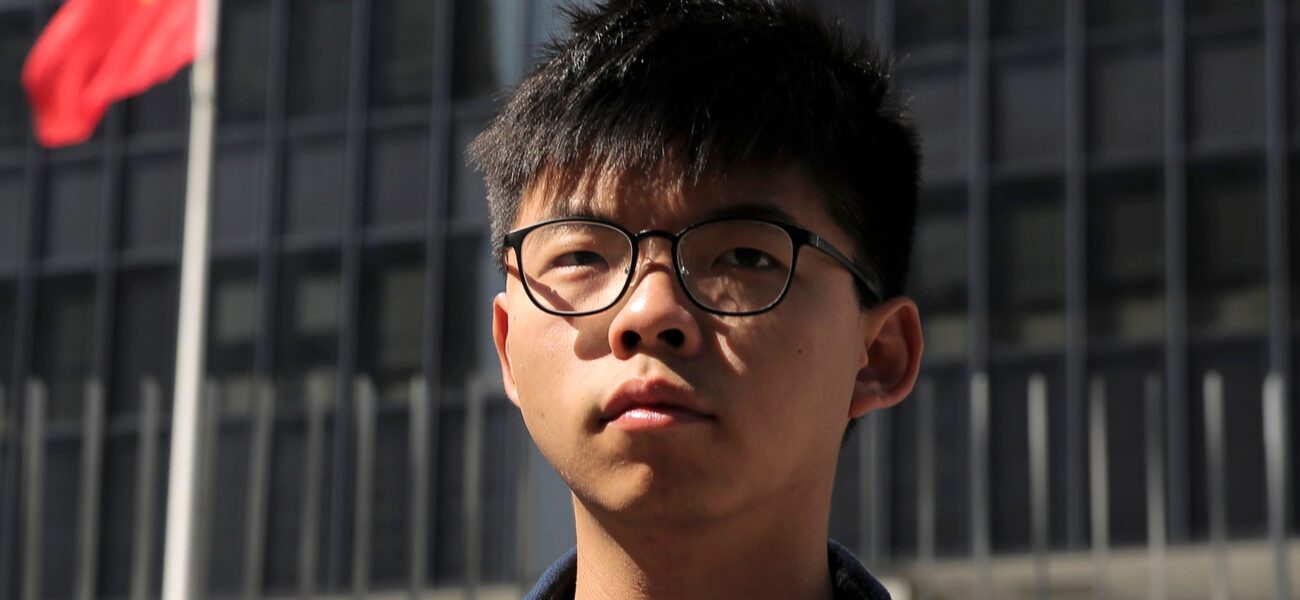
It isn’t some fresh controversy or even a nascent political movement under scrutiny. This particular dance with justice for pro-democracy figure Joshua Wong involves his second national security case—a bleak kind of bureaucratic redundancy that suggests systematic dismantling rather than simple reaction. The Hong Kong authorities, for their part, have been methodically scrubbing away any vestiges of the vibrant, sometimes rowdy, political discourse that once characterized this special administrative region.
Wong, still in his mid-20s, became a global face of Hong Kong’s resistance during the 2014 Umbrella Movement. A kid, practically, who just wanted universal suffrage. Now, he’s spent a significant chunk of his adult life behind bars, a fate that seems almost preordained for anyone bold enough to consistently challenge the narrative emerging from mainland China. His journey from schoolboy activist to political prisoner encapsulates the rapid transformation of Hong Kong, a city grappling with a new, much harsher reality than many ever imagined.
Because, make no mistake, Beijing isn’t just sending a message to Hong Kong. It’s broadcasting a masterclass in asserting absolute state control to the wider region, — and even beyond. Consider how these actions ripple outwards. Nations across South Asia and the Muslim world, often walking a tightrope between sovereign ambition and economic pragmatism, are watching this unfolding drama with quiet apprehension. They’re observing how a powerful neighbor reshapes a relatively autonomous territory. They’re seeing the cost of perceived defiance, but also perhaps the ‘stability’ that comes with centralized authority.
Pakistan, for example, heavily invested in China’s Belt and Road Initiative, finds itself in a complex strategic embrace. The implications of Hong Kong’s fate on international norms—things like human rights and self-determination—can’t be entirely divorced from the broader geopolitical conversations in Islamabad, Dhaka, or even Kuala Lumpur. It’s a reminder that political crackdowns, however localized they seem, carry weight on a much larger chessboard.
The numbers don’t lie, even if the narratives often do. Since the imposition of the National Security Law in June 2020, Hong Kong Free Press reported that over 290 individuals had been arrested under its provisions as of February 2023. Think about that for a second. More than 290 people targeted under a law designed to crush dissent—it’s not a legal glitch; it’s policy. And it’s exactly the kind of chilling statistic that governments worldwide factor into their geopolitical risk assessments, whether they admit it or not.
This situation isn’t some isolated incident; it’s part of a concerted effort to recalibrate Hong Kong’s identity, aligning it squarely with mainland Chinese principles, and eradicating any semblance of genuine opposition. It’s a blueprint, too. A model, maybe. One that could have profound implications for how other powerful nations deal with internal dissent or restive provinces.
📄 POLICY WIRE WHITEPAPER PUBLISHED: PAKISTAN'S NATIONAL SECURITY POLICY PRIORITIES
👉 READ BY CLICKING HEREWong’s upcoming judgment will, no doubt, grab headlines—the young man’s plight is compelling. But the underlying mechanics are the real story. The systemic erosion. The legal tools. The quiet acquiescence of a global community largely consumed by its own economic interests, reluctant to challenge a major economic partner too aggressively.
It’s not just a city losing its freedoms; it’s a test case for how far an authoritarian government can push. A test, too, for how robust international human rights mechanisms truly are when faced with economic might.
What This Means
Wong’s sentencing, particularly given that it’s his second go-around with national security charges, underscores a stark reality: Hong Kong’s political autonomy, once a point of pride and distinctiveness under the [QUOTE_PLACEHOLDER] framework, is now largely a historical footnote. Politically, this move solidifies Beijing’s grip, serving as a powerful disincentive for future acts of public dissent, real or perceived. It signals an unwavering commitment to prioritizing internal stability (as defined by Beijing) over external criticism or traditional liberal values. International condemnation, while predictable, hasn’t shifted the needle significantly. That’s because the perceived ‘cost’ of intervention or strong pushback often outweighs the ‘benefit’ for many global powers—a calculus Beijing understands intimately.
Economically, this protracted legal campaign against figures like Wong corrodes international investor confidence, slowly chipping away at Hong Kong’s reputation as a bastion of rule of law and unfettered markets. Yes, it remains a financial hub—of sorts—but it’s rapidly losing its independent sheen. Businesses thrive on predictability and stability, but also on clear legal frameworks and a degree of political freedom. When a legal system is perceived as a tool of political suppression, rather than an impartial arbiter, capital becomes skittish. While Hong Kong may still serve as a gateway to mainland China, its unique appeal as an independent, transparent international business center continues to diminish. You’ve gotta wonder how much of that once-brilliant shine can take this sort of battering before it’s gone entirely. It certainly presents a challenge for states hoping to balance China’s economic overtures with preserving domestic civic space, a balancing act many Muslim-majority nations, among others, currently grapple with as China extends its global influence and soft power.