


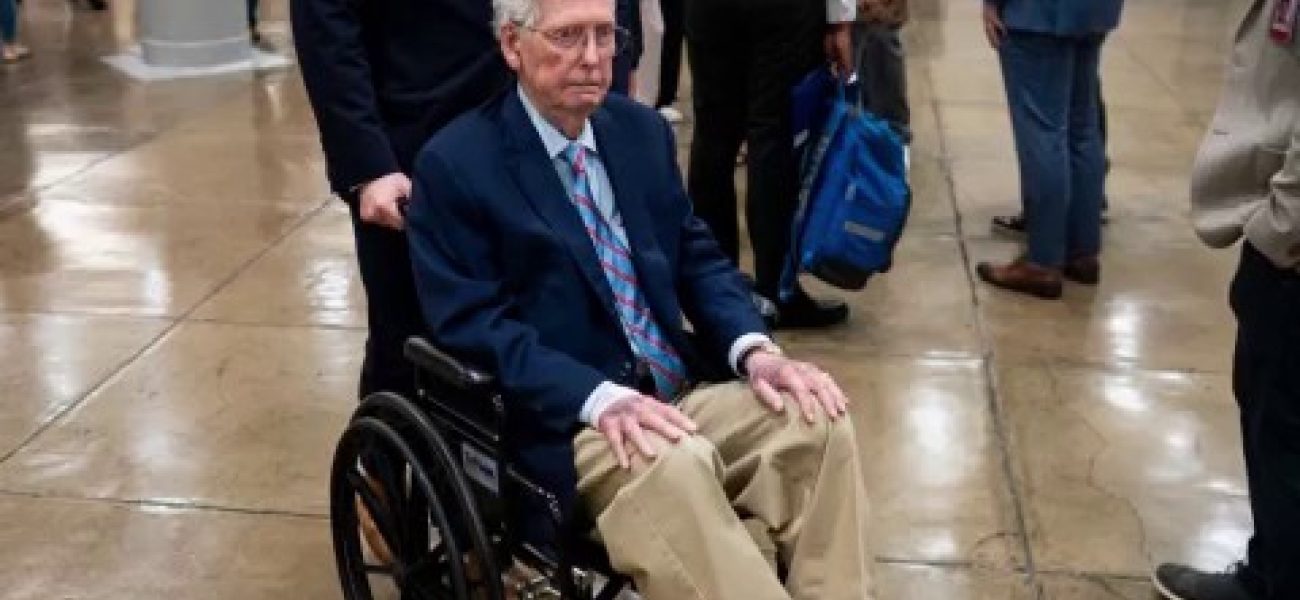
McConnell’s Cardiac Arrest: DC Leadership & Age
Discover the true story behind Mitch McConnell's 'cardiac arrest' call. This serious event exposes DC's aging leadership, raising urgent questions about political stability and succession.

POLICY WIRE — Washington D.C., USA — A silent drama played out on the cobblestone streets of America’s capital long before the headlines screamed of high-profile hospitalization. It wasn’t the roar of partisan debate or the public unveiling of some grand legislative strategy that heralded the beginning of that tumultuous day for Kentucky Senator Mitch McConnell. Nope. It was the quiet, almost mundane arrival of emergency services dispatched to his home for what dispatch logs—always so matter-of-fact—later characterized as a ‘cardiac arrest.’ And there you have it: the sort of grim, unexpected interjection that peels back the carefully maintained facade of political power, revealing the very human fragility beneath.
You see, when an emergency vehicle rolls up to the doorstep of someone holding the reins of a national legislative body, it’s never just about health. Not really. It becomes a sudden, urgent referendum on continuity, stability, and, let’s be honest, the creeping reality of time. Washington’s grand experiment with gerontocracy has had its moments, hasn’t it? Senator McConnell, who’s approaching 82 years old, isn’t some outlier. He’s part of a broader, grey-haired vanguard. But a ‘cardiac arrest’ call? That’s different. That’s a jolt. [QUOTE_PLACEHOLDER]
Official channels were, predictably, tight-lipped—masterful, in fact, in their practiced ambiguity. The public messaging focused on recuperation — and privacy. What else would you expect? But the initial dispatch report, now unearthed by determined digging, cuts through the PR fog. It didn’t mention a slip, a fall, or a routine check-up. It articulated a far more serious condition. Paramedics responded to a ‘cardiac arrest’ at Mitch McConnell’s home on day of hospitalization, which suggests a severe medical event required immediate, critical intervention right there and then. It isn’t just a headache; it’s an urgent call. That kind of information, even weeks after the fact, lands like a tiny, but very heavy, political bomb.
And it’s a detail that, frankly, reshapes the context around everything that came after. Every official statement, every picture of recovery, every assurance of a return to duty now gets viewed through a prism of what might’ve happened in those crucial, silent moments at his residence. It’s not about being cynical; it’s about being a grown-up about how power works. The health of leaders isn’t just personal, it’s public business. It just is.
Because the implications for governance — for legislative agendas, for electoral strategies — become enormous the second a leader’s mortality enters the public discourse in such a stark fashion. Imagine if such an incident had befallen a leader in, say, Pakistan. The ripple effects through regional stability, internal political factions, and even the financial markets, would be immediate and profound. Think about how leadership changes, or even just the *rumor* of them, can send tremors through developing economies and their intricate geopolitical alliances. We don’t talk about it as bluntly here, but the same underlying anxieties—about succession, about vacuum, about weakness—absolutely percolate.
One hard statistic tells a lot: The average age of senators in the 118th Congress is 65.3 years, according to data from the Congressional Research Service. This figure isn’t an accident. It’s a system that tends to reward longevity and experience, but sometimes, it forgets to ask the tougher questions about capacity and continuity. What happens when the experienced hands, the ones that hold decades of institutional memory, face these sudden, stark challenges to their health? It’s not a pleasant thought, but it’s a necessary one.
📄 POLICY WIRE WHITEPAPER PUBLISHED: PAKISTAN'S NATIONAL SECURITY POLICY PRIORITIES
👉 READ BY CLICKING HEREThis isn’t to diminish McConnell’s recovery or his ongoing contributions—he’s proven incredibly resilient. But the nature of that initial call, the urgency it suggests, brings into sharp relief a question the American political establishment has long skirted: Just how resilient is the broader structure, and indeed the public’s faith in it, when key figures appear increasingly vulnerable?
What This Means
The revelation of a ‘cardiac arrest’ dispatch fundamentally shifts the narrative around Senator McConnell’s health episode. It moves it from a routine hospital visit to a moment of genuine crisis that had significant, immediate implications for Senate leadership and Republican continuity. For Kentucky, it means a fresh evaluation of their senior senator’s capacity, even as he works diligently toward recovery. For the GOP, it forces uncomfortable internal discussions about a potential succession plan that, until recently, they seemed intent on deferring indefinitely. There’s no playbook for gracefully navigating these moments when institutional memory and influence are so heavily concentrated in individuals who are, let’s say, seasoned. It isn’t about disrespect, it’s about governance. for observers watching from regions like South Asia, where the stability of leadership is often directly tied to the political and economic fortunes of nations, this kind of incident serves as a chilling reminder of leadership vulnerability that can create instant power vacuums, both anticipated and sudden. It highlights how leadership health, particularly in patriarchal and personality-driven political systems, carries an enormous, often hidden, political and economic cost.