


Shadows and Sisterly Support: Cricket Captaincy, Public Scrutiny, and the South Asian Game
POLICY WIRE — Mumbai, India — The arena of elite sport, especially in a cricket-mad nation like India, isn’t just about athletic prowess; it’s a psychological battleground, often...

POLICY WIRE — Mumbai, India — The arena of elite sport, especially in a cricket-mad nation like India, isn’t just about athletic prowess; it’s a psychological battleground, often extending far beyond the 22 yards. Here, performance isn’t merely measured in runs or wickets, but in the volatile currency of public sentiment. When the national spotlight feels less like an honor and more like an interrogation lamp, even a seasoned athlete’s closest kin can find themselves reluctantly stepping into the public relations fray.
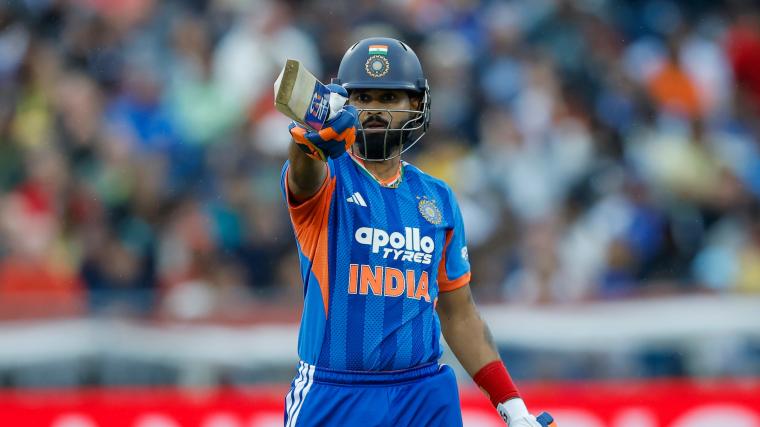
Such is the unexpected pivot in the unfolding narrative of Shreyas Iyer, India’s current T20I skipper. Following a disheartening winless streak—including a series whitewash against Ireland and successive losses to England—the critical murmurings escalated to a cacophony. Yet, it wasn’t a team spokesperson or a coach who emerged as the primary shield against this barrage. Instead, it was Shresta, his sister, who found herself compelled to articulate a defense against the swirling maelstrom of judgment and online punditry. [QUOTE_PLACEHOLDER]
Her intervention underscores a profound, often overlooked aspect of contemporary celebrity in sports: the blurring lines between a public persona and personal vulnerabilities. Because when national pride hinges on the toss of a coin or a misplaced shot, the burden of expectation becomes immense—and brutally personal. And it isn’t just about the athlete; it’s their entire familial support system feeling the heat. This level of engagement, where family members must publicly humanize their kin amidst professional setbacks, isn’t unique to Indian cricket, but it certainly thrives in its fiercely competitive ecosystem. From Pakistan to Bangladesh, the pressures on national sporting figures, particularly those representing cricket, can turn family homes into unintentional media centers, dissecting every public slight and perceived failing.
Shresta Iyer’s message was stark in its simplicity. “Wait and watch. I know he has that in him. Things don’t work in your favour every time. It’s easy for us to comment that he’s losing as a captain. Cricket is way beyond that,” she observed, her words a quiet plea for perspective amidst the rampant immediate analysis. She correctly points out that fan opinion rarely accounts for the multifaceted reality behind a player’s struggle. “You don’t know how the pitch is, if it’s a bowling or a batting pitch, if he won or lost the toss. You’re only looking at his captaincy. See the matches that he won as a captain.” Her arguments cut to the core of an issue that transcends statistics and win-loss records: the deeply human struggle for consistency and success under unrelenting, global scrutiny.
It’s an inescapable truth: failure, however temporary, often transforms sporting figures into symbols of perceived national weakness, not merely athletes having an off day. The public’s memory, for some, is regrettably short-circuited by recent losses. But then, as Shresta noted, “When you represent India, there are a lot of things that come with it. It’s not just a good or bad captain. All the captains so far, may it be Shubman Gill, the legends Virat Kohli, Rohit Sharma and Sachin Tendulkar – they’ve also lost many matches.” It’s an important reminder: even titans stumble.
The economic stakes at play further amplify this pressure cooker. Cricket, as India’s most cherished sport, represents an industry valued at roughly US$9 billion, as reported by Statista in 2023. This vast financial engine fuels everything from team sponsorships to individual player endorsement deals, and public perception directly correlates to market value. A captain’s slump isn’t just a sporting blip; it can ripple through commercial agreements, influencing future contracts and brand appeal. But, it seems that some critics don’t just consider his professional output. “If you only point out to Shreyas Iyer, may be you have a problem with him. He is a very different personality overall — and he has a lot to give. And that time will come very soon,” his sister boldly stated, hinting at personal vendettas behind some of the more vitriolic attacks. This suggests a narrative unfolding off-field, in the complex dynamics of public opinion, where facts often get intertwined with unstated biases.
What This Means
📄 POLICY WIRE WHITEPAPER PUBLISHED: PAKISTAN'S NATIONAL SECURITY POLICY PRIORITIES
👉 READ BY CLICKING HEREThe immediate political implication here is subtle, yet ever-present: successful sports teams contribute significantly to national morale, a soft power asset no government overlooks. When a captain or team falters, it’s not just fans who express disappointment; a sense of collective identity takes a hit. Political leaders often leverage sporting triumphs, connecting national athletic success with broader progress, making failures equally symbolic, though less openly discussed by those in power. And the way sports bodies manage public discourse around their star players, and how families are drawn into it, reveals a larger trend in celebrity management — or the lack thereof — in a hyper-connected age.
Economically, this intense scrutiny bears tangible costs. For a captain like Iyer, every performance is a direct audition for future endorsement deals, retainers, and the lucrative world of T20 franchises, which now dominate the global cricket landscape. Perceived vulnerability on the field can translate into diminished appeal off it, impacting not only personal wealth but also the wider sporting economy. When players like Iyer are under such a microscope, any sustained downturn could jeopardize millions in potential earnings. The necessity for his sister to issue a public defense underscores a systemic issue: the sports industry, despite its vast revenues, often fails to adequately prepare or shield its athletes from the human cost of incessant public pressure, often leaving families to pick up the pieces, and the public facing market imperatives in athlete protection.
What’s next for Iyer feels less about the game — and more about managing an ongoing psychological crucible. He’s got a couple more games against England to try — and secure a win as skipper. It isn’t just about his form or strategy anymore; it’s about his resilience under a burden that extends well beyond mere cricketing outcomes. It’s about navigating the harsh, often illogical currents of fame in a country where sport isn’t just entertainment. It’s an integral, emotional pulse of the nation itself. That’s a heavy mantle for any shoulders.