
Holy Land’s Darkening Corner: Anti-LGBTQ Violence Surges Amidst Deepening Societal Fissures
POLICY WIRE — TEL AVIV, Israel — In a land long accustomed to navigating fault lines—religious, ethnic, geopolitical—a different kind of fracture seems to be widening, silently at first, now with...

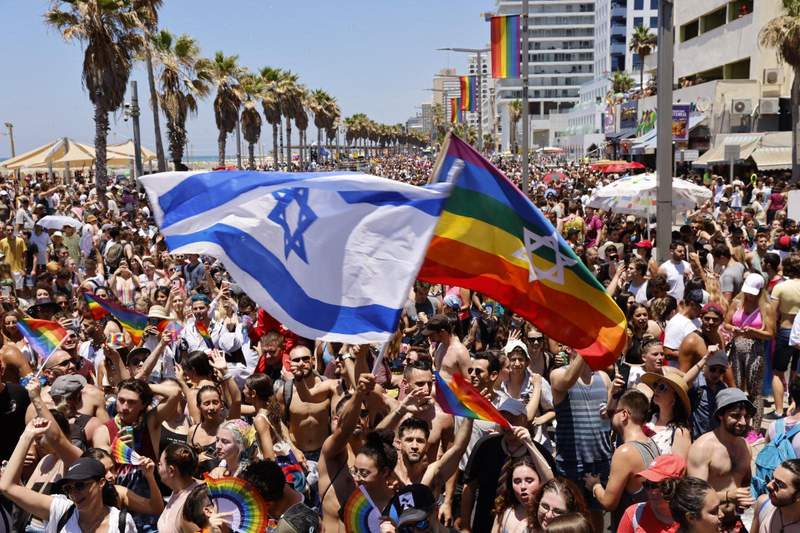
POLICY WIRE — TEL AVIV, Israel — In a land long accustomed to navigating fault lines—religious, ethnic, geopolitical—a different kind of fracture seems to be widening, silently at first, now with increasingly sharp edges. It isn’t about borders or rockets this time. Instead, it’s a quiet war on personal identity, fought on the streets and in the shadowed corners of what was once lauded as the Middle East’s singular democratic outpost for LGBTQ rights. And it’s getting ugly.
Because while Israel’s self-image often features Tel Aviv’s vibrant, progressive urban sprawl, a newly published report—released early 2026 by the Israeli Queer & Trans Violence Monitoring Project—paints a far grittier picture of 2025. It suggests that behind the liberal façade, a powerful undercurrent of hostility is pushing against the LGBTQ community, manifesting in an alarming escalation of violence. We’re not talking about just hateful whispers here; we’re talking about actual, physical harm.
The report details a troubling spike in aggression. It cited a grim 30% increase in reported physical assaults targeting LGBTQ individuals across Israel in 2025 alone, compared to the previous year’s figures. But even that number, statisticians warn, likely underrepresents the true scope of the problem. Many victims don’t report. They don’t trust the system. They fear reprisal. But why is this happening now, you might ask, in a country that prides itself on democratic values and, some might argue, Western sensibilities?
It boils down to ideology, really—a clashing of worldviews that’s becoming less about debate and more about domination. The growing influence of ultra-conservative religious factions in the Knesset, Israel’s parliament, combined with nationalist fervor, appears to be emboldening those who believe LGBTQ existence is an affront to their deeply held traditions. It’s a calculated rhetorical campaign that, observers suggest, has now begun to translate directly into tangible threats. “These reports often sensationalize isolated incidents,” commented Yaakov Goldstein, Deputy Minister for Religious Affairs, in a prepared statement. “Israel remains a robust democracy, — and protections are absolutely in place. We prioritize family values, of course, but don’t tolerate violence against any citizen.” He’s walking a tightrope, isn’t he? Acknowledging the problem without really owning it.
But the victims? They don’t buy that sanitised narrative. “It’s a chilling escalation. We’re seeing rhetoric turn into physical threats, state inaction enabling a truly hostile environment,” said Dr. Ayala Cohen, Director of the Israeli Queer Rights Forum, her voice taut with urgency during a press conference. “How can we even begin to thrive when merely existing is a risk in our own country?” Her point is, when politicians normalize discriminatory rhetoric, it legitimizes the bigots. And they act on it.
📄 POLICY WIRE WHITEPAPER PUBLISHED: PAKISTAN'S NATIONAL SECURITY POLICY PRIORITIES
👉 READ BY CLICKING HEREAnd this isn’t just an Israeli anomaly. The chilling trend echoes a broader regional surge in conservatism impacting marginalized communities. While Israel often sets itself apart from its Arab and Muslim neighbors, its internal cultural battles around LGBTQ rights sometimes mirror the pressures faced by queer communities from Cairo to Islamabad. In many parts of the Muslim world, and even in nations like Pakistan—which formally recognized a third gender in 2018 but still grapples with immense societal prejudice and violence against its trans and queer citizens—religious fundamentalism and societal intolerance represent an existential threat to personal freedoms. Israel’s situation, though framed within a different political context, reveals similar underlying anxieties about social change. It’s a sobering thought: distinct nations, sometimes similar battles. Just look at the challenges facing free expression even in established Western democracies. (Read more about how societal tensions erupt in nations facing deeply entrenched issues.)
What This Means
The stark rise in anti-LGBTQ violence in Israel carries profound political and economic implications, far beyond simple human rights concerns. For starters, it dents Israel’s carefully curated image as the sole democratic, liberal oasis in a tumultuous region. International bodies, human rights organizations, and Western allies will undoubtedly — and justifiably — begin to scrutinize this deterioration more closely. This isn’t just about PR; it can affect diplomatic relations, aid packages, and cultural exchanges, creating headaches for a government already besieged by other pressing security and political challenges. It makes allies uncomfortable, complicates foreign policy discussions.
Economically, this escalating intolerance can impact vital sectors like tech — and tourism. Tel Aviv, especially, has positioned itself as a global tech hub, attracting diverse talent from around the world. A climate of hostility toward LGBTQ individuals makes it harder to recruit and retain the bright minds who value inclusive environments. Tourism, another significant revenue stream, might also see a downturn as travelers—especially those from progressive countries—rethink destinations where minority groups face open aggression. It’s not a direct financial collapse, of course, but it’s a slow bleed, eroding trust — and desirability. The state is effectively shooting itself in the foot, compromising its own long-term prosperity for the sake of placating hardline elements. It’s a risky bet. (Sometimes, these gambles just don’t pay off.) That internal conflict, where modern aspirations clash violently with traditional rigidities, might just prove more destabilizing than any external threat. And nobody seems to have a clear answer on how to rein it in.