


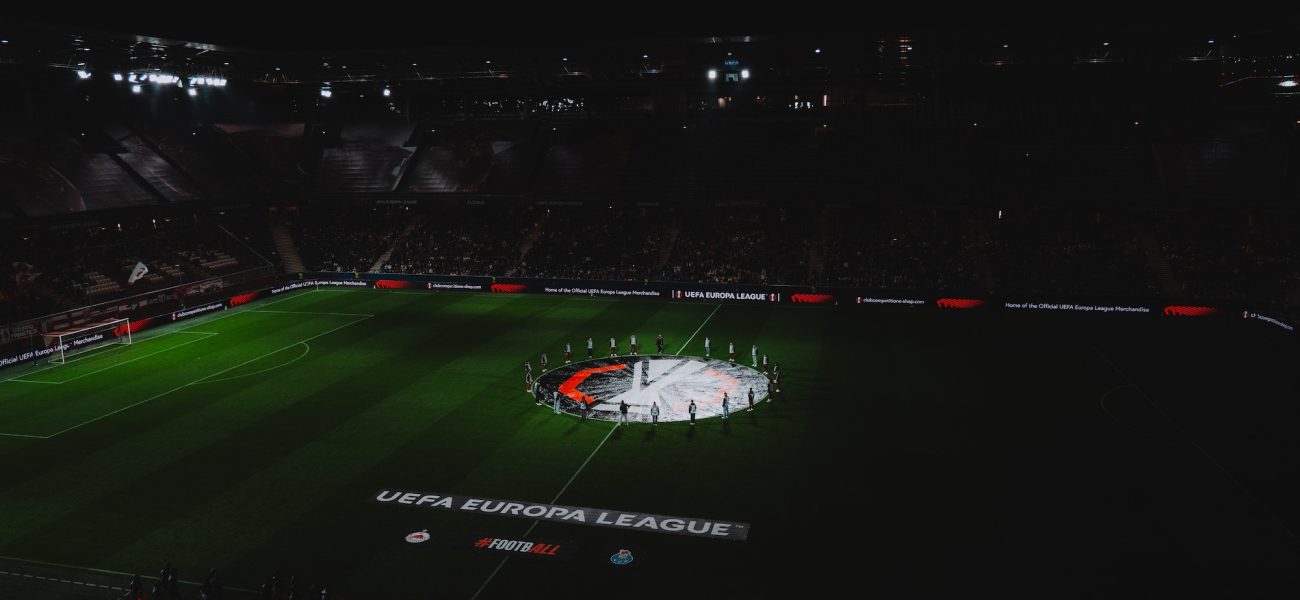
Europa League Gambit: An Austrian Club’s Fate, a Premier League’s Echo, and Global Spectators
POLICY WIRE — Vienna, Austria — Call it the geopolitical whims of the pitch. Or maybe just a spectacularly intricate game of dominoes. Either way, an unassuming Austrian Bundesliga side, finishing a...

POLICY WIRE — Vienna, Austria — Call it the geopolitical whims of the pitch. Or maybe just a spectacularly intricate game of dominoes. Either way, an unassuming Austrian Bundesliga side, finishing a respectable third, now finds its European aspirations held hostage by the fortunes of an English club. It’s a tale of indirect influence, financial stakes, and the baffling, brilliant bureaucracy of UEFA qualification that says as much about global interdependence as it does about football.
Because, you see, a third-place finish in the 2025/26 ADMIRAL Bundesliga isn’t enough, not quite. Not when LASK snags a double, thereby rearranging the deckchairs of continental football slots. This means the Austrian club will start its Europa League journey in the third qualifying round, a stage prone to unexpected exits and nerve-wracking two-leg battles. But there’s a shimmering, unlikely golden ticket: if Aston Villa claims the UEFA Europa League trophy and simultaneously manages to finish either fifth or sixth in the Premier League, then, suddenly, that Austrian club sails straight into the play-off round. It’s a conditional bypass, a hope flickering at the whims of Birmingham.
“We’ve done our part in Austria; that much is clear,” commented Hans K. Schmidt, the Austrian club’s terse Sporting Director, during a recent media briefing. “But football, as they say, has a way of complicating things. We’re watching the Premier League with keen interest – perhaps a little too keenly for my blood pressure.” And you can see why. It’s not just about bragging rights; it’s about cold, hard cash, something UEFA meticulously parcels out to those who manage to navigate its labyrinthine qualification paths.
This reliance on external outcomes, sometimes thousands of miles away, isn’t new to the European football landscape, but it highlights the precarious balancing act many smaller clubs perform. They’re trying to grow, to gain exposure, to tap into the substantial financial rewards of European competition—prize money, broadcast revenues, heightened sponsorship. Take, for instance, the sheer financial gulf: entry into the Europa League group stage alone can net a club upwards of 3.63 million euros, not counting performance bonuses and market pool revenue, a figure confirmed by UEFA’s financial distribution reports from recent seasons. That’s a significant chunk for any budget, particularly outside the continent’s elite leagues.
“These cascading effects are the lifeblood of modern European football’s economy,” explained Dr. Anya Sharma, a senior analyst specializing in sports economics at the European Institute for Global Affairs, from her London office. “What happens in a Champions League final, or indeed a Europa League final, sends ripples far beyond the immediate participants. It’s an intricate web, and the economic benefits—from increased tourism to national sporting pride—are not lost on governments. It’s truly a brutal dance: money, prestige, and the perilous scramble for survival.” (You can see Policy Wire’s prior analysis on this topic here.)
📄 POLICY WIRE WHITEPAPER PUBLISHED: PAKISTAN'S NATIONAL SECURITY POLICY PRIORITIES
👉 READ BY CLICKING HEREBut the reverberations don’t stop at the continent’s borders. The fervent support for European football clubs extends globally, with millions of passionate fans tuning in from distant lands. Think Pakistan, think the bustling cities of the Middle East, think South Asia, where viewing parties erupt for major English Premier League clashes or crucial European finals. They’re invested, deeply so, in the outcomes. And for many in these regions, European club football has become a primary touchpoint for global sports culture. A smaller Austrian club’s presence on this stage, even for a few qualifying rounds, generates invaluable international viewership and commercial opportunities, albeit for a fleeting moment. It allows for unexpected storylines, for David-and-Goliath narratives that resonate everywhere.
The Europa League qualifying dates are already etched: Draw on July 20, 2026, with the first leg of Q3 on August 6, and the return leg on August 13. If that magical Aston Villa scenario materializes, then the play-off draw awaits on August 3, with matches on August 20 and 27. It’s a tight turnaround, a brutal gauntlet even before a single group-stage ball is kicked. But the dream of rubbing shoulders with European giants? It’s a powerful motivator.
What This Means
This Austrian club’s precarious position isn’t just a quirky football factoid; it’s a microcosm of the larger, intricate network of influence and economic dependencies that define 21st-century global interactions. Politically, success in European football translates to soft power. It puts a national flag, however briefly, on the global stage. For Austria, a strong showing can subtly enhance its image abroad, potentially drawing tourists or fostering cultural exchange. Economically, even the mere possibility of qualifying offers an uplift. Clubs can budget for higher revenues, attract better talent, — and improve infrastructure. This scenario—where the fortunes of a smaller club are dictated by an entirely separate competition involving a more financially dominant league—serves as a stark reminder of the asymmetrical power dynamics at play in globalized industries, sports included. And, for the record, this dynamic plays out repeatedly, year after year, with nations far beyond Europe tracking these continental sagas, seeing themselves, perhaps, in the underdog narratives that unfold.